
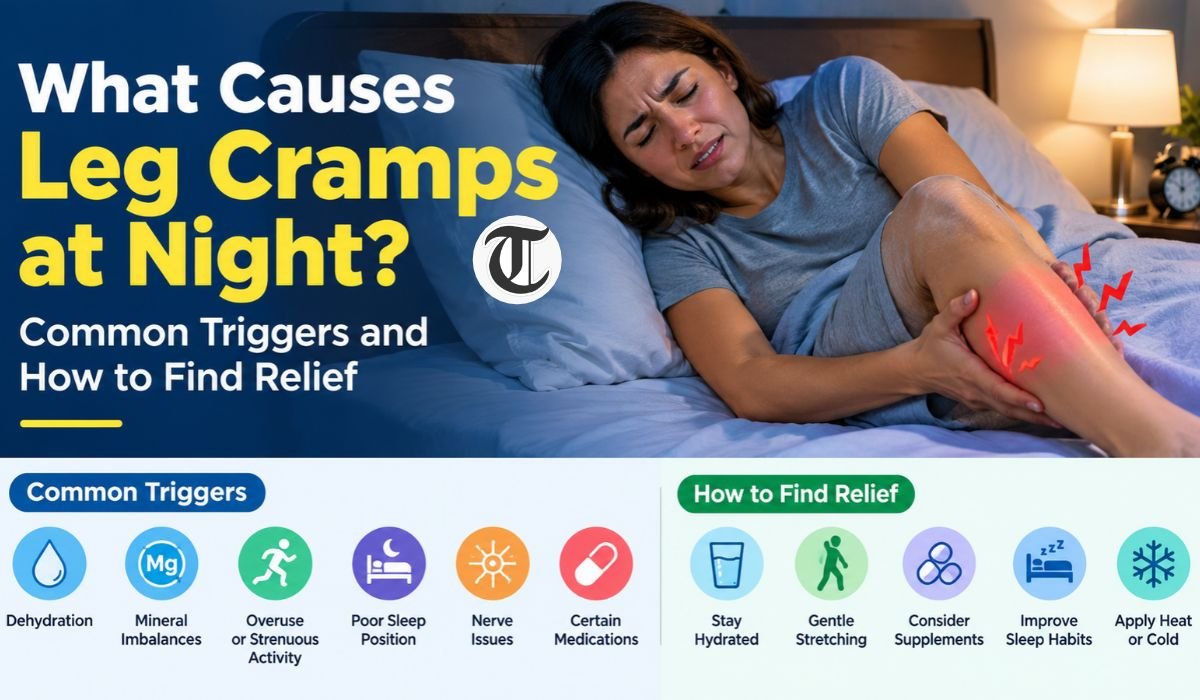
There are few more unwelcome ways to wake up than with a calf muscle suddenly tightening into a painful knot. Leg Cramps At Night can arrive without warning, forcing you out of bed as you try to stretch, move, and get the muscle to relax. The cramp itself may last only a few minutes, but the soreness it leaves behind can linger much longer.
So, What Causes Leg Cramps At Night? Unfortunately, there isn’t one answer that applies to everyone. Muscle fatigue, spending too much time sitting or standing, aging, pregnancy, certain medications, nerve problems, circulation issues, and some medical conditions can all be associated with nighttime cramps. In plenty of cases, though, doctors can’t identify one specific cause.
Fortunately, most ordinary nighttime leg cramps are temporary and aren’t dangerous. Knowing what to do when one starts, recognizing possible triggers, and understanding when a cramp deserves medical attention can make these episodes less frightening and much easier to manage.
What Are Leg Cramps?
A Leg Cramp is an involuntary muscle contraction that happens suddenly and often painfully. The calf is one of the most common places for a cramp, although the feet and thighs can also be affected. When a cramp hits, the muscle may feel unusually firm, tight, or visibly contracted.
Most episodes last anywhere from several seconds to several minutes. The pain can be surprisingly intense, even when the cramp itself is harmless. It’s also common for the affected muscle to remain tender or achy for several hours after the spasm has finally stopped.
Quick Bio Information
Fact Box 1: Leg Cramps Are Involuntary Muscle Contractions.
Fact Box 2: The Calf, Foot, And Thigh Are Common Locations For Leg Cramps.
Fact Box 3: A Cramp Can Last For Several Seconds Or Several Minutes.
Fact Box 4: The Affected Muscle May Remain Tender After The Cramp Ends.
Fact Box 5: Nighttime Cramps Can Wake A Person From Sleep.
Why Do Leg Cramps Happen While Sleeping?
Leg Cramps While Sleeping, also known as nocturnal leg cramps, tend to appear while a person is resting or asleep. They can wake someone abruptly, even when nothing seemed wrong before bedtime. Exactly why these cramps favor nighttime isn’t completely understood, but prolonged inactivity, muscle fatigue from the day, and certain positions of the legs may all play a part.
Age is another important factor. Nocturnal leg cramps become more common as people get older, and changes in muscles and tendons may help explain that pattern. Pregnancy is another situation in which nighttime cramps are frequently reported. The body’s physical changes and the added strain placed on the legs may contribute, although the precise mechanism isn’t always clear.
A nighttime cramp also shouldn’t automatically be viewed as a warning that something is seriously wrong. Many episodes are considered idiopathic, which simply means that no definite cause can be identified.
Common Causes And Triggers
Trying to understand What Causes Leg Cramps At Night can be frustrating because more than one factor may be involved. Muscle fatigue is one possible contributor. A sudden increase in exercise, a demanding workout, a long walk, or another unfamiliar physical activity can put extra stress on the legs and may be followed by cramping later.
Interestingly, too little movement can also be relevant. Spending hours sitting at a desk or remaining on your feet in one position can leave the muscles inactive or under prolonged strain. Poor posture and extended periods of standing, particularly on hard surfaces, may add to the problem.
There’s also evidence that abnormal nerve activity may contribute to some idiopathic cramps. In other words, a person doesn’t necessarily need to have exercised heavily or obviously overworked a muscle for a painful cramp to occur.
Fact Box 6: Muscle Fatigue Can Contribute To Leg Cramps.
Fact Box 7: Prolonged Sitting And Prolonged Standing May Be Associated With Nighttime Cramps.
Fact Box 8: Some Nighttime Leg Cramps Have No Identifiable Cause.
Can Dehydration Or Electrolyte Problems Cause Cramps?
When someone develops a painful muscle cramp, dehydration is often the first explanation that comes to mind. The reality is a little more complicated.
Significant dehydration and disturbances in electrolyte levels can contribute to muscle cramping in certain circumstances. Minerals such as potassium, magnesium, and calcium are important for normal nerve and muscle function. However, that doesn’t mean an ordinary nighttime leg cramp is automatically caused by a mineral deficiency.
For typical idiopathic nocturnal leg cramps, routine laboratory testing isn’t generally necessary when the symptoms clearly fit the condition. Testing may become useful when a person’s symptoms or medical history suggest another health problem.
Staying adequately hydrated is still a sensible habit, especially during exercise, hot weather, heavy sweating, or illness. But reaching for an electrolyte drink every time your calf tightens isn’t necessarily the answer. Repeated cramps can have many other causes.
Can Medications Cause Leg Cramps?
Medication side effects are another piece of the puzzle. Some medicines have been associated with muscle cramps or other muscle-related symptoms, which is why a medication review can be useful when cramps become frequent.
Medication groups that may be relevant include diuretics, statins, and certain medicines used for respiratory, neurological, psychiatric, and other conditions. The connection isn’t always straightforward, though. A medicine may be only one of several possible factors contributing to the problem.
If your cramps began after starting a new medicine or became more frequent after a dosage change, let your healthcare provider know. They’ll be able to consider whether the medication could be contributing and decide whether a different approach is appropriate.
Most importantly, don’t stop a prescription medicine on your own. Even if a medication appears to be causing cramps, it may be treating an important health condition. Your provider can weigh the potential side effect against the benefits of the treatment.
Fact Box 9: A Medication Review Can Be Important When Leg Cramps Become Frequent.
Fact Box 10: Statins And Diuretics Are Among Medication Groups That May Be Associated With Muscle Cramps.
Fact Box 11: Prescription Medicines Should Not Be Stopped Without Medical Guidance.
Medical Conditions Linked To Leg Cramps
Sometimes Night Leg Cramps occur alongside another health condition. These are often called secondary cramps because another medical problem may be contributing to the muscle symptoms.
Conditions associated with leg cramps include diabetes-related nerve damage, peripheral neuropathy, peripheral artery disease, kidney disease, liver disease, low potassium, Parkinson’s disease, osteoarthritis, and certain neuromuscular disorders. Problems involving circulation, nerves, or the body’s fluid and mineral balance can be particularly relevant when other symptoms are present.
Still, it’s important to keep this information in perspective. An occasional calf cramp doesn’t mean that you have a serious illness. Most people who experience occasional leg cramps don’t have a dangerous condition behind them.
The picture changes when cramps become frequent, severe, persistent, or are accompanied by symptoms such as weakness, numbness, swelling, skin changes, or significant pain. Those situations deserve a closer look.
How To Stop A Leg Cramp Quickly
When a Leg Cramp Strikes, the first instinct may be to panic or pull the muscle as hard as possible. That’s usually not necessary. Gentle stretching is a better place to start.
For a calf cramp, straighten the affected leg and gently bring your toes toward your shin. This lengthens the calf muscle and may help it release. If you’re able to stand safely, placing your foot firmly on the floor or walking slowly can also help restore movement.
Massage is another simple option. Use your hands to gently rub the cramped area as the muscle begins to relax. Some people find heat, such as a warm bath or heating pad, soothing during the episode. If soreness remains afterward, a wrapped cold pack may provide additional comfort.
These approaches aren’t guaranteed to stop every cramp immediately, and research on individual treatments is limited. Still, they’re generally simple measures that most people can try safely when used gently.
Fact Box 12: Gentle Stretching May Help During An Acute Cramp.
Fact Box 13: Massage And Gentle Movement Are Common Non-Drug Approaches For Managing A Cramp.
The Best Stretch For A Nighttime Calf Cramp
If you’re dealing with a Calf Cramp At Night, straighten the affected leg and gently pull the toes upward toward the shin. If you’re sitting and can comfortably reach your foot, you can use your hands or a towel to help guide the foot toward you.
If you choose to stand, make safety the priority. Hold onto a sturdy chair, bed frame, or another stable surface so you don’t lose your balance while stretching.
There’s no benefit to bouncing or aggressively forcing a cramped muscle. A gentle, steady stretch is the better approach. If a particular movement causes significant pain, stop rather than trying to push through it.
For a front-thigh cramp, gently bringing the foot toward the buttock can stretch the affected muscle, provided you can do so safely. If you’re unsure which muscle is contracting, don’t force the movement.
Heat, Ice, Massage, Or Walking?
There’s no single remedy that works equally well for everyone. Heat can feel particularly soothing when a muscle is tightly contracted. A warm bath or heating pad can be especially convenient when a cramp wakes you during the night.
Massage and gentle walking can help get the leg moving again after the initial contraction begins to ease. If the muscle remains sore, a cold pack wrapped in a towel may help make the area more comfortable. Ice shouldn’t be placed directly against bare skin.
Think of these techniques as tools for managing symptoms rather than guaranteed cures. Research into treatments for nocturnal leg cramps remains limited, and even commonly recommended strategies such as stretching haven’t produced consistently strong results in every study.
How To Prevent Leg Cramps At Night
There’s no foolproof way to prevent every Nighttime Leg Cramp, but everyday habits may help reduce the frequency of episodes for some people.
Regular physical activity can keep the legs conditioned, while gradually increasing exercise intensity can reduce the strain that comes with sudden changes in workload. Stretching the calf and other leg muscles before bed is another reasonable habit, as is gentle stretching before and after exercise.
If your day involves hours at a desk, try not to remain in the same position indefinitely. Getting up and moving around regularly gives the legs a chance to change position. If your work requires prolonged standing or walking, comfortable and supportive footwear may also make a difference.
Hydration matters for general health and normal muscle function, particularly if you’re exercising heavily, sweating a lot, or spending time in hot conditions. At the same time, there’s no need to follow a rigid rule that everyone must drink exactly eight glasses of water a day. Fluid needs vary according to activity, climate, diet, illness, and individual medical circumstances.
Fact Box 14: Regular Movement May Help Reduce Muscle Fatigue.
Fact Box 15: Gentle Calf Stretching Before Bed Is A Common Preventive Strategy.
Fact Box 16: Hydration Supports Normal Body Function, But Not Every Cramp Is Caused By Dehydration.
Can Vitamins Or Magnesium Help?
Search for Magnesium For Leg Cramps and you’ll find plenty of claims that a supplement can solve the problem. The science is less convincing.
Magnesium is essential for normal muscle and nerve function, but taking extra magnesium doesn’t guarantee that nighttime cramps will disappear. Evidence from clinical studies is mixed, and a 2023 evidence review found that magnesium probably doesn’t provide meaningful short-term relief for most idiopathic or pregnancy-related nocturnal leg cramps. Longer-term benefits remain less certain.
Vitamin B preparations have also been studied, but the available evidence is limited. Some prescription medicines have been investigated for people with frequent cramps, but there isn’t one medication that reliably prevents nighttime leg cramps in everyone.
Quinine is worth mentioning because it has been used for leg cramps in the past. Although it can reduce cramp frequency, it isn’t routinely recommended because of potentially serious adverse effects. It shouldn’t be treated as an ordinary home remedy.
If you suspect that your diet is lacking a particular nutrient, it’s better to discuss the situation with a healthcare professional rather than automatically taking high-dose supplements.
Fact Box 17: Magnesium Is Not A Guaranteed Treatment For Nighttime Leg Cramps.
Are Nighttime Leg Cramps A Sign Of Something Serious?
For most people, an occasional Leg Cramp At Night isn’t dangerous. The pattern of symptoms is more informative than one isolated episode.
Frequent cramps that repeatedly disturb your sleep deserve attention, especially when they’re accompanied by swelling, numbness, weakness, significant pain, skin changes, or cramps elsewhere in the body. These additional symptoms can point toward problems involving nerves, circulation, muscles, medications, or another underlying condition.
It can be surprisingly useful to pay attention to when your cramps happen. Do they appear after a particularly active day? Are they more common after sitting for several hours? Did they start after a new medication? Are they happening alongside another physical change?
Keeping track of these details can make a medical appointment more productive and may help reveal a pattern you hadn’t noticed before.
When Should You See A Doctor?
Talk with a healthcare professional if your Leg Cramps At Night become frequent, severe, unusually persistent, or disruptive enough to affect your sleep or daily routine. Medical advice is particularly important if the cramps occur alongside numbness, swelling, weakness, skin changes, or significant pain.
During an appointment, your provider will likely want to know when the cramps started, how often they happen, where they occur, how long they last, and what the sensation feels like. They may also ask whether the episodes happen during sleep, after exercise, or during periods of rest.
Your medical history and medications are important, too. In many typical cases, the history and description of the cramps provide enough information to recognize nocturnal leg cramps. There isn’t one specific test that confirms the diagnosis.
Blood or urine testing may be appropriate when your symptoms or medical history raise suspicion of another condition, but routine testing isn’t necessary for every person with straightforward nighttime leg cramps.
When Is A Leg Cramp An Emergency?
A typical nighttime cramp is painful but usually isn’t dangerous. The situation is different when the cramping is unusually severe, prolonged, widespread, or accompanied by other concerning symptoms.
A cramp that doesn’t release and remains extremely painful deserves medical attention, particularly if it occurs with weakness, swelling, numbness, major skin changes, or other sudden symptoms. Likewise, if you suspect poisoning, an infection, or another acute medical problem, don’t rely on home treatment alone.
The important thing is to consider the whole picture rather than focusing only on the muscle contraction. Most ordinary cramps don’t require emergency care, but severe or unexplained symptoms should never be dismissed simply because they started as a cramp.
Leg Cramps Vs. Restless Legs Syndrome
Leg Cramps And Restless Legs Syndrome can both become troublesome at night, but they’re quite different experiences.
A leg cramp involves an actual involuntary contraction of the muscle. The affected area may suddenly become hard, tight, and intensely painful. Stretching or gentle movement may help release the contraction, and soreness can remain afterward.
Restless legs syndrome, commonly known as RLS, usually causes an uncomfortable urge to move the legs rather than a painful muscle contraction. People may describe sensations such as crawling, pulling, tingling, or an unpleasant feeling deep inside the legs. Moving around often brings temporary relief.
The distinction matters because RLS and nighttime leg cramps have different clinical features and may require different approaches. If you’re unsure which problem you’re experiencing, describe exactly what you feel rather than simply calling it a “cramp.” That detail can help your healthcare provider make a more accurate assessment.
Final Thoughts
What Causes Leg Cramps At Night can’t always be reduced to a single explanation. For many people, these episodes are idiopathic, with no definite cause identified. For others, muscle fatigue, prolonged positions, aging, pregnancy, medications, nerve problems, circulation issues, or an underlying health condition may contribute.
When a cramp strikes, simple measures such as gentle stretching, massage, movement, and heat or cold can help you work through the episode. Building regular movement and stretching into your routine may also reduce episodes for some people, although no prevention strategy works for everyone.
It’s also worth resisting the temptation to blame every cramp on dehydration or a lack of magnesium. Those factors can matter in certain circumstances, but nighttime leg cramps have a broader range of possible causes. Looking at the whole picture—including your medications, activity level, symptoms, medical history, and daily routine—is a much more useful approach.
Most occasional nighttime cramps are temporary. When they become frequent, severe, or disruptive, however, they’re worth discussing with a healthcare professional. The goal isn’t simply to survive the next painful episode. It’s to understand what’s happening, find practical ways to reduce its impact, and recognize when a seemingly simple leg cramp may need a closer medical look.
Frequently Asked Questions About Leg Cramps
What Causes Leg Cramps At Night?
What Causes Leg Cramps At Night varies from person to person. Muscle fatigue, prolonged sitting or standing, aging, pregnancy, certain medicines, nerve problems, circulation issues, and some medical conditions can all play a role. In many cases, however, no definite cause is identified.
Why Do I Get Leg Cramps While Sleeping?
Nighttime cramps occur during periods of rest and may be influenced by muscle fatigue, prolonged inactivity, certain leg positions, aging, or other factors. They can happen even when there doesn’t seem to be an obvious trigger.
How Can I Stop A Leg Cramp Fast?
Start with a gentle stretch of the affected muscle. For a calf cramp, straighten the leg and bring the toes toward the shin. Massage the muscle and, if safe, stand or walk gently. Heat may feel soothing during the cramp, while cold can help with soreness afterward.
Does Drinking Water Prevent Leg Cramps?
Adequate hydration supports normal body function, but dehydration isn’t responsible for every nighttime cramp. Fluid needs increase in situations such as heavy exercise, significant sweating, hot weather, or illness. Persistent cramps can have causes unrelated to hydration.
Does Magnesium Help Nighttime Leg Cramps?
Magnesium is important for healthy muscle and nerve function, but supplementation isn’t a guaranteed solution. Current evidence suggests magnesium is unlikely to provide meaningful short-term relief for most idiopathic or pregnancy-related nighttime cramps. Anyone considering supplementation should consider their overall health, diet, and medications.
Why Do Older Adults Get More Leg Cramps?
Nocturnal leg cramps become more common with age. Changes in muscles and tendons, activity levels, medication use, nerve function, circulation, and other health factors may contribute. Frequent or disruptive cramps should be discussed with a healthcare professional.
Can Pregnancy Cause Leg Cramps At Night?
Yes. Leg cramps are commonly reported during pregnancy. Physical changes and the additional demands placed on the legs may contribute, although the exact cause isn’t always clear. Persistent or severe symptoms should be discussed with a pregnancy care provider.
When Should Leg Cramps Be Checked By A Doctor?
Medical advice is appropriate when cramps are frequent, severe, persistent, or repeatedly interfere with sleep. You should also seek medical attention when cramps occur with swelling, numbness, weakness, skin changes, significant pain, or other unusual symptoms.
Learn more and explore exciting content on: What Is Gingham? A Simple Guide To This Classic Checked Fabric
[…] Learn more and explore exciting content on: What Causes Leg Cramps at Night? Common Triggers and How to Find Relief […]