
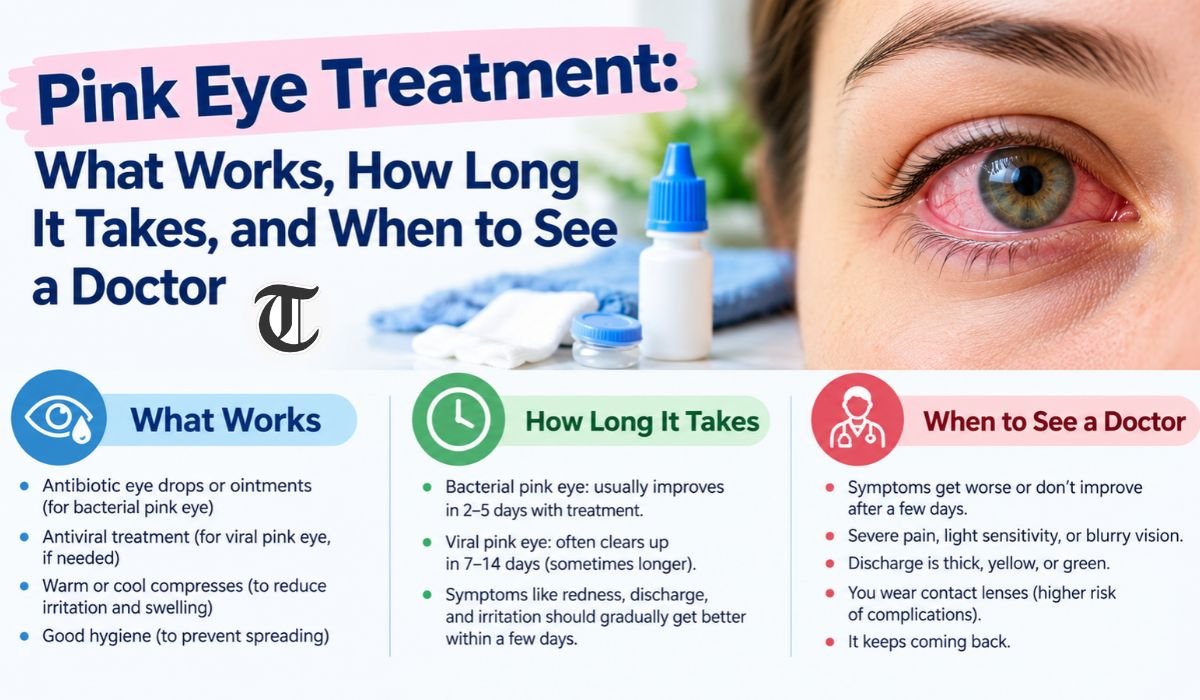
Pink Eye Can Show Up At The Most Inconvenient Time. You Might Wake Up With A Red Eye, Notice Your Eyelids Are Stuck Together, Or Spend The Day Dealing With Constant Watering And Irritation. For Many People, Pink Eye Is Mild And Short-Lived. Still, It Can Be Uncomfortable, And In Some Cases, It Needs Medical Attention.
The Medical Name For Pink Eye Is Conjunctivitis. It Happens When The Conjunctiva, The Thin Membrane Covering The White Part Of The Eye And The Inner Eyelid, Becomes Inflamed. Viruses And Bacteria Can Cause It, But So Can Allergies, Irritants, Contact-Lens Problems, And Other Eye Conditions.
That’s Why There Isn’t One Universal Pink Eye Treatment. What Helps One Person May Not Be Appropriate For Another. The Most Useful First Step Is Understanding What’s Causing The Redness, Then Choosing Care That Fits The Situation.
Quick Bio: Pink Eye Facts
| Fact | Information |
|---|---|
| Medical Name | Conjunctivitis |
| Main Area Affected | The Conjunctiva |
| Common Causes | Viruses, Bacteria, And Allergens |
| Contagious Forms | Viral And Bacterial Conjunctivitis |
| Noncontagious Forms | Allergic And Most Irritant-Related Conjunctivitis |
| Common Signs | Redness, Swelling, Watering, Itching, And Discharge |
| Viral Treatment | Usually Supportive Care |
| Bacterial Treatment | May Include Antibiotic Eye Drops Or Ointment |
| Allergy Treatment | Avoiding The Trigger And Managing Allergy Symptoms |
| Artificial Tears | Can Help Relieve Dryness And Irritation |
| Cool Compress | Can Help Reduce Discomfort, Swelling, And Redness |
| Contact Lenses | Should Be Avoided While Symptoms Continue |
| Recovery | Depends On The Cause |
| Viral Recovery | Often About 7 To 14 Days, Sometimes Longer |
| Bacterial Recovery | Often Several Days, But May Take Up To Two Weeks |
| Doctor Visit | Needed For Severe Or Worsening Symptoms |
| Emergency Concern | Significant Pain Or Vision Changes |
| Prevention | Hand Hygiene And Avoiding Shared Personal Items |
What Is Pink Eye?
Pink Eye, Also Called Conjunctivitis, Happens When The Conjunctiva Becomes Inflamed. This Clear, Thin Membrane Covers The White Part Of The Eye And Lines The Inside Of The Eyelid.
Pink Eye Can Affect One Eye Or Both. The condition can develop suddenly or last longer, depending on its cause. Viral and bacterial conjunctivitis can spread from person to person, while allergic conjunctivitis and most irritation-related cases aren’t contagious.
Although Pink Eye is common, a red eye doesn’t always mean simple conjunctivitis. Some other eye problems can cause similar symptoms, which is why unusual or severe symptoms shouldn’t be ignored.
Pink Eye Symptoms
The most recognizable sign is redness or a pink appearance in the white part of the eye. You may also notice watery eyes, itching, burning, irritation, swollen eyelids, or crusting around the lashes.
Discharge can vary depending on the cause. Some people have clear and watery fluid, while others develop thicker mucus or yellow and green discharge. When discharge dries overnight, the eyelids may stick together in the morning.
A gritty or foreign-body sensation is also common. Your eyes may feel as though something is stuck inside them even when nothing is there. Mild blurred vision can occur, particularly when tears or discharge cover the surface of the eye.
Significant vision changes, severe eye pain, or strong sensitivity to light are different. These symptoms can point to a more serious eye problem and deserve prompt medical attention.
What Causes Pink Eye?
Pink Eye Has Several Possible Causes, And Identifying The Cause Can Help Determine The Right Treatment.
Viruses are among the most common causes of acute conjunctivitis. Adenoviruses frequently cause viral conjunctivitis, and the condition can appear alongside a cold or another respiratory infection. Viral Pink Eye may begin in one eye and later spread to the other.
Bacterial conjunctivitis is another common form. It can cause thicker discharge and crusting, and infectious bacterial conjunctivitis can spread to other people.
Allergies can also cause conjunctivitis. Common triggers include pollen, mold, dust mites, and animal dander. Allergic Pink Eye often causes intense itching and usually affects both eyes.
Irritants can trigger inflammation as well. Smoke, dust, chemicals, cosmetics, chlorine, foreign material, contact lenses, and contact-lens solutions may all irritate the eye.
Fungal and parasitic infections are much less common. Other causes can include eye injuries, certain autoimmune conditions, and, rarely, tumors or other serious eye conditions.
Does Pink Eye Always Need Treatment?
Not Every Case Of Pink Eye Requires Prescription Medicine. Many mild cases improve on their own, particularly viral conjunctivitis.
Viral Pink Eye is usually self-limited, which means the body’s immune system clears the infection without specific medication. Antibiotics don’t work against viruses, so using them won’t treat viral conjunctivitis.
Some mild bacterial cases can also improve without antibiotics. A healthcare professional may recommend antibiotic eye drops or ointment depending on the severity of the infection, the amount of discharge, a person’s overall health, and the suspected cause.
It’s important not to use leftover prescription eye drops or medication prescribed for someone else. Eye conditions can look similar while requiring very different treatments.
Pink Eye Treatment At Home
For Mild Pink Eye, Home Care Is Mainly About Making The Eyes More Comfortable While The Condition Runs Its Course.
Artificial tears can help soothe dryness, burning, and irritation. A cool compress placed gently over closed eyes may also reduce discomfort, swelling, and redness.
If discharge collects around the eyes, gently clean it with a clean, wet washcloth or fresh material. Avoid rubbing the eyes, even when they feel itchy or gritty. Rubbing can increase irritation and may transfer an infection from one eye to the other.
Good hand hygiene is especially important. Wash your hands regularly, particularly after touching your face or cleaning eye discharge.
Anyone wearing contact lenses should stop using them while symptoms are present. Contact lenses can increase irritation and, in some situations, raise the risk of more serious eye infections.
Medical Pink Eye Treatment
The Right Medical Treatment Depends On What Is Causing The Conjunctivitis.
For bacterial Pink Eye, a healthcare professional may prescribe antibiotic eye drops or ointment. Antibiotics can shorten the illness in some cases, but they aren’t necessary for every mild bacterial infection.
Viral Pink Eye usually doesn’t require antiviral medication. However, certain viral infections, including serious infections involving herpes viruses or varicella-zoster virus, may require specific antiviral treatment.
Allergic conjunctivitis is treated differently. Reducing exposure to the allergen is an important first step. Allergy medicines or appropriate eye drops may also help control itching, watering, and inflammation.
Steroid eye drops can sometimes have a role in treating certain types of eye inflammation, but they shouldn’t be used without professional guidance. Inappropriate steroid use can make some eye infections or other conditions worse.
Pink Eye And Contact Lenses
Contact Lens Wearers Need To Be Especially Careful When They Develop A Red Or Irritated Eye.
The safest approach is to remove contact lenses and stop wearing them until an eye-care professional says it is safe to resume. If a person cannot see a doctor, waiting until symptoms have completely cleared is generally recommended before returning to contact-lens use.
Contact-lens wearers with suspected bacterial conjunctivitis can have a higher risk of bacterial keratitis, a potentially serious infection of the cornea. Pain, light sensitivity, vision changes, or significant discharge should therefore be taken seriously.
Disposable contact lenses and cases used during an infection may need to be discarded. Reusable lenses and cases should be cleaned, disinfected, or replaced according to professional and manufacturer instructions.
How Long Does Pink Eye Last?
How Long Pink Eye Lasts Depends Largely On Its Cause.
Viral conjunctivitis often improves within about 7 to 14 days, although some cases can continue for two to three weeks or even longer. Antibiotics won’t speed recovery from a viral infection.
Mild bacterial conjunctivitis may begin improving within a few days and can sometimes clear without treatment. Other bacterial cases may take up to two weeks to fully resolve.
Allergic Pink Eye can continue for as long as the person remains exposed to the trigger. Once the allergen is removed and the inflammation settles, symptoms generally improve.
If symptoms are getting worse rather than better, or they aren’t following an expected recovery pattern, a medical evaluation is a sensible next step.
Is Pink Eye Contagious?
Some Types Of Pink Eye Are Contagious, While Others Are Not.
Viral and bacterial conjunctivitis can spread through close contact, contaminated hands and objects, eye discharge, and certain respiratory droplets. Touching an infected eye and then touching the other eye can also spread the infection.
Allergic conjunctivitis isn’t contagious. Most cases caused by ordinary irritants aren’t contagious either.
Because it can be difficult to identify the cause based only on appearance, good hygiene is useful whenever an infectious form is possible.
How To Prevent Pink Eye From Spreading
Good Hygiene Can Make A Significant Difference When Pink Eye Is Caused By An Infection.
Wash your hands frequently with soap and water for at least 20 seconds. When soap and water aren’t available, an alcohol-based hand sanitizer containing at least 60% alcohol can be used.
Try not to touch or rub your eyes. Keep any discharge around the eyes clean, and wash your hands afterward.
Don’t share towels, washcloths, pillowcases, bedding, cosmetics, makeup brushes, eye drops, contact lenses, or contact-lens cases with other people.
Contact-lens equipment should also be handled carefully. Follow proper cleaning and replacement instructions to reduce the chance of reinfection.
It’s also wise to stay out of swimming pools while you have infectious Pink Eye, since contaminated water and close contact can contribute to spread.
How Doctors Diagnose Pink Eye
Doctors Usually Diagnose Pink Eye By Examining The Eye And Asking About The Person’s Symptoms.
They may ask when the redness started, whether one or both eyes are affected, whether there is discharge, and whether the condition is improving or getting worse.
In straightforward cases, additional testing may not be necessary. If the cause is unclear, the symptoms are severe, or a particular infection is suspected, a doctor may take a sample of fluid from the eye using a soft-tipped swab.
Laboratory testing can sometimes help identify the specific organism responsible for an infection.
A proper examination also matters because several more serious eye conditions can look similar to Pink Eye during the early stages.
When Should You See A Doctor For Pink Eye?
A Mild Red Eye That Is Gradually Improving May Not Require Immediate Medical Care. However, Some Symptoms Shouldn’t Be Brushed Aside.
See a healthcare professional if the redness or discomfort is getting worse, symptoms aren’t improving, or the condition seems more severe than expected.
Significant eye pain, strong sensitivity to light, blurred or reduced vision, intense redness, heavy discharge, or a persistent feeling that something is stuck in the eye can all require professional evaluation.
People who wear contact lenses should be particularly cautious because of the increased risk of corneal infection.
Newborns with signs of conjunctivitis need prompt medical attention. Conjunctivitis in a newborn can sometimes be caused by infections that require specific treatment.
Pink Eye Warning Signs And Complications
Most Straightforward Cases Of Pink Eye Have A Good Outlook And Don’t Cause Permanent Problems. Serious Complications Are Uncommon, But They Can Happen.
The main concern is that a more serious eye condition may be mistaken for ordinary conjunctivitis. Problems affecting the cornea, for example, can cause redness, pain, and vision changes.
Contact-lens wearers have an increased risk of corneal infection, particularly when an infectious eye condition is involved.
A rare form called hyperacute bacterial conjunctivitis can progress quickly. It may cause heavy discharge, marked swelling, pain, and reduced vision. This situation requires prompt eye-care treatment.
Permanent vision loss from ordinary Pink Eye is uncommon, but severe or unusual symptoms should always be assessed rather than treated as a routine case.
Viral, Bacterial, Allergic, Or Irritant Pink Eye?
The Symptoms Can Offer Clues About The Cause, But They Can’t Always Provide A Reliable Diagnosis On Their Own.
Viral Pink Eye often causes watery discharge and may appear along with a cold or another respiratory infection. It can begin in one eye before spreading to the other.
Bacterial conjunctivitis is more likely to cause thicker discharge, crusting, and eyelids that stick together. However, symptoms can overlap with other forms of conjunctivitis.
Allergic Pink Eye commonly produces significant itching and often affects both eyes at the same time.
Irritant conjunctivitis usually appears after exposure to something that bothers the eye, such as smoke, dust, chemicals, cosmetics, or chlorine.
Because these patterns can overlap, a healthcare professional may be needed when symptoms are severe, persistent, unusual, or worsening.
Common Pink Eye Treatment Mistakes
One Common Mistake Is Assuming That Every Red Eye Needs Antibiotics. Antibiotics only work against certain bacterial infections and don’t treat viruses.
Another mistake is using someone else’s prescription eye drops or taking an old prescription from a previous eye problem. The medication may not be appropriate for the current condition.
Continuing to wear contact lenses can also increase irritation and may raise the risk of complications in some people.
Sharing towels, cosmetics, eye drops, contact-lens equipment, or other personal items can make it easier for infectious Pink Eye to spread.
Finally, don’t ignore warning signs. Significant pain, vision changes, strong light sensitivity, heavy discharge, intense redness, or rapidly worsening symptoms deserve medical attention.
Final Thoughts
There Isn’t One Single Pink Eye Treatment That Works For Every Case. The Best Approach Depends On The Cause And The Severity Of The Symptoms.
Viral conjunctivitis usually improves with supportive care rather than antibiotics. Bacterial conjunctivitis may sometimes require antibiotic eye drops or ointment, while allergic Pink Eye is generally managed by avoiding the trigger and controlling allergy symptoms.
Simple measures such as artificial tears, cool compresses, careful hand hygiene, avoiding eye rubbing, and taking a break from contact lenses can make recovery more comfortable.
Most cases improve without lasting problems. Still, severe pain, strong sensitivity to light, vision changes, heavy discharge, intense redness, or rapid worsening shouldn’t be treated as ordinary Pink Eye. In those situations, getting professional eye care is the safest choice.
FAQs About Pink Eye Treatment
Can Pink Eye Go Away On Its Own?
Yes, Many Mild Cases Can Improve Without Prescription Treatment. Viral Pink Eye commonly clears within one to two weeks, although some cases can last two to three weeks or longer. Mild bacterial conjunctivitis may also clear without antibiotics. Severe, persistent, or worsening symptoms should be evaluated by a healthcare professional.
What Is The Best Pink Eye Treatment At Home?
Artificial Tears And Cool Compresses Can Help Reduce Irritation And Discomfort. Keeping the eyes clean, washing your hands regularly, avoiding eye rubbing, and stopping contact-lens use while symptoms continue can also help.
Do Antibiotics Treat Pink Eye?
Antibiotics Can Treat Certain Bacterial Cases Of Pink Eye, But They Don’t Work Against Viral Conjunctivitis. Some mild bacterial infections improve without antibiotics, so treatment should depend on the individual situation.
How Long Does Pink Eye Usually Last?
Viral Pink Eye Often Lasts About 7 To 14 Days, Although Some Cases Continue For Two To Three Weeks Or Longer. Bacterial Pink Eye May Begin Improving Within A Few Days And Can Take Up To Two Weeks. Allergic conjunctivitis can continue while the triggering allergen is present.
Can I Wear Contact Lenses With Pink Eye?
No. It’s Best To Stop Wearing Contact Lenses While You Have Pink Eye. Ideally, wait until an eye-care professional says it’s safe to resume, or until symptoms have completely disappeared if professional care isn’t available. Contact-lens wearers should seek prompt attention for pain, light sensitivity, discharge, or vision changes.
Is Pink Eye Contagious?
Viral And Bacterial Pink Eye Can Be Contagious. Allergic Pink Eye And Most Irritant-Related Conjunctivitis Aren’t Contagious. Frequent hand washing and avoiding shared personal items can help reduce the spread of infectious forms.
When Should I See A Doctor For Pink Eye?
Seek Medical Care If You Have Significant Pain, Strong Light Sensitivity, Blurred Or Reduced Vision, Intense Redness, Heavy Discharge, Or Symptoms That Are Getting Worse Instead Of Better. Contact-lens wearers and newborns with conjunctivitis require particular attention because they can have a higher risk of serious complications.
Learn more and explore exciting content on: What Is A Scissor Lift? A Simple Guide To Types, Uses, And Safety
[…] Learn more and explore exciting content on: Pink Eye Treatment: What Works, How Long It Takes, and When to See a Doctor […]