
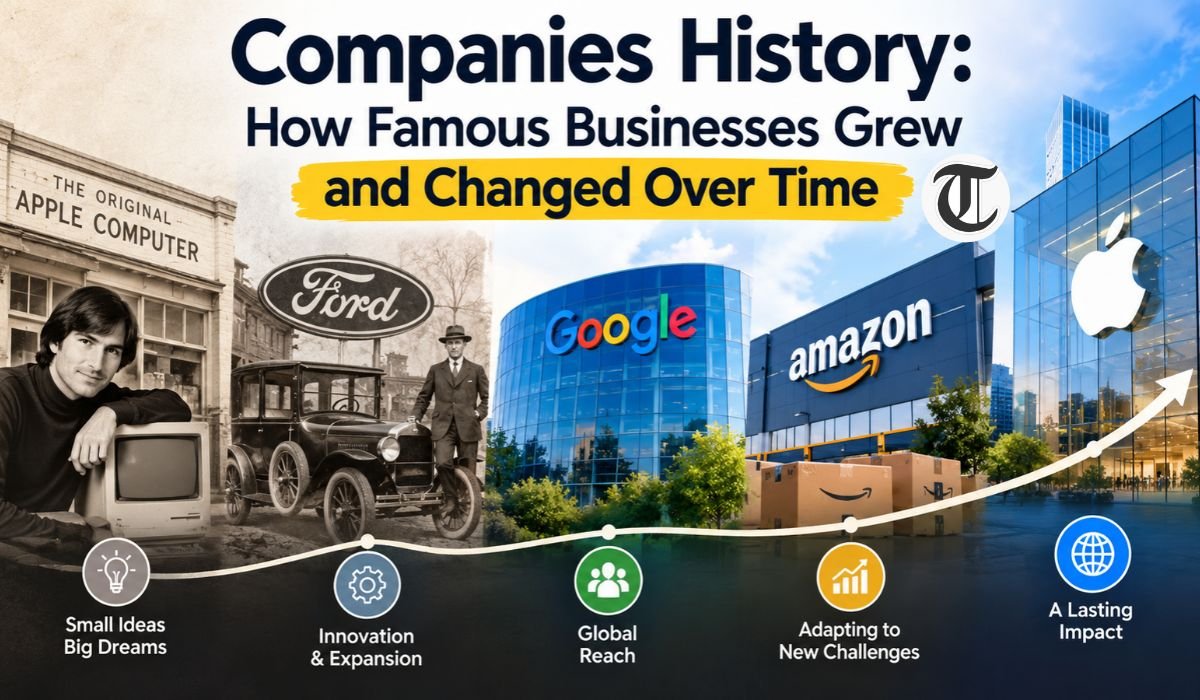
Behind Every Famous Company Is A Story Of Ideas, Hard Work, Important Decisions, And Change. Some Businesses Begin With A Simple Idea, While Others Grow By Finding Better Ways To Solve Everyday Problems. Over Time, These Small Beginnings Can Lead To Major Innovations, New Markets, And Brands Recognized Around The World. Exploring Companies History Helps Us Understand How Businesses Grow, Why Some Become Successful, And How Others Struggle When Their Industries Change.
From Apple And Amazon To Ford, Toyota, Microsoft, And Netflix, The Stories Of Famous Businesses Reveal How Leadership, Technology, Customer Needs, And Business Strategy Shape Corporate Growth. They Also Show That Success Rarely Happens Overnight. It Usually Takes Years Of Experimentation, Investment, And Adaptation. By Looking At How These Companies Have Developed, We Can Better Understand The Decisions That Changed Their Industries And The Lessons Their Experiences Offer Modern Businesses.
Quick Bio Information
Apple’s Founding
Apple Was Founded On April 1, 1976, And Celebrated Its Fiftieth Anniversary In 2026. Its Development Spans Personal Computers, Mobile Devices, And Digital Services. Apple’s Official Anniversary Announcement Reflects On Five Decades Of The Company’s History.
Amazon’s Incorporation
Amazon Was Incorporated In Washington State In 1994. The Company Later Established Its Online Store And Began Building A Business That Would Expand Far Beyond Its Initial Focus On Books. Amazon Investor Relations Provides The Relevant Corporate Dates.
Amazon’s Online Store
Amazon Opened Its Online Store In July 1995, Initially Concentrating On Books. This Narrow Starting Point Helped Establish The Online Retail Model Before The Company Expanded Into Other Product Categories And Services.
Amazon’s IPO
Amazon Went Public On May 15, 1997, At An Initial Offering Price Of $18 Per Share. Its Stock Is Listed On Nasdaq Under The Symbol AMZN. The Company’s Investor Relations FAQs Explain The IPO And Subsequent Stock Splits.
Ford Model T
Ford Introduced The Model T In 1908. The Vehicle Was Designed To Be Practical, Durable, And More Affordable Than Many Earlier Cars, Helping Expand Access To Personal Transportation. Ford’s Official Model T History Provides More Background.
Ford’s Assembly Line
Ford’s Moving Assembly Line Began Operating At Highland Park In October 1913. The Production Method Helped Increase Output And Lower Costs, Influencing Modern Manufacturing Well Beyond The Automotive Industry.
Microsoft’s Early Software
Bill Gates And Paul Allen Developed BASIC Software For The Altair 8800 In 1975. This Early Project Helped Establish The Foundation For Microsoft’s Growth In The Personal Computing Industry. The Company’s Historical Timeline Documents The Milestone.
IBM’s Origins
IBM’s Predecessor, The Computing-Tabulating-Recording Company, Was Incorporated In 1911 Following A Merger Of Several Businesses. Its Early Work In Data Processing Helped Set The Stage For Its Later Development In Information Technology.
IBM’s Name Change
The Computing-Tabulating-Recording Company Adopted The Name International Business Machines In 1924. The Change Reflected Its Broader Corporate Direction And International Ambitions.
Toyota’s Production System
Toyota’s Production System Focuses On Quality, Efficiency, And Reducing Waste. Its Approach Has Become An Important Example Of How Manufacturing Processes Can Be Improved Through Structured Methods And Continuous Learning.
Just-In-Time Manufacturing
Toyota’s Just-In-Time Principle Aims To Produce And Deliver What Is Needed, When It Is Needed, And In The Required Amount. The Goal Is To Coordinate Production With Demand And Reduce Unnecessary Inventory.
Netflix’s First DVD
Netflix Delivered Its First DVD In 1998. Its Rental Service Gave Customers A New Way To Access Films At Home And Helped Establish The Company Before Its Later Move Into Streaming Entertainment.
Netflix’s Final DVD
Netflix Shipped Its Last DVD In September 2023, Bringing Its Rental Service To An End After Twenty-Five Years. The Change Marked A Major Transition In The Company’s Business History.
What Company History Reveals
Company History Tells The Story Of A Business From Its Early Beginnings To Its Later Developments. It Includes Information About Founders, Original Products, Major Milestones, Leadership Changes, Financial Performance, And Challenges That Influenced The Company’s Direction. It Also Explains How Businesses Respond To Competition, Economic Conditions, And Technological Change.
For Students, Entrepreneurs, Investors, And Researchers, Corporate History Offers Valuable Context. It Can Explain Why A Company Built Its Reputation, Changed Its Business Model, Or Expanded Into New Markets. However, Past Success Doesn’t Guarantee Future Results. The Real Value Comes From Understanding Why Events Happened, What Evidence Supports Those Explanations, And How Decisions Affected The Company’s Development.
How Famous Companies Began
Many Recognized Businesses Started With A Specific Idea Rather Than An Immediate Plan To Dominate An Entire Industry. Amazon Is A Good Example. Jeff Bezos Developed The Idea For An Online Bookstore In 1994, And Amazon Opened Its Online Store In July 1995. Selling Books Online Allowed Customers To Explore A Broad Selection Without Depending On The Limited Shelf Space Of A Traditional Bookshop. Amazon’s Investor Relations Website Provides The Company’s Incorporation And Early Business Dates.
Apple Followed A Different Path. Founded On April 1, 1976, The Company Began With Personal Computing And Later Expanded Into Consumer Devices And Digital Services. Its Development Shows How A Business Can Grow By Bringing Technical Innovation Together With Products People Find Useful. In Both Cases, The Original Idea Was Only The Starting Point. Continued Growth Required Additional Investment, Strategic Decisions, And A Willingness To Adapt.
Business Milestones That Changed Company History
Important Milestones Mark The Moments When A Business Enters A New Stage Of Development. These Events May Include Launching A Popular Product, Opening A Factory, Entering An Overseas Market, Acquiring Another Company, Or Introducing A Different Business Model. Studying A Company’s Timeline Helps Readers Understand What Happened, When It Happened, And Why The Event Mattered.
Ford Motor Company Offers A Strong Example. Ford Introduced The Model T In 1908, With Affordability And Practical Transportation Among Its Main Selling Points. In October 1913, The Company’s Moving Assembly Line Began Operating At Its Highland Park Plant. This Approach Increased Production Capacity And Reduced Assembly Time, Helping Make Cars More Accessible To Ordinary Buyers. The Change Also Influenced Manufacturing Practices Beyond The Automobile Industry. Ford’s Official Model T History And Highland Park History Provide More Detail About These Developments.
Leadership And Business Growth
Leadership Shapes A Company’s Strategy, Workplace Culture, Investments, And Long-Term Direction. Founders Often Establish The Original Vision, While Later Leaders Decide How To Respond To Competitors, New Technologies, And Changing Customer Expectations. Good Leadership Involves More Than Ambition. It Also Requires Planning, Communication, Financial Discipline, And The Ability To Learn From Mistakes.
IBM Illustrates How Leadership Can Influence Corporate Development. The Company Was Established In 1911 As The Computing-Tabulating-Recording Company Following A Merger Of Several Businesses. Under Thomas J. Watson’s Leadership, It Developed A More Unified Corporate Identity, Focused Its Resources, And Expanded Internationally. In 1924, The Company Adopted The Name International Business Machines. Its Official Corporate History Explains How Leadership And Organizational Change Helped Shape Its Growth.
Innovation And Product Development
Innovation Helps Businesses Improve Products, Solve Problems, And Respond To Changing Customer Expectations. It Can Mean Inventing Something New, improving an existing product, or finding a more efficient way to deliver a service. Although Innovation Creates Opportunities, Not Every New Idea Becomes A Commercial Success.
Toyota Shows How Innovation Can Take Place Within Manufacturing Operations As Well As Through Products. Its Toyota Production System Emphasizes Two Important Principles: Just-In-Time, Which Coordinates Production With Actual Needs, And Jidoka, Which Helps Detect Problems And Prevent Defective Products From Moving Through The Production Process. The System Also Encourages Continuous Improvement. Toyota’s Official Production System Guide Explains How These Principles Support Quality And Efficiency. The Example Shows That Business Innovation Isn’t Limited To Creating Something New; It Can Also Involve Improving How Work Gets Done.
Branding And Customer Trust
A Strong Brand Helps Customers Recognize A Business And Understand What It Offers. Names, Logos, Advertising, Packaging, And Customer Experiences All Contribute To Brand Identity. Over Time, Customers May Associate A Brand With Qualities Such As Reliability, Convenience, Style, Or Value. These Associations Can Influence Purchasing Decisions And Encourage Repeat Business.
However, Branding Alone Can’t Sustain A Company. Businesses Must Support Their Public Image With Reliable Products, Fair Treatment, And Consistent Service. When Exploring Companies History, It’s Worth Looking At How A Brand Earned Its Reputation, How Its Marketing Changed, And Whether Its Actions Matched Its Promises. This Provides A More Balanced Picture Of Brand Development Than Focusing On Advertising Campaigns Alone.
Global Expansion And New Markets
Many Successful Businesses Grow By Reaching Customers Beyond Their Original Markets. International Expansion May Involve Exporting Products, Opening Overseas Offices, Establishing Manufacturing Facilities, Working With Regional Partners, Or Acquiring Local Businesses. These Strategies Can Create New Revenue Opportunities, But They Also Introduce Challenges.
Companies Must Understand Local Laws, Languages, Spending Habits, And Competition. A Marketing Campaign That Works In One Country May Not Connect With Customers In Another. Businesses Expanding Internationally Often Need To Balance A Consistent Brand Identity With Local Knowledge. Corporate History Helps Explain How Companies Adjust Their Products, Prices, And Operations To Meet Different Market Conditions.
Technology And Changing Business Models
Technology Has Transformed Industries Such As Retail, Manufacturing, Banking, And Entertainment. Computers, Mobile Devices, Online Platforms, Cloud Services, And Artificial Intelligence Have Created New Ways To Serve Customers And Manage Operations. They’ve Also Challenged Businesses That Depend Too Heavily On Older Models.
Netflix Provides A Clear Example. The Company Opened Its Online DVD Rental Store In 1998 And Eventually Moved Beyond Physical Rentals As Digital Entertainment Changed How People Watched Films And Television Series. In September 2023, Netflix Shipped Its Final DVD, Ending A Service That Had Helped Establish The Business. Its Official Announcement Describes The End Of This Chapter After Twenty-Five Years. The Company’s Journey Shows How Changing Technology And Customer Habits Can Reshape An Entire Business Model.
Challenges And Failures In Corporate History
A Complete Company History Must Include Difficult Periods As Well As Achievements. Businesses Can Lose Customers, Misjudge Demand, Launch Unsuccessful Products, Face Financial Pressure, Or Respond Too Slowly To Competition. Economic Downturns And Technological Change Can Make These Problems More Serious.
Kodak Offers An Important Example Of The Relationship Between Innovation And Commercial Strategy. In 1975, Engineer Steven Sasson Developed An Early Self-Contained Digital Camera Prototype While Working At Kodak. The Invention Demonstrated The Possibilities Of Digital Photography Long Before It Became Commonplace. However, Developing New Technology And Building A Profitable Business Around It Are Different Challenges. Kodak’s Experience Shows Why Companies Must Consider How New Inventions Could Affect Existing Products, Customer Habits, And Future Revenue. IEEE Spectrum’s Historical Account Explains The Development Of Sasson’s Prototype And Its Limitations.
Mergers And Acquisitions
Mergers And Acquisitions Can Change A Company’s Ownership, Resources, Products, And Competitive Position. Businesses May Pursue These Deals To Reach New Customers, Acquire Technology, Add Specialist Skills, Or Enter Different Markets. Such Transactions Can Reshape The Companies Involved And Influence The Wider Industry.
However, These Deals Don’t Always Deliver The Expected Results. Combining Different Workplace Cultures, Systems, And Products Can Prove Difficult, While Paying Too Much For An Acquisition Can Create Financial Pressure. Regulators May Also Review Transactions That Could Reduce Competition. A Reliable Account Of An Acquisition Should Explain Its Purpose, Relevant Terms, And Observable Outcome Rather Than Assuming A Larger Company Is Automatically More Successful.
Customer Needs And Market Trends
Customer Preferences Change Over Time. New Technologies, Economic Conditions, Lifestyle Changes, And Demographic Shifts Can Influence What People Buy And How They Expect To Be Served. Businesses May Respond By Improving Products, Adjusting Prices, Changing Distribution, Or Developing New Services.
Customer Research Helps Companies Make Better-Informed Decisions. Sales Data, Feedback, Product Testing, And Market Studies Can Reveal Unmet Needs And Emerging Concerns. Still, Research Can’t Remove Every Uncertainty. Businesses Need To Test Their Assumptions And Evaluate Whether Their Changes Improve Customer Satisfaction And Performance. This Is Why A Company’s History Should Be Examined Alongside The Market Conditions In Which It Operated.
How Companies Reinvent Themselves
Reinvention Happens When A Business Changes Its Products, Services, Or Strategy To Remain Relevant. Microsoft Provides A Useful Example Of Evolution Across Technology Markets. The Company Began With Software For Personal Computers And Later Expanded Into Business Software, Cloud Computing, Gaming, And Other Services. Its Early History Included Developing BASIC Software For The Altair 8800 Computer In 1975. Microsoft’s Official Historical Account Documents This Early Milestone.
This Kind Of Transformation Shows That A Business Doesn’t Have To Depend Forever On Its First Product. Companies Can Build On Existing Skills And Customer Relationships While Exploring New Opportunities. However, Reinvention Requires Investment, Planning, And A Real Understanding Of Market Needs. Entering An Unfamiliar Market Can Create Growth, But It Can Also Bring New Competitors And Operational Risks.
Lessons From Famous Businesses
Corporate History Offers Valuable Lessons About Customer Understanding, Innovation, Leadership, And Financial Management. Ford’s Manufacturing Changes Demonstrate How Process Improvements Can Lower Costs. Toyota Highlights The Importance Of Continuous Improvement, While Netflix Shows How A Business Can Move Away From An Older Service As Technology And Consumer Habits Change.
The Main Lesson Isn’t That Every Business Should Copy A Famous Brand. Different Companies Face Different Markets, Resources, And Risks. Entrepreneurs And Managers Can Instead Study The Reasoning Behind Past Decisions, Examine The Evidence Of Their Results, And Decide Whether Those Lessons Apply To Their Own Circumstances. Learning From Failed Strategies Can Be Just As Valuable As Understanding Successful Ones.
How To Research Company History Reliably
Reliable Research Begins With Choosing Appropriate Sources. Official Company Archives Can Help Establish Founding Stories And Product Milestones, While Annual Reports And Regulatory Filings Provide Information About Financial Performance And Business Operations. In The United States, The Securities And Exchange Commission’s EDGAR Database Offers Free Access To Corporate Filings, Including Documents Submitted By Public Companies.
Readers Should Cross-Check Important Dates And Claims, Especially When Sources Disagree. Company-Published Histories Are Useful, But They May Emphasize Achievements. Independent Reporting And Academic Research Can Provide Additional Context. Private Businesses May Have Fewer Public Records Than Listed Companies, So Missing Information Should Be Acknowledged Instead Of Replaced With Assumptions. The Library Of Congress Guide To Historical Company Research Offers Further Guidance On Finding Records And Evaluating Historical sources.
Companies History In 2026
Companies History Remains Relevant In 2026 Because Business Conditions Continue To Change. Artificial Intelligence, Digital Platforms, International Competition, And New Customer Expectations Are Influencing How Organizations Operate. Historical Records Help Readers Understand How Businesses Responded To Earlier Changes, Although Present-Day Decisions Also Require Current Market, Financial, And Regulatory Information.
Digital Archives And Searchable Databases Have Made Corporate Records Easier To Explore. Yet Easy Access Doesn’t Automatically Mean Every Record Is Accurate Or Complete. A Useful Company History Combines Verified Events With Clear Analysis, Explaining What Happened, Why It Mattered, And What Remains Uncertain. This Approach Helps Readers Learn From The Past Without Treating It As A Guaranteed Prediction Of The Future.
SEC EDGAR
The SEC’s EDGAR Database Provides Free Public Access To Millions Of Corporate And Regulatory Filings. Researchers Can Use It To Find Documents That Help Explain A Public Company’s Financial Position, Operations, And Disclosures.
Annual Reports
Annual Reports Can Help Readers Examine A Public Company’s Business Activities And Financial Performance Over A Specific Period. They Are Useful For Understanding Both Historical Results And The Risks Management Identifies.
Historical Company Research
The Library Of Congress Provides Research Guidance And Information About Historical Company Records. Its Resources Can Help Readers Find Archives, Directories, Financial Materials, And Other Documents Relevant To Corporate History.
Final Thoughts
The History Of Famous Businesses Shows That Growth Is Rarely A Straight Path. Companies Develop Through Ideas, Leadership Decisions, Innovation, Customer Relationships, And The Ability To Adapt When Circumstances Change. Their Stories Include Achievements, Setbacks, And Lessons That Remain Relevant Across Industries.
Exploring Companies History Helps Readers Look Beyond Famous Brands And Understand The Decisions That Shaped Them. Whether You’re A Student, Investor, Entrepreneur, Or Curious Reader, Corporate History Offers A Valuable Way To Learn About Business And Economic Change. Understanding The Past Can’t Guarantee Future Success, But It Can Help People Ask Better Questions, Evaluate Business Decisions, And Recognize The Factors That Influence Long-Term Growth.
FAQs About Companies History
What Does Companies History Mean?
Companies History Refers To The Origins, Development, Milestones, Leadership Changes, Innovations, And Challenges That Shape Businesses Over Time. It Helps Readers Understand How Companies Evolve And Respond To Changing Market Conditions.
Why Is Company History Important?
Company History Explains How Businesses Respond To Competition, Customer Needs, And Technological Change. It Also Offers Useful Context For Students, Researchers, Investors, And Entrepreneurs Studying Business Development. By Examining Past Decisions, Readers Can Better Understand How Corporate Strategies affect long-term performance.
Which Sources Are Best For Researching Company History?
Official Company Archives, Annual Reports, Regulatory Filings, Historical Newspapers, And Reputable Business Publications Are Useful Sources. Comparing Multiple Records Helps Readers Check Dates, Understand Context, And Identify Conflicting Claims. For Older Or Private Businesses, Library Archives And Historical Directories May Also Be Valuable.
How Do Famous Companies Become Successful?
Successful Companies Often Combine Customer Understanding, Effective Leadership, Strong Products, Innovation, And Careful Financial Management. Market Conditions And Timing Also Matter, So No Single Formula Guarantees Lasting Success. Many Established Businesses Have Also Needed To Learn From Mistakes And Adapt Their Strategies Over Time.
Can Company History Help Entrepreneurs?
Yes. Entrepreneurs Can Study Past Business Decisions To Understand Product Development, Customer Research, Expansion, Competition, And Risk Management. These Examples Offer Practical Lessons, Although Each Business Faces Different Circumstances And Must Make Decisions Based On Its Own Customers And Resources.
How Do Companies Change Over Time?
Companies Evolve By Introducing New Products, Improving Operations, Adopting Technology, Entering New Markets, Or Changing Their Business Models. These Changes Can Help Businesses Respond To New Opportunities And Customer Expectations. In Other Cases, Financial Pressure Or Stronger Competition May Force A Company To Restructure Or Reduce Its Activities.
Where Can I Find Financial Information About Public Companies?
Investors And Researchers Can Consult Annual Reports And Regulatory Filings. In The United States, The SEC’s EDGAR Database Provides Free Access To Public Filings That Help Explain A Company’s Operations, Financial Position, And Disclosed Risks. Readers Should Also Check The Filing Date To Make Sure They Are Using Information Appropriate To Their Research.
Learn more and explore exciting content on: icostamp.com: A Practical Guide for Entrepreneurs and Small Businesses
[…] Learn more and explore exciting content on: Companies History: How Famous Businesses Grew and Changed Over Time […]