
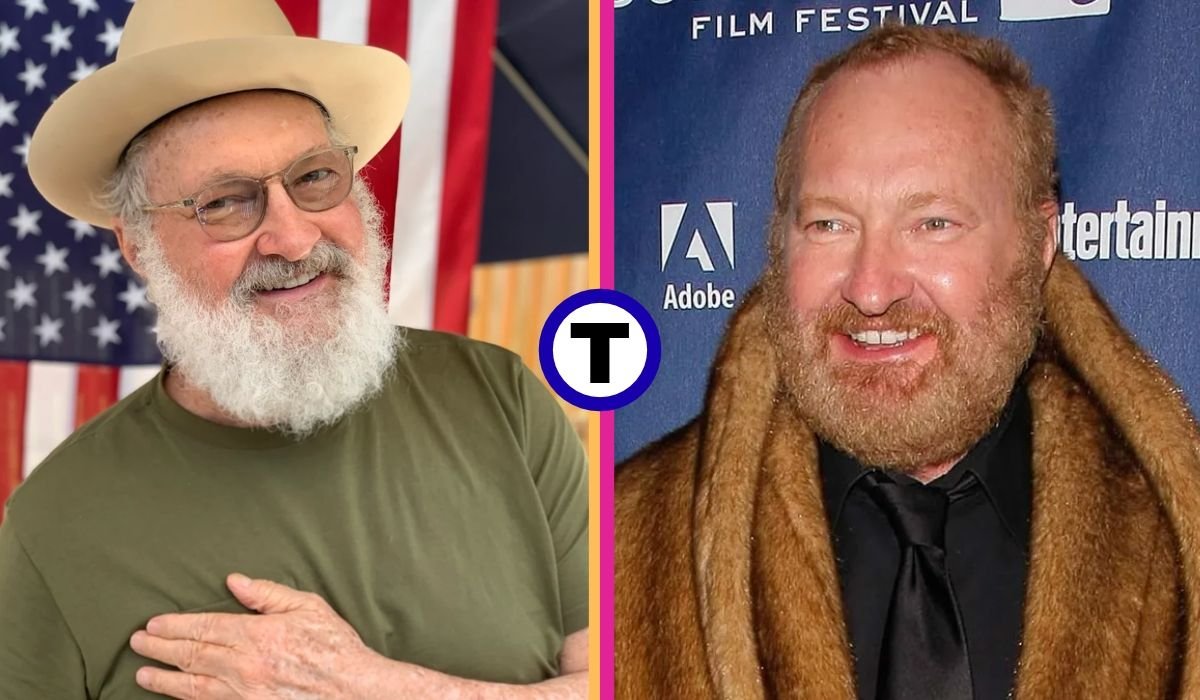
Randy Quaid has never been an easy actor to categorize. Over a career spanning more than five decades, the Texas-born performer has moved between serious drama, broad comedy, television, independent films, and some of Hollywood’s biggest blockbusters. His towering frame and unmistakable voice made him easy to recognize, but it was his willingness to play unusual, complicated characters that gave his career staying power.
For many viewers, Randy Quaid will always be Cousin Eddie, the hilariously inappropriate relative from the National Lampoon’s Vacation movies. Yet that famous comedy role represents only one side of his work. Long before Cousin Eddie became a holiday favorite, Quaid had earned an Academy Award nomination for The Last Detail. He later won a Golden Globe for portraying Lyndon B. Johnson and appeared in films as different as Independence Day, Kingpin, Midnight Express, and Brokeback Mountain.
His life away from the screen eventually became almost as widely discussed as his acting. Legal disputes, a move to Canada, and unconventional public statements dramatically changed his public image. Those events are part of Randy Quaid’s story, but they shouldn’t overshadow a substantial body of work built across several generations of American filmmaking.
Quick Bio Information
| Information | Details |
|---|---|
| Full Name | Randy Randall Rudy Quaid |
| Known As | Randy Quaid |
| Date Of Birth | October 1, 1950 |
| Birthplace | Houston, Texas, United States |
| Nationality | American |
| Profession | Actor |
| Education | University Of Houston |
| Height | Approximately 6 Feet 5 Inches |
| Mother | Juanita Bonniedale Jordan |
| Father | William Rudy Quaid |
| Brother | Dennis Quaid |
| Current Spouse | Evi Quaid |
| Former Spouse | Ella Marie Jolly |
| Child | Amanda Quaid |
| Famous Comedy Role | Cousin Eddie |
| Major Breakthrough | The Last Detail |
| Major Blockbuster | Independence Day |
| Golden Globe-Winning Role | Lyndon B. Johnson |
| Walk Of Fame Star | Motion Pictures |
| Career Span | More Than Five Decades |
Who Is Randy Quaid?
Randy Quaid is an American actor best known for taking characters who might have seemed strange, awkward, intimidating, or even ridiculous on paper and giving them a personality audiences remembered.
He never followed the conventional Hollywood leading-man route. Instead, Quaid developed into a character actor who could step into almost any kind of story. He played vulnerable outsiders, authority figures, historical personalities, eccentric relatives, criminals, working men, and comic misfits. Sometimes he was threatening; at other times, he seemed surprisingly gentle.
That versatility brought him opportunities to work with acclaimed filmmakers including Peter Bogdanovich, Hal Ashby, Harold Ramis, Ang Lee, and Miloš Forman.
It also explains why his filmography can seem so unpredictable. The actor who brought Cousin Eddie to life could also deliver a deeply vulnerable performance in The Last Detail or disappear into the larger-than-life personalities of President Lyndon B. Johnson and Elvis Presley’s manager, Colonel Tom Parker.
Randy Quaid’s Early Life In Texas
Randy Quaid was born on October 1, 1950, in Houston, Texas, and spent his childhood in the Houston area, including Bellaire. His mother, Juanita Bonniedale Jordan, worked in real estate, while his father, William Rudy Quaid, was an electrician.
Acting would eventually become something of a family profession. Randy’s younger brother, Dennis Quaid, also went on to build a major Hollywood career.
Growing up in Texas left a recognizable mark on Randy’s screen presence. His natural accent and imposing build made him a convincing choice for Southern and rural characters, although he eventually proved capable of playing far beyond those types.
Quaid attended the University Of Houston and studied drama. His time there helped turn an interest in performance into a professional direction. Before long, he was finding work in movies and entering an era of American cinema that would produce some of his most important early performances.
How Randy Quaid Started Acting
Filmmaker Peter Bogdanovich played an important part in the beginning of Randy Quaid’s career. Quaid appeared in The Last Picture Show, Bogdanovich’s acclaimed adaptation of Larry McMurtry’s novel about life in a small Texas community.
The film placed the young actor inside a respected ensemble and gave him valuable exposure. Quaid went on to appear in other Bogdanovich projects, including What’s Up, Doc? and Paper Moon.
None of these early appearances instantly transformed him into a conventional movie star. Instead, they allowed him to develop the kind of career that would ultimately suit him better: becoming a character performer audiences noticed even when he wasn’t at the center of the story.
There was also an interesting connection to writer Larry McMurtry. Decades after Quaid appeared in The Last Picture Show, he joined the cast of Brokeback Mountain, whose screenplay was co-written by McMurtry.
Those early films opened the door. Quaid’s next major performance would establish just how much he could do once given a substantial role.
The Last Detail And His Oscar Breakthrough
Randy Quaid’s breakthrough arrived with The Last Detail, directed by Hal Ashby.
Quaid played Meadows, a young Navy sailor being escorted to prison by two sailors portrayed by Jack Nicholson and Otis Young. Meadows is inexperienced, frightened, and emotionally vulnerable, and Quaid resisted the temptation to make the character overly sentimental.
Instead, he gave the young sailor an awkward humanity that became central to the film.
The performance earned Randy Quaid an Academy Award nomination for Best Supporting Actor and brought additional awards attention. More importantly, it established him as a serious young performer capable of sharing the screen with an actor as commanding as Nicholson.
For audiences who primarily associate Quaid with his later comedy work, The Last Detail offers a revealing look at his range. The performance is restrained where Cousin Eddie is loud, vulnerable where many of his later characters are intimidating, and emotionally grounded throughout.
It remains one of the defining achievements of his career.
Building A Career As A Character Actor
After The Last Detail, Quaid didn’t settle into one predictable type of role. He kept working and gradually assembled a remarkably varied résumé.
His credits during the seventies and surrounding years included Breakout, Bound for Glory, The Missouri Breaks, Midnight Express, and The Long Riders. He worked alongside prominent actors and filmmakers while becoming increasingly comfortable in supporting roles that demanded personality rather than conventional star power.
Television and theater also became important parts of his career.
What emerged during this period was a pattern that would follow Quaid for decades. He could enter a story without playing its hero and still leave a strong impression. His characters often seemed slightly outside the world around them. Some were vulnerable, others dangerous, and many carried a streak of unpredictability.
That ability made him particularly valuable in ensemble productions. Quaid didn’t have to dominate a movie to make audiences remember that he had been in it.
Cousin Eddie And National Lampoon’s Vacation
If The Last Detail proved Randy Quaid could handle serious drama, National Lampoon’s Vacation revealed just how effective he could be in comedy.
Quaid appeared opposite Chevy Chase as Cousin Eddie, an awkward relative who seems almost entirely unaware of how uncomfortable his behavior makes everyone else.
Eddie could easily have become a one-note joke. Quaid made him something more memorable.
Rather than constantly signaling to the audience that Eddie was ridiculous, Quaid played him with sincerity. Cousin Eddie believes what he says. He isn’t trying to embarrass Clark Griswold or become the center of attention. In Eddie’s mind, much of his behavior is perfectly reasonable.
That straight-faced commitment gave the character his comic power.
Quaid returned as Eddie in National Lampoon’s Christmas Vacation, where the character became an even bigger part of the franchise. His battered recreational vehicle, unusual wardrobe, blunt observations, and lack of social awareness helped make Eddie one of the film’s most enduring personalities.
Later appearances strengthened the connection between Quaid and the character. Decades later, Cousin Eddie remains one of the first roles many people associate with Randy Quaid.
Golden Globe Success And Television Roles
Comedy may have expanded Quaid’s audience, but dramatic television provided some of his most significant critical recognition.
He portrayed President Lyndon B. Johnson in LBJ: The Early Years, taking on a historical personality whose physical presence and forceful manner presented an unusual acting challenge.
The performance earned Quaid a Golden Globe Award and demonstrated that the qualities that made him distinctive in comedy could be equally powerful in drama. His size, voice, and intensity could generate humor in one project and authority in another.
Years later, Quaid tackled another complicated real-life personality when he played Colonel Tom Parker in the television production Elvis. Parker, Elvis Presley’s longtime manager, remains one of the most debated figures in the singer’s story.
Quaid’s portrayal brought further major awards attention.
Together, these performances underline an important point about Randy Quaid’s career. His best work wasn’t limited to eccentric fictional characters. He could also inhabit recognizable historical figures without simply turning them into impersonations.
Independence Day, Kingpin And Mainstream Fame
The nineties gave Randy Quaid another burst of mainstream visibility.
In Independence Day, he played Russell Casse, an eccentric crop-duster and former fighter pilot whose claims about alien encounters initially make him an object of ridicule. As the story develops, however, Russell moves beyond comic relief and receives one of the film’s memorable heroic moments.
That shift suited Quaid perfectly. He had spent much of his career finding vulnerability or dignity inside characters who initially appeared foolish or strange.
Around the same period, he appeared alongside Woody Harrelson and Bill Murray in Kingpin. The film gave Quaid another opportunity to embrace eccentric comedy, and his performance became an important part of the movie’s lasting cult appeal.
His broader work from the era included Quick Change, Days of Thunder, Texasville, and The Paper.
Seen together, those projects demonstrate the unusual breadth of his career. Quaid could move from a huge science-fiction spectacle to an offbeat bowling comedy or an ensemble drama without seeming entirely out of place in any of them.
Brokeback Mountain And Later Acting Career
Randy Quaid returned to a major critically acclaimed production with Ang Lee’s Brokeback Mountain.
He played Joe Aguirre, the rancher who employs the characters portrayed by Heath Ledger and Jake Gyllenhaal. Quaid’s role wasn’t large, but his stern presence fit naturally into the film’s world.
The project also brought his career back into contact with Larry McMurtry, who co-wrote the screenplay. McMurtry’s work had been connected to Quaid’s early career through The Last Picture Show, making the association an interesting thread running across several decades.
After Brokeback Mountain became a major success, Quaid filed a legal claim concerning how the production had allegedly been represented to him when he agreed to participate. The dispute was later dropped. Reports about its financial resolution have not always been consistent, so specific settlement claims should be approached cautiously without primary legal documentation.
Quaid continued working afterward. He portrayed King Carlos IV of Spain in Miloš Forman’s Goya’s Ghosts and later delivered a darker performance in the independent film Real Time.
Even in the later stages of his mainstream career, he remained drawn to unusual characters.
Randy Quaid’s Awards And Recognition
Randy Quaid’s résumé includes recognition from several of the entertainment industry’s major institutions.
His performance in The Last Detail earned him an Academy Award nomination for Best Supporting Actor, establishing his dramatic credentials relatively early in his career.
Television brought further recognition. His portrayal of Lyndon B. Johnson in LBJ: The Early Years earned him a Golden Globe Award, while other performances brought additional Golden Globe and Emmy attention.
Quaid was also honored with a star on the Hollywood Walk Of Fame in the Motion Pictures category in October 2003.
Those achievements offer useful perspective on a career that is sometimes discussed mainly through the lens of later controversy. Long before his personal life became regular media material, Quaid had established a professional record that included prestigious dramas, popular comedies, major television performances, and blockbuster movies.
His reputation wasn’t built around one successful film. It developed over decades.
Randy Quaid’s Wife, Marriage And Daughter
Randy Quaid has been married twice.
He married Ella Marie Jolly in 1980. The marriage later ended in divorce, and they have a daughter, Amanda Quaid.
Quaid subsequently met Evi while working on Bloodhounds of Broadway. They married in 1989, and Evi became closely connected with both his personal life and later professional activities. She directed The Debtors, which featured Randy.
Their marriage continued through periods of intense media attention, legal disputes, and major changes in their lives.
That attention has also produced a considerable amount of speculation over the years. For that reason, any responsible account of Randy Quaid’s family life needs to separate documented events from rumors, particularly when discussing legal matters or private relationships.
The verified story is already eventful enough without embellishment.
Randy Quaid And Dennis Quaid
Randy Quaid is the older brother of Dennis Quaid, giving the Quaid family an unusual place in Hollywood history.
Both brothers grew up in Texas and attended the University Of Houston before developing successful acting careers. Their paths, however, were quite different.
Dennis became widely associated with leading roles, while Randy found his strongest niche as a character actor. Randy’s willingness to look strange, foolish, threatening, or vulnerable often became an advantage, allowing him to disappear into roles that might not have suited a conventional leading man.
The brothers appeared together in The Long Riders.
A later generation of the family entered entertainment through Dennis Quaid’s son, Jack Quaid, who established his own film and television career.
Public reports have described periods of estrangement between Randy and Dennis. Family relationships can change over time, however, and the precise reasons for private disagreements shouldn’t be treated as settled fact without direct and current confirmation from those involved.
Legal Troubles And Public Controversies
The later years of Randy Quaid’s public life took a dramatic turn.
Randy and Evi Quaid became involved in widely reported legal disputes involving hotel payments, court appearances, and property-related allegations. The details developed over time, with some allegations or charges changing or being resolved as the legal proceedings continued.
That distinction matters. An arrest, allegation, charge, dismissal, and conviction are not interchangeable, and reducing complicated legal histories to a few sensational sentences can create a misleading picture.
The couple eventually traveled to Canada, where their situation attracted international attention.
Randy and Evi publicly expressed fears that people associated with Hollywood intended to harm them. Their references to what they called “Hollywood star whackers” generated extensive media coverage and became closely associated with their public image.
Those statements reflect claims made by the Quaids themselves. They shouldn’t be presented as independently established evidence that such a threat existed.
Legal and immigration complications continued, while Randy’s presence in mainstream Hollywood productions became increasingly limited. Whatever one’s interpretation of the period, it clearly marked a major turning point in both his career and public reputation.
Life Beyond Mainstream Hollywood
As Quaid appeared less frequently in major films, the gap between his earlier Hollywood career and his newer public image widened.
For longtime movie fans, he remained the Oscar-nominated performer from The Last Detail, the Golden Globe-winning actor who played Lyndon Johnson, and the scene-stealing Cousin Eddie. Other audiences encountered him primarily through news coverage of his legal difficulties and public statements.
Meanwhile, his older movies continued to circulate.
National Lampoon’s Christmas Vacation remained a recurring holiday favorite, while Independence Day, Kingpin, and other films continued introducing Quaid’s work to viewers who might not have followed his career when those movies were originally released.
He has also remained intermittently connected with entertainment. Quaid reunited on screen with longtime Vacation co-star Chevy Chase in the holiday project The Christmas Letter.
His journey offers an unusual example of how an actor’s public identity can shift dramatically even while earlier performances continue to maintain a life of their own.
Randy Quaid’s Memories Of Dolly Parton
One of the warmer stories from Randy Quaid’s later public life concerns his experience working with Dolly Parton.
The two appeared together in the 2002 comedy Frank McKlusky C.I., playing husband and wife. Years later, Quaid shared affectionate memories of Parton and the atmosphere she created while they were filming.
In 2026, he recalled her cooking Southern food during production. Among the dishes he remembered were chicken and dumplings, biscuits, gravy, and green beans.
For Quaid, the memory wasn’t simply about the food. His account painted a picture of Parton using the cooking facilities available to her and sharing what she prepared with people working around her.
It’s a small detail compared with the awards, blockbusters, and controversies that fill Quaid’s biography, but it adds something valuable. Long careers aren’t made only from premieres and famous scenes. They’re also built from relationships and ordinary moments on sets that actors can remember decades later.
Randy Quaid’s Acting Style
At roughly six feet five inches tall, Randy Quaid has always had a physical presence that directors could use immediately. He could appear intimidating without doing much at all.
What made him more interesting, however, was his ability to work against that appearance.
In The Last Detail, Meadows is vulnerable and uncertain. Cousin Eddie is outrageous yet oddly sincere. Russell Casse in Independence Day begins as an eccentric outsider before moving toward an unexpectedly heroic conclusion.
Quaid could also turn his size and intensity toward authority, as demonstrated in his portrayals of Lyndon B. Johnson and Colonel Tom Parker.
That contrast became one of his greatest strengths. He could be funny without looking like a conventional comedian and threatening without playing a traditional villain. His characters often seemed capable of changing the mood of a scene without warning.
For a character actor, unpredictability can be an enormous advantage. Quaid had plenty of it.
Randy Quaid’s Hollywood Legacy
Randy Quaid’s Hollywood legacy can’t be reduced to one character, one award, or one controversial period.
His career includes an Academy Award nomination, a Golden Globe victory, Emmy recognition, a Hollywood Walk Of Fame star, major studio releases, respected dramas, cult comedies, and some of the most recognizable commercial films of their eras.
Cousin Eddie remains his most immediately identifiable creation for many viewers, particularly because National Lampoon’s Christmas Vacation continues to attract audiences. Yet The Last Detail offers evidence of his dramatic sensitivity, while LBJ: The Early Years demonstrates his ability to carry a demanding biographical performance.
Then there is Independence Day, where his eccentric supporting character becomes part of a massive blockbuster, and Brokeback Mountain, which connects his later filmography with another acclaimed American drama.
Taken together, those performances reveal the quality that defined Randy Quaid at his best: range.
His personal life eventually complicated his relationship with Hollywood and altered how the public viewed him. But the films remain, and they tell a broader story than the headlines alone.
Final Thoughts
Randy Quaid’s biography is much more complicated than the story of Cousin Eddie, and it’s considerably richer than the controversies that dominated coverage of his later life.
He started as a young Texas drama student and entered Hollywood during an especially creative period in American filmmaking. Within a relatively short time, he was working with respected directors and appearing alongside major actors. His performance in The Last Detail brought an Academy Award nomination and established his credibility as a dramatic performer.
Rather than follow that achievement with a predictable series of similar roles, Quaid kept changing direction.
The Vacation films revealed his gift for comedy. LBJ: The Early Years brought Golden Globe recognition. Independence Day put him inside one of the biggest blockbusters of the nineties, while Kingpin gave him another eccentric comedy role that audiences continued to remember. Years later, Brokeback Mountain placed him inside one of the most acclaimed films of its era.
Then his story changed.
Legal problems, public disputes, and unconventional claims increasingly shaped how Randy Quaid was discussed outside his films. His mainstream acting career slowed, and headlines about his personal life sometimes became more prominent than discussion of his work.
Those events belong in any complete Randy Quaid biography, but they don’t tell the whole story.
The longer view reveals an actor with an unusual willingness to take risks. Quaid could make himself ridiculous when a comedy demanded it, unsettling when a drama needed tension, or vulnerable when a character required sympathy. His physical presence made him noticeable, but his ability to find unexpected qualities inside unusual people made many of those performances memorable.
That may ultimately be the most useful way to understand Randy Quaid’s career. He was rarely the conventional choice, and his characters were rarely conventional people. Across more than five decades of acting, that unpredictability became his signature.
FAQs About Randy Quaid
Who Is Randy Quaid?
Randy Quaid is an American actor whose career includes acclaimed dramas, comedies, television productions, and major Hollywood blockbusters. He is especially known for The Last Detail, National Lampoon’s Vacation, National Lampoon’s Christmas Vacation, Independence Day, Kingpin, LBJ: The Early Years, and Brokeback Mountain. His work has earned Academy Award, Golden Globe, and Emmy recognition.
How Old Is Randy Quaid In 2026?
Randy Quaid was born on October 1, 1950. He turned 76 years old in October 2026. His professional career stretches back more than five decades, giving him a filmography that covers several very different periods of American cinema.
Is Randy Quaid Dennis Quaid’s Brother?
Yes. Randy Quaid is the older brother of actor Dennis Quaid. Both grew up in Texas, attended the University Of Houston, and eventually became successful professional actors. They also appeared together in The Long Riders.
Who Is Randy Quaid’s Wife?
Randy Quaid is married to Evi Quaid. They met while working on Bloodhounds of Broadway and married in 1989. Evi has remained closely connected with Randy throughout the later stages of his personal and professional journey. He was previously married to Ella Marie Jolly.
Does Randy Quaid Have A Daughter?
Yes. Randy Quaid has a daughter named Amanda Quaid from his first marriage to Ella Marie Jolly. Randy and Ella married in 1980 and later divorced.
What Is Randy Quaid Most Famous For?
Randy Quaid is especially famous for playing Cousin Eddie in the National Lampoon’s Vacation franchise. However, his career extends far beyond that comedy role. His other notable performances include The Last Detail, Independence Day, Kingpin, LBJ: The Early Years, Midnight Express, and Brokeback Mountain.
Was Randy Quaid Nominated For An Oscar?
Yes. Randy Quaid received an Academy Award nomination for Best Supporting Actor for The Last Detail. His performance as the vulnerable young sailor Meadows remains one of the most critically important roles of his career, even though he didn’t ultimately win the Oscar.
Did Randy Quaid Win A Golden Globe?
Yes. Randy Quaid won a Golden Globe for portraying President Lyndon B. Johnson in LBJ: The Early Years. The performance remains an important example of his ability to move beyond comedy and take on complex real-life personalities.
Learn more and explore exciting content on: Bill Hudson Net Worth 2026: Music Career, Earnings, Family, and Life Story
[…] Learn more and explore exciting content on: Randy Quaid Biography: Early Life, Acting Career, Family, and Personal Journey […]