
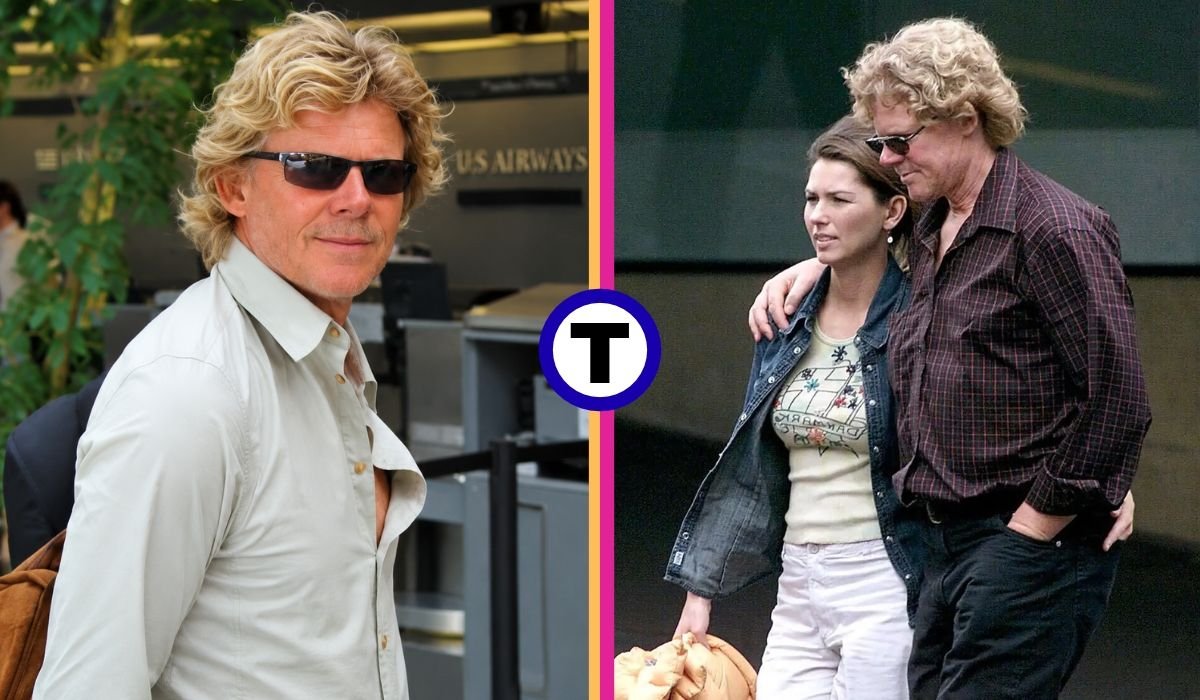
Introduction: Who Is Mutt Lange?
Mutt Lange has spent much of his career outside the spotlight, yet his influence can be heard across some of the biggest records in rock, pop, and country music. Born Robert John Lange, the celebrated producer and songwriter helped shape landmark recordings for AC/DC, Def Leppard, Bryan Adams, Shania Twain, Foreigner, The Cars, and many other successful artists.
What separates Lange from many famous producers is his ability to adapt. He didn’t simply impose the same studio formula on every performer. Instead, he found ways to strengthen what already made an artist distinctive. Powerful choruses, carefully layered harmonies, precise arrangements, and painstaking attention to detail became trademarks of his work, but the musicians themselves remained at the center of the finished record.
That approach helped create albums as different as AC/DC’s Back In Black, Def Leppard’s Hysteria, and Shania Twain’s Come On Over. All became major commercial successes, yet each retained a clear musical identity.
Away from the studio, Lange has lived a remarkably private life. His marriage to Shania Twain brought him considerable public attention, especially after their separation, but he has rarely embraced celebrity culture himself.
This Mutt Lange biography looks closely at his early years, remarkable music career, production style, family, reported net worth, personal life, conservation interests, and enduring influence. Where financial or private information hasn’t been publicly confirmed, it is identified as reported or estimated rather than presented as established fact.
Mutt Lange Quick Bio Information
| Quick Bio | Information |
|---|---|
| Full Name | Robert John Lange |
| Professional Name | Mutt Lange |
| Date Of Birth | November 11, 1948 |
| Age In 2026 | 77, Turning 78 In November |
| Birthplace | Mufulira, Northern Rhodesia, Now Zambia |
| Raised In | South Africa |
| Profession | Record Producer And Songwriter |
| Main Genres | Rock, Pop, Hard Rock, And Country Pop |
| Early Music Groups | Sound Reason And Hocus |
| Famous AC/DC Album | Back In Black |
| Famous Def Leppard Album | Hysteria |
| Famous Shania Twain Album | Come On Over |
| Former Wife | Shania Twain |
| Son | Eja Lange |
| Grammy Wins | Five |
| Grammy Nominations | Twenty |
| Reported Net Worth | Around $225 Million |
| Known For | Layered Vocals And Detailed Production |
| Conservation Connection | Mahu Whenua, New Zealand |
| Public Profile | Highly Private |
Mutt Lange’s Early Life And Family Background
Robert John Lange was born on November 11, 1948, in Mufulira, Northern Rhodesia, in an area that is now part of Zambia. He later spent important years of his childhood and youth in South Africa. Biographical accounts describe his father as a South African mining engineer and his mother as German.
Music entered his life early. Lange attended Belfast High School in what is now Mpumalanga, South Africa, where he became increasingly interested in performing. He played rhythm guitar and sang harmonies, giving him practical experience with two musical elements that would later become central to his work as a producer.
Those early years help explain something important about Lange’s later success. He didn’t enter a recording studio with only technical knowledge. He understood what it felt like to be part of a band, to build vocal harmonies, and to make individual musical parts fit together.
That understanding eventually became one of his greatest professional strengths. Decades later, sophisticated vocal arrangements and carefully organized instrumentation would become recognizable features of many records bearing his name.
How Mutt Lange Started His Music Career
Lange’s path into the recording business wasn’t an overnight success story. Before becoming a producer for international stars, he worked as a musician and learned his craft through performance.
He became involved with early groups including Sound Reason and Hocus, gaining hands-on experience with singing, songwriting, instruments, and arrangements. These weren’t simply youthful experiments. They gave Lange an understanding of how musicians interact and how songs change between the writing, rehearsal, and recording stages.
He eventually relocated to the United Kingdom, where the music business offered broader professional opportunities. During the 1970s, his attention gradually moved from performing toward production.
His early studio career included work with City Boy and other British artists. A notable breakthrough arrived with The Boomtown Rats’ “Rat Trap,” which reached the top of the UK singles chart in 1978.
By then, Lange was developing a reputation for being much more than someone who simply supervised recording sessions. He became involved in arrangements, performances, vocals, and song structure. That intense involvement would soon take him into the highest levels of the international music industry.
Mutt Lange And AC/DC’s Rock Breakthrough
The turning point came when Lange began working with AC/DC.
He produced Highway To Hell, released in 1979, and helped present the Australian band’s hard-rock attack with greater clarity and focus. Importantly, the polish didn’t erase the band’s personality. The guitars remained aggressive, the rhythm section remained direct, and the music still sounded unmistakably like AC/DC.
The collaboration became even more significant with Back In Black in 1980.
Recorded following the death of singer Bon Scott, the album introduced Brian Johnson as AC/DC’s new vocalist. It went on to become one of the most commercially successful rock albums ever made and remains a defining record in both the band’s history and Lange’s career.
Lange continued the relationship by producing For Those About To Rock We Salute You, released in 1981.
His work with AC/DC revealed a skill that would follow him throughout his career. Lange understood that better production didn’t necessarily mean more production. Sometimes it meant making every guitar riff clearer, every vocal stronger, and every rhythmic pause more effective.
That ability to refine an artist without removing the qualities that made the artist compelling became a hallmark of his work.
How Mutt Lange Helped Shape Def Leppard
If AC/DC established Lange as a major rock producer, his relationship with Def Leppard showed just how far he was prepared to push studio production.
Lange worked on High ‘n’ Dry before helping create Pyromania and Hysteria. Together, those records played a major role in developing Def Leppard’s distinctive combination of hard-rock guitars, melodic songwriting, enormous choruses, and densely layered backing vocals.
The recording process was famously detailed. Guitar parts could be carefully constructed rather than simply captured in a single performance. Vocals were layered to create an almost orchestral sense of scale. Individual sections of songs were refined until they delivered exactly the desired impact.
That approach became particularly important on Hysteria. The album developed into an international success and produced enduring songs such as “Pour Some Sugar On Me,” “Love Bites,” and “Animal.”
Lange’s role went well beyond conventional studio supervision. Members of Def Leppard have repeatedly acknowledged his creative importance, and his deep involvement led to him being described as an honorary “sixth member” of the group.
The description makes sense. Lange wasn’t standing onstage with Def Leppard, but his creative fingerprints were all over the records that helped define their career.
What Makes Mutt Lange’s Production Style Different?
It’s tempting to explain Lange’s success by pointing to polished production, but that description only tells part of the story.
His deeper skill lies in arrangement.
Lange paid close attention to the journey a listener takes through a song. A verse needed somewhere to go. A pre-chorus needed to create anticipation. When the chorus finally arrived, it had to feel bigger and more memorable than everything that came before it.
That required discipline as much as technology.
Vocals could be stacked repeatedly until they created a huge, choir-like sound. Guitar parts were arranged so they remained powerful without competing for the same sonic space. Rhythms were tightened, melodies refined, and sections sometimes reconsidered until the song achieved the emotional effect Lange wanted.
He also treated songwriting as inseparable from production. A technically perfect recording couldn’t rescue a weak chorus or forgettable melody.
That philosophy explains why his methods worked with such different performers. AC/DC, Def Leppard, Bryan Adams, and Shania Twain clearly don’t make the same kind of music. Lange’s strength was recognizing what each artist did best and building the production around it.
Success With Bryan Adams And Other Artists
By the time Lange began working extensively with Bryan Adams, there was little doubt that his talents extended beyond hard rock.
His career had already included collaborations with artists such as Foreigner, The Cars, Billy Ocean, and Michael Bolton. With Adams, however, Lange found another particularly successful creative partnership.
Their work together included Waking Up The Neighbours, an album that reinforced Adams’ international standing and produced several successful songs.
Among their best-known collaborations was “(Everything I Do) I Do It For You,” written by Adams, Lange, and composer Michael Kamen. Connected with the film Robin Hood: Prince Of Thieves, the ballad became a huge international success.
It was a very different kind of recording from the aggressive rock Lange had produced for AC/DC, yet his instincts remained visible. The melody was direct, the emotional progression carefully controlled, and the arrangement built steadily toward a powerful conclusion.
Lange’s wider career would eventually include work connected with Celine Dion, Britney Spears, Nickelback, Maroon 5, Lady Gaga, Muse, and other prominent performers. His role wasn’t identical on every project, however. Sometimes he produced, sometimes he wrote or co-wrote, and on other projects his creative involvement took a different form.
That distinction matters when assessing his career accurately.
Mutt Lange And Shania Twain’s Musical Partnership
Of all Lange’s creative relationships, his partnership with Shania Twain may be the clearest example of his ability to cross musical boundaries.
After hearing Twain’s music in the early 1990s, Lange contacted her. Conversations about songwriting and production gradually developed into both a professional partnership and a personal relationship.
Their first major album together was The Woman In Me. The record retained Twain’s country identity while introducing a broader production style that drew from pop and rock. Strong melodies, polished vocals, memorable choruses, and carefully controlled arrangements helped the songs appeal far beyond traditional country audiences.
Then came Come On Over.
The album became an extraordinary commercial success, with songs such as “You’re Still The One,” “That Don’t Impress Me Much,” and “Man! I Feel Like A Woman!” helping transform Twain into a global star.
Lange and Twain later collaborated on Up!, continuing to explore ways of presenting country-rooted songwriting to audiences with different musical tastes.
Their work together wasn’t simply about making country music sound more like pop. The more interesting achievement was finding common ground between genres. Twain’s personality and songwriting remained central, while Lange created arrangements capable of reaching listeners who might never have considered themselves country fans.
That combination played a significant role in expanding the possibilities of country-pop crossover music.
Mutt Lange’s Most Important Albums And Career Legacy
Looking at several key albums helps put Lange’s extraordinary career into perspective.
Highway To Hell arrived as AC/DC were reaching a larger international audience. Back In Black then became one of rock music’s defining albums. With Def Leppard, Pyromania and Hysteria demonstrated how hard rock could incorporate sophisticated studio techniques and pop-sized hooks without losing its force.
His work with Bryan Adams showed another side of his songwriting and production abilities, while The Woman In Me and Come On Over proved that his instincts could translate successfully into country pop.
These weren’t minor variations on a single formula. They emerged from different artists, genres, and periods in popular music.
That range is central to Lange’s reputation.
His job wasn’t merely to make recordings sound polished or expensive. He helped musicians strengthen hooks, rethink arrangements, improve performances, and identify the emotional center of a song.
For listeners, much of that work is invisible. They simply hear a chorus that feels irresistible or a guitar riff that lands exactly where it should. For producers and musicians, however, those details reveal the depth of craft behind the finished recording.
Awards And Professional Recognition
Commercial success brought Lange substantial industry recognition.
The Recording Academy credits Robert John “Mutt” Lange with five Grammy Award wins and twenty nominations. Those honors reflect work across different genres and stages of his career, reinforcing his reputation as both a producer and songwriter.
Yet awards provide only one measure of his influence.
Perhaps the stronger evidence is longevity. Many albums Lange helped create continue to attract listeners decades after their original release. Younger musicians and producers still study the techniques behind those records, while songs from his catalog remain familiar across generations.
That kind of staying power is difficult to manufacture.
A successful record can dominate its moment and then disappear. Albums such as Back In Black and Hysteria did something different. They became part of the wider language of popular music.
Lange’s professional authority comes largely from that record of sustained influence.
Mutt Lange Net Worth And Sources Of Income
Mutt Lange’s net worth is widely estimated at around $225 million, although that figure needs context.
Lange hasn’t publicly released audited financial information showing his assets, investments, liabilities, contracts, or royalty income. As a result, no outside publication can state his precise net worth in 2026 with certainty.
Celebrity wealth figures should therefore be understood as estimates rather than confirmed financial statements.
Even so, it’s easy to understand why Lange is believed to have accumulated substantial wealth.
His career includes production and songwriting credits attached to some enormously successful recordings. Depending on the terms of individual agreements, producers and songwriters can earn money through production fees, songwriting royalties, publishing interests, licensing, and continuing commercial use of music.
Lange’s catalog is particularly important because many of the recordings associated with him have remained commercially active for decades. Songs continue to be streamed, licensed, broadcast, and purchased long after their original release.
For readers searching for Mutt Lange’s net worth in 2026, around $225 million is best described as a commonly reported estimate. His actual personal fortune remains private.
Mutt Lange And Shania Twain’s Marriage
Music brought Lange and Shania Twain together, and their relationship developed quickly after they began communicating in the early 1990s.
They married on December 28, 1993.
What followed was an unusually intertwined personal and professional partnership. Lange was Twain’s husband, but he was also her producer and songwriting collaborator during the period when she rose from a promising country singer to one of the world’s most recognizable recording artists.
The couple welcomed their son, Eja D’Angelo Lange, in August 2001.
For years, their marriage was closely associated with their creative success. Albums produced during their partnership sold on an enormous scale, making them one of the music industry’s most prominent husband-and-wife creative teams.
Their personal relationship, however, eventually came apart.
Twain and Lange announced their separation in 2008. Their divorce was finalized in June 2010, ending a marriage that had lasted more than a decade and a half.
Divorce, Family Life And Privacy
The breakdown of Lange and Twain’s marriage became a major entertainment story, even though Lange himself said relatively little publicly.
Their separation was widely linked to reports of a relationship between Lange and Marie-Anne Thiébaud, who had been close to Twain. Twain later spoke openly about the emotional impact the breakup had on her. Lange, by contrast, continued his long-standing practice of keeping his private life largely out of public discussion.
Twain later married Frédéric Thiébaud, Marie-Anne’s former husband.
Despite the difficult circumstances surrounding the divorce, Twain has said that she and Lange continued communicating when necessary regarding their son.
Public biographical records also identify earlier marriages involving Stevie Vann and Olga Anthony. Because Lange has offered relatively little first-person commentary about those periods of his life, details should be handled cautiously rather than filled out with speculation.
That distinction is especially important in Lange’s case. His reluctance to give interviews has sometimes created an information vacuum around his private life, but an absence of public information shouldn’t be treated as permission to turn rumor into fact.
Mutt Lange’s Conservation Work And Life Away From Fame
Lange’s life away from music includes a significant connection to environmental conservation.
He became associated with high-country properties in New Zealand that form part of the Mahu Whenua landscape. A major conservation agreement involving the area protects approximately 53,000 hectares of high-country land.
The protected landscape includes dramatic mountain environments and became significant in the history of private conservation efforts in New Zealand. Public-access routes are also associated with the broader protected area.
This side of Lange’s life receives far less attention than his music career or marriage to Shania Twain, but it provides useful context about his interests outside the recording industry.
It also fits with a broader pattern in his adult life: Lange has rarely seemed interested in turning himself into a public personality.
He gives few interviews and doesn’t maintain the constant media presence expected of many famous entertainment figures. That privacy has made him more mysterious, but it has also created plenty of unsupported speculation.
A reliable Mutt Lange biography therefore needs to distinguish between what has been documented and what outsiders merely assume about his life.
Where Is Mutt Lange Now?
One of the most common questions about Mutt Lange today is whether he has retired.
The answer isn’t quite that simple.
His workload is clearly far lighter and more selective than it was during the busiest periods of the 1980s, 1990s, and early 2000s. Even so, he hasn’t completely disappeared from music.
More recent projects have continued to connect Lange with recording and executive-production work, including involvement with Crossbone Skully. That activity suggests he remains creatively engaged when the right project attracts his attention.
What has changed most dramatically is his visibility.
Lange doesn’t participate in the constant cycle of interviews, social-media promotion, public appearances, and celebrity updates that surrounds much of the modern entertainment industry. As a result, specific claims about his everyday routine or exact current residence should be approached carefully unless they are supported by reliable, recent information.
At this stage of his career, he doesn’t need regular publicity to maintain his professional reputation. The catalog speaks loudly enough.
Mutt Lange’s Influence On Modern Music Production
Lange’s influence is still audible in modern production, particularly in the way producers approach vocal layering, arrangement, dynamics, and the size of a chorus.
His records demonstrated that enormous sound doesn’t have to mean uncontrolled sound.
A track can contain layers of guitars and vocals while still allowing individual elements to remain clear. A chorus can feel explosive because the sections leading into it have been deliberately restrained. A simple melody can become more powerful when the arrangement gives it room to develop.
Those ideas are common in modern production, but Lange was applying them with remarkable precision decades ago.
There’s another lesson in his career that may be even more important.
He adapted.
AC/DC didn’t need to become Def Leppard. Def Leppard didn’t need to become Bryan Adams. Shania Twain didn’t need to become any of them. Lange understood that a producer’s role wasn’t necessarily to make every artist sound like the producer.
Instead, he looked for the qualities that made each performer compelling and tried to magnify them.
That ability to combine a recognizable production philosophy with respect for an artist’s identity remains one of the strongest reasons Mutt Lange continues to matter.
Final Thoughts
Mutt Lange has built a career filled with an unusual contradiction: his influence is enormous, but his public presence is remarkably small.
He helped shape AC/DC’s Back In Black, pushed Def Leppard toward new levels of studio ambition with Hysteria, collaborated on internationally successful music with Bryan Adams, and played a central role in Shania Twain’s transformation into a global country-pop star.
His five Grammy wins and twenty nominations reinforce that professional record, but trophies alone don’t explain his legacy.
The music does.
Lange’s meticulous arrangements, layered harmonies, powerful choruses, and relentless attention to detail helped establish a production approach that influenced several generations of musicians and producers. His ability to move successfully between hard rock, melodic pop, ballads, and country pop makes that achievement even more unusual.
Away from music, his story includes family life, a difficult and highly publicized divorce, significant conservation interests, and a consistent preference for privacy.
In 2026, Mutt Lange remains one of popular music’s most intriguing behind-the-scenes figures. Casual listeners may know the artists better than the man who helped produce their records, but they’ve almost certainly heard his work.
That’s perhaps the most fitting legacy for a producer who spent decades making other people sound unforgettable.
FAQs About Mutt Lange
Who Is Mutt Lange?
Mutt Lange is a record producer and songwriter whose full name is Robert John Lange. Born on November 11, 1948, he became internationally known through his work with artists including AC/DC, Def Leppard, Bryan Adams, Shania Twain, Foreigner, and many others. His career is particularly notable for its reach across hard rock, pop, melodic rock, and country music.
How Old Is Mutt Lange In 2026?
Mutt Lange is 77 years old until November 11, 2026, when he turns 78. He was born on November 11, 1948, in Mufulira, Northern Rhodesia, an area that is now located in Zambia. He later spent important years of his youth in South Africa.
What Is Mutt Lange’s Net Worth In 2026?
Mutt Lange’s net worth is commonly estimated at approximately $225 million. The figure hasn’t been confirmed through publicly available audited financial records, so it should be treated as an estimate rather than an exact statement of his wealth. His long career as a producer and songwriter provides several potential income sources, including production earnings, royalties, publishing, and music licensing.
Why Is Mutt Lange Famous?
Mutt Lange is famous for producing and co-writing some of the most commercially successful music of the past several decades. His best-known projects include AC/DC’s Back In Black, Def Leppard’s Pyromania and Hysteria, Bryan Adams’ Waking Up The Neighbours, and major Shania Twain albums including The Woman In Me and Come On Over.
Was Mutt Lange Married To Shania Twain?
Yes. Mutt Lange and Shania Twain married on December 28, 1993, after developing both a professional and personal relationship. Lange became an important producer and songwriting collaborator during Twain’s rise to international fame. They separated in 2008, and their divorce was finalized in June 2010.
Does Mutt Lange Have Children?
Mutt Lange and Shania Twain have a son, Eja D’Angelo Lange, who was born in August 2001. Both parents have generally avoided making their son’s private life a major part of their public profiles, although Twain has occasionally discussed family matters in interviews.
How Many Grammy Awards Has Mutt Lange Won?
The Recording Academy credits Mutt Lange with five Grammy Award wins and twenty nominations. His Grammy record reflects the breadth of his career as a producer and songwriter working across multiple musical styles.
Is Mutt Lange Still Producing Music?
Lange works far more selectively today than he did during the busiest decades of his career, but he hasn’t completely withdrawn from music. More recent projects have continued to connect him with recording and executive-production work, including involvement with Crossbone Skully. His lower public profile shouldn’t therefore be mistaken for complete retirement.
Learn more and explore exciting content on: James DeBarge Biography: Early Life, Music Career, Family, and Personal Journey
[…] Learn more and explore exciting content on: Mutt Lange Biography: Music Career, Net Worth, Family, and Personal Life […]