
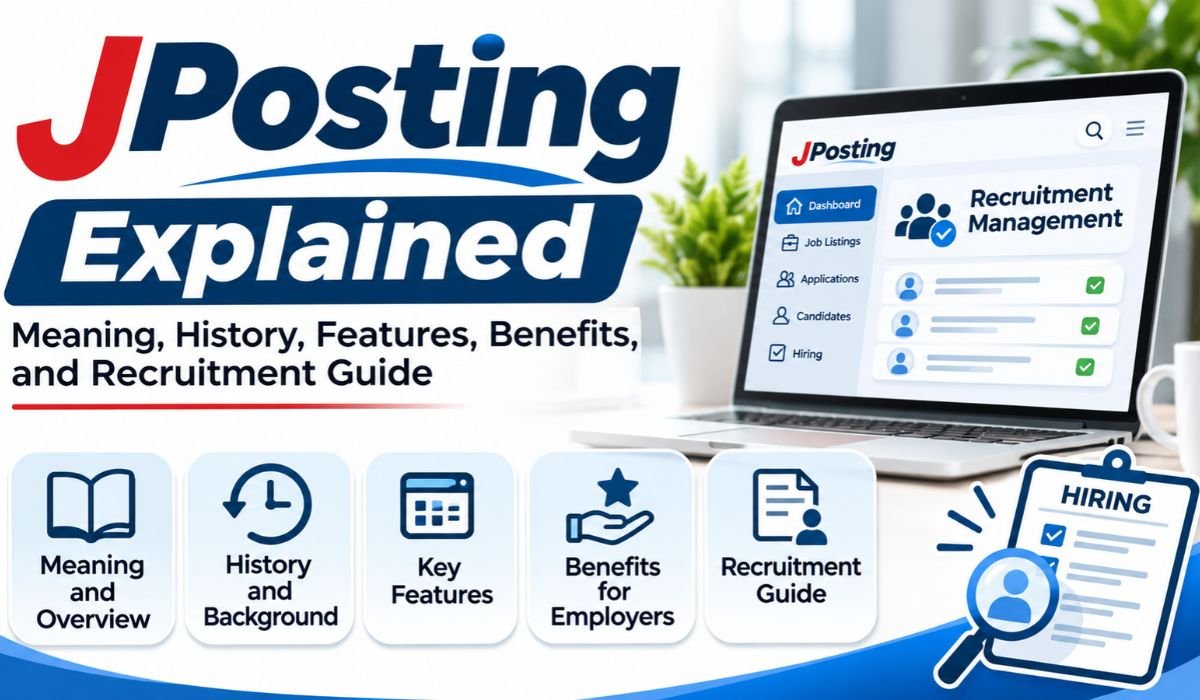
Introduction to JPosting
Finding a job or hiring the right employee isn’t always as simple as it should be. Behind nearly every online application is a recruitment process involving candidate information, interviews, evaluations, and hiring decisions. Managing all these activities efficiently requires reliable technology. That’s where JPosting, a name associated with Japanese recruitment management software, becomes relevant.
JPosting has historical roots in Japan Job Posting Service, a company known for developing recruitment technology. Its business history is closely connected with JobSuite, a family of software solutions designed to help employers organize applications and manage hiring activities.
However, JPosting shouldn’t be confused with an ordinary job posting. While a job posting advertises an available position, JPOSTING refers to a historical business identity associated with recruitment management technology.
Understanding this difference is particularly useful for job seekers who encounter unfamiliar application websites and employers researching digital hiring solutions. This guide explores JPosting’s meaning, company history, features, benefits, security considerations, and role in modern recruitment.
JPosting Quick Bio Information
| Information | Details |
|---|---|
| Name | JPosting |
| Historical Business Identity | JPOSTING |
| Original Company | Japan Job Posting Service |
| Country of Origin | Japan |
| Business Origins | 1998 |
| Industry | Human Resources Technology |
| Primary Focus | Recruitment Management |
| Main Customers | Employers and Recruitment Teams |
| Software Category | Applicant Tracking and Recruitment Management |
| Associated Software Family | JobSuite |
| Corporate Group | NSD Group |
| NSD Acquisition | 2017 |
| Later Corporate Identity | StellaS |
| Merger With NM Systems | 2018 |
| Corporate Name in 2026 | NSD Digital Solutions |
| Experienced-Hire Product | JobSuite CAREER |
| Graduate Recruitment Product | JobSuite FRESHERS |
| Recruitment Content Product | JobSuite STUDIO |
| Advertising-Related Product | JobSuite ADVERTISING |
| Primary Business Market | Japan |
The information above describes JPosting’s historical business background and related recruitment products. It doesn’t represent a single worldwide job-search platform.
What Is JPosting?
JPosting is historically associated with Japan Job Posting Service, a Japanese recruitment technology company whose business origins date back to 1998. The company developed solutions intended to make recruitment management more organized and efficient for employers.
Unlike traditional job boards, which primarily help people discover employment opportunities, JPosting’s historical business focused on technology supporting the recruitment process.
Its services were connected with applicant management, recruitment administration, and systems that help organizations handle candidate information throughout different hiring stages.
Over time, this business became closely associated with JobSuite, a recruitment software portfolio serving different hiring requirements.
For job seekers, the distinction is straightforward. A company might advertise a vacancy on its official website but use a separate recruitment system to collect applications. That system processes information on the employer’s behalf rather than functioning as an independent job marketplace.
The History and Evolution of JPosting
JPosting’s story began in 1998, when Japan Job Posting Service entered the developing market for internet-based recruitment technology. At the time, businesses were gradually moving away from paper applications and traditional administrative processes toward digital hiring systems.
As online recruitment became more common, employers needed better ways to collect applications, organize candidate records, and coordinate hiring decisions. Japan Job Posting Service developed its business around these changing requirements.
An important turning point came in December 2017, when Japanese technology company NSD acquired Japan Job Posting Service as a subsidiary.
The following year brought another significant change. In October 2018, Japan Job Posting Service merged with NM Systems, and the combined business adopted the StellaS name.
The company’s evolution continued in April 2026, when StellaS changed its corporate name to NSD Digital Solutions.
These changes help explain why older recruitment materials may mention JPOSTING, while newer corporate information uses StellaS or NSD Digital Solutions.
One distinction is worth remembering: the historical JPOSTING business origins and the legal establishment date of the current corporate entity aren’t necessarily the same. NSD Digital Solutions lists July 17, 1981, as its corporate establishment date.
Together, these developments show how the business evolved within Japan’s recruitment technology industry while maintaining connections to the JobSuite software portfolio.
How JPosting Recruitment Software Works
Recruitment management software helps employers organize the many activities involved in hiring. Instead of relying entirely on spreadsheets, emails, and separate documents, recruitment teams can manage candidate information through a more structured process.
It generally begins when an employer prepares a job vacancy. The recruitment team defines the position, required qualifications, responsibilities, and application conditions before publishing the opportunity through suitable channels.
Once candidates begin applying, their information can be collected through online application forms. These submissions may include résumés, contact details, educational qualifications, and previous employment experience.
Recruiters then review applications and identify candidates who meet the organization’s requirements.
As the process continues, recruitment software can help coordinate interviews, monitor selection stages, and organize communication between hiring managers and applicants.
JobSuite CAREER provides documented functionality supporting applicant management, selection coordination, and recruitment administration.
Still, the software doesn’t independently guarantee hiring outcomes. Employers establish their selection procedures and remain responsible for employment decisions.
For applicants, receiving an automated confirmation usually means their information has been submitted or received. It doesn’t necessarily indicate that a recruiter has already reviewed their application.
Understanding JPosting and JobSuite
The relationship between JPosting and JobSuite is central to understanding the company’s recruitment technology background.
JobSuite isn’t simply another name for a general job board. It’s a family of software products designed to address different recruitment and human resources requirements.
JobSuite CAREER focuses on experienced-hire recruitment. It helps organizations manage candidate information, coordinate selection activities, and organize hiring workflows.
JobSuite FRESHERS serves graduate recruitment, an area where employers may need to communicate with large candidate groups, coordinate information sessions, and manage several evaluation stages.
JobSuite STUDIO is associated with recruitment website content and careers-site production. Its purpose relates more closely to how employers present opportunities and communicate their employment brand.
Meanwhile, JobSuite ADVERTISING supports recruitment advertising activities, helping organizations address the challenge of attracting suitable candidates.
Although these products belong to a related portfolio, their functions aren’t necessarily interchangeable.
Employers should review the latest product documentation and confirm which services, integrations, and features are included before selecting a solution.
Key Features of JPosting-Related Recruitment Systems
One of the most useful capabilities of recruitment management software is centralized applicant tracking.
When applications arrive through different channels, recruitment teams can struggle to maintain accurate records. A structured system helps bring candidate information together, making it easier to review applications and monitor progress.
Recruitment workflow management is another important capability. It allows hiring teams to organize selection stages and understand which applicants are awaiting review, interviews, or further communication.
Interview coordination can also reduce administrative work. Instead of managing every arrangement through disconnected email conversations, recruiters may use supported tools to organize schedules and related information.
Reporting provides additional value. Recruitment teams can examine application activity, candidate sources, and potential delays in their hiring processes.
JobSuite CAREER documentation describes capabilities involving applicant aggregation, selection management, interview coordination, reporting, and integrations.
However, it’s important not to assume that every employer receives identical functionality. Available features depend on the specific product, service agreement, and system configuration.
Benefits of JPosting for Employers and Recruiters
For employers, one of the biggest advantages of recruitment management technology is having a clearer picture of the hiring process.
Consider a company receiving applications from its careers website, recruitment agencies, employee referrals, and other sources. Without an organized system, candidate information can quickly become scattered across emails and spreadsheets.
A centralized recruitment platform can reduce that confusion by helping recruiters maintain accessible records and coordinate reviews.
It may also improve collaboration between HR teams and hiring managers. When authorized employees can access relevant information through shared workflows, they spend less time searching for documents or requesting updates.
Recruitment reporting offers another practical benefit. Employers can identify delays, evaluate recruitment channels, and understand where applicants leave the process.
Yet technology isn’t a substitute for good recruitment management.
A company can invest in sophisticated software and still provide a disappointing candidate experience if its application forms are confusing or its recruiters fail to communicate.
The strongest results come when organizations combine suitable technology with clear responsibilities, realistic timelines, and thoughtful hiring practices.
How Job Seekers Can Apply Through JPosting
Job seekers sometimes become concerned when an employer’s official careers website redirects them to an unfamiliar application domain.
In many cases, this happens because the employer uses an external recruitment management system to collect applications.
However, an unfamiliar website should never be trusted automatically.
Before submitting information, applicants should confirm that the vacancy appears on the employer’s official website and that the application destination matches the employer’s recruitment instructions.
Preparing an accurate, updated résumé is equally important. Candidates should review their contact details, employment history, qualifications, and supporting documents before completing an application.
It’s also worth reading the privacy notice to understand how personal information will be collected and used.
After submission, applicants should save any confirmation message and retain a copy of the vacancy description.
Some employers provide online application tracking, while others communicate directly through email.
If no response arrives within the stated recruitment timeline, a polite follow-up through an official employer channel may be appropriate.
JPosting vs. Job Boards and Applicant Tracking Systems
The similarity between JPosting and the phrase “job posting” often creates confusion, but the terms describe different things.
A job posting is an advertisement announcing an employment opportunity. It usually includes the position title, responsibilities, qualifications, location, and application instructions.
A job board is a platform where candidates can discover advertised vacancies from different employers.
An applicant tracking system, commonly called an ATS, serves another purpose. It helps organizations receive, organize, and manage applications during recruitment.
JPOSTING is a historical business identity associated with Japanese recruitment technology, while JobSuite CAREER is a specific recruitment management product connected with that business history.
Recruitment CRM software is another related category. These systems generally focus on building relationships with potential candidates and maintaining talent pipelines.
Understanding these differences helps readers recognize that finding a vacancy and managing an application are separate parts of the hiring process.
Is JPosting Legitimate and Safe?
JPOSTING has a documented history in Japan’s recruitment technology industry. However, that doesn’t mean every website, email, or application form using a similar name is genuine.
Online recruitment scams can imitate established employers and technology providers, making fraudulent opportunities appear convincing.
The safest approach is to begin with the employer’s official careers website and locate the advertised vacancy independently.
Applicants should examine the complete application address, compare the job details with the employer’s published information, and confirm that the recruitment process appears consistent.
Unexpected requests for registration payments, banking passwords, or unnecessary identification documents deserve particular attention.
A website using HTTPS provides an encrypted connection, but encryption alone doesn’t prove that the organization operating the website is legitimate.
If something seems suspicious, applicants should contact the employer using independently verified contact information before sharing sensitive details.
JPosting Privacy and Candidate Data Protection
Recruitment platforms often process substantial amounts of personal information. This may include applicants’ names, addresses, telephone numbers, educational qualifications, employment histories, and résumé documents.
Protecting that information is an important responsibility for employers and recruitment technology providers.
Organizations should understand who can access candidate records, how information is stored, and how long it remains available after recruitment activities end.
Appropriate access permissions, account security, privacy notices, and retention procedures can help reduce unnecessary exposure of applicant information.
Japan’s Act on the Protection of Personal Information establishes an important legal framework for personal data handling.
However, the precise obligations applying to a recruitment system depend on the organizations involved, their activities, and the relevant legal circumstances.
Candidates also have a role in protecting their information. Reading privacy notices, checking application destinations, and avoiding unnecessary document sharing are sensible precautions.
Trustworthy recruitment technology should support both operational efficiency and responsible treatment of personal data.
Advantages and Limitations of JPosting-Related Software
Recruitment management systems offer practical advantages, particularly for organizations handling applications from several sources.
Centralized records can improve organization, structured workflows can support consistency, and reporting can help employers identify recruitment problems.
However, these benefits don’t appear automatically.
Introducing new recruitment software may require employee training, technical integration, and changes to established hiring procedures.
Some organizations may also face challenges when connecting recruitment platforms with existing human resources systems.
From the candidate’s perspective, complicated forms and unclear instructions can create unnecessary frustration.
That’s why employers should evaluate recruitment technology from both sides of the process.
A useful system should help recruiters work efficiently while allowing applicants to complete their submissions without confusion or avoidable delays.
JPosting Alternatives and Recruitment Platforms
Employers researching JPosting-related recruitment technology may also encounter platforms such as Greenhouse, Lever, Workday Recruiting, and SAP SuccessFactors.
These products serve different organizational needs and offer varying approaches to applicant tracking, recruitment workflows, reporting, and human resources integration.
Choosing the right solution requires more than comparing brand names.
Organizations should consider their hiring volume, recruitment channels, existing technology, language requirements, security expectations, and available budget.
For companies operating in Japan, support for local recruitment practices and Japanese-language workflows may be particularly important.
International businesses may place greater emphasis on multinational hiring requirements and compatibility with broader HR systems.
Before committing to any platform, employers should request current product information and test realistic recruitment scenarios.
A system that looks impressive during a demonstration isn’t necessarily the best choice unless it fits the organization’s actual hiring process.
The Future of JPosting and Digital Recruitment
Recruitment technology has changed considerably since the early days of online applications.
By 2026, employers increasingly rely on digital workflows, recruitment analytics, integrated systems, and automation to manage hiring activities.
Artificial intelligence is also influencing parts of the recruitment industry. Certain tools can assist with administrative tasks and information processing, although their capabilities and limitations vary.
These developments bring important questions about transparency, fairness, accuracy, and human oversight.
Organizations need to understand how automated systems operate and ensure that recruitment decisions remain appropriately accountable.
The history of JPosting and JobSuite reflects the broader evolution of recruitment technology, from collecting applications online to supporting more connected hiring processes.
Looking ahead, the most valuable improvements may not simply involve processing applications faster.
Clear communication, accessible application forms, responsible data handling, and fair evaluation practices will remain essential.
Ultimately, technology should make recruitment easier to understand and manage, not more complicated for the people involved.
Final Thoughts
JPosting is more than a name that resembles the phrase “job posting.” Its history is connected with Japan Job Posting Service, the development of recruitment management technology, and the JobSuite software family.
Over the years, the business underwent significant corporate changes, eventually becoming part of the NSD group’s evolving technology operations.
For job seekers, understanding JPosting provides useful context when encountering unfamiliar recruitment systems. It also reinforces the importance of verifying application links and protecting personal information.
For employers, the related software highlights the value of organized candidate records, coordinated hiring workflows, and meaningful recruitment reporting.
The larger lesson is straightforward: successful recruitment depends on more than having advanced software.
Good hiring practices require clear communication, responsible information management, and fair, well-informed decisions.
When technology supports those priorities, it can make the recruitment experience better for employers and candidates alike.
FAQs About JPosting
What Is JPosting Used For?
JPosting is historically associated with recruitment management technology developed for employers. Its business background includes systems designed to support candidate applications, applicant tracking, recruitment coordination, and hiring administration. Related JobSuite products help organizations manage different aspects of recruitment.
Is JPosting a Job Search Website?
JPosting isn’t best understood as a general public job-search website. Its documented history relates primarily to recruitment technology. Individual employers may use related software to receive applications, but that doesn’t mean the platform operates as a universal database of available jobs.
Who Owns JPosting in 2026?
Japan Job Posting Service became an NSD subsidiary in December 2017. In October 2018, it merged with NM Systems and adopted the StellaS name. StellaS subsequently changed its corporate name to NSD Digital Solutions in April 2026. These developments explain the different company names associated with JPosting’s history.
What Is the Difference Between JPosting and JobSuite?
JPOSTING refers to the historical business identity connected with Japan Job Posting Service. JobSuite is the related recruitment software family, including JobSuite CAREER for experienced-hire recruitment and JobSuite FRESHERS for graduate hiring. The two names are connected historically but aren’t interchangeable.
Is JPosting Free for Job Seekers?
Legitimate employer-hosted job applications generally don’t require candidates to pay registration fees. However, applicants should verify each opportunity independently. Unexpected requests for payment to secure interviews or employment offers are warning signs that deserve careful investigation.
Is JPosting Safe for Online Applications?
The historical JPOSTING business is legitimate, but applicants should never assume that every website using a familiar recruitment name is trustworthy. It’s important to verify the employer, examine the application address, read privacy information, and avoid sharing unnecessary sensitive documents.
Can Small Businesses Use JPosting-Related Software?
Small businesses can benefit from applicant tracking systems when they need a more organized way to manage recruitment. However, the suitability of a particular JobSuite product depends on its current features, pricing, implementation requirements, and the company’s hiring needs. Employers should confirm these details directly before making a decision.
Does JPosting Guarantee a Job Interview?
No. Recruitment management software helps employers collect and organize applications, but it doesn’t guarantee interviews or employment offers. Candidates progress according to the employer’s selection criteria, recruitment procedures, and hiring decisions. An application confirmation simply indicates that the submission has been recorded or received.
Learn more and explore exciting content on: Instablu Explained: Features, Pricing, Safety, Benefits, and Complete Review
 Sky Bloom IT
 Qamer Javed
 Backlinks Hub
[…] Learn more and explore exciting content on: JPosting Explained: Meaning, History, Features, Benefits, and Recruitment Guide […]