
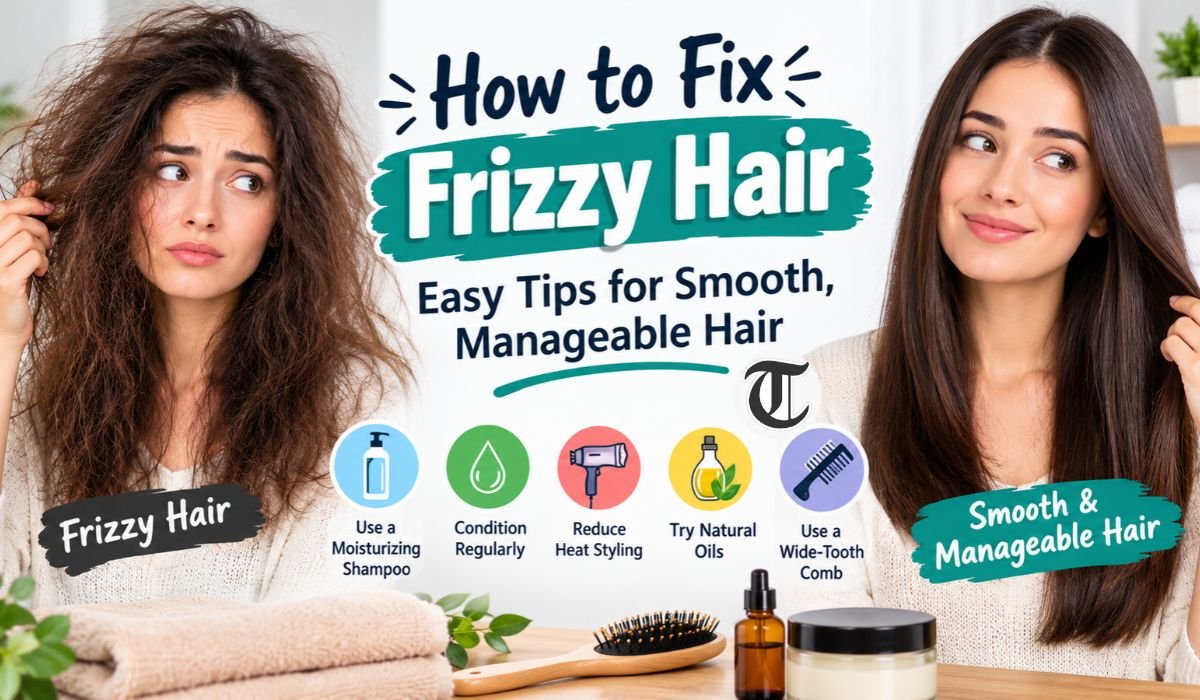
Frizzy Hair has a way of showing up at exactly the wrong time. You can spend time washing, styling, and smoothing your hair, only to step outside and find that the strands have become puffy, rough, or covered in Flyaways. Humidity often gets the blame, and for good reason, but it isn’t the whole story. Dryness, heat styling, chemical treatments, friction, static, breakage, and your natural Hair Texture can all influence how smooth your hair looks.
The good news is that How to Fix Frizzy Hair doesn’t have to involve an elaborate routine or a shelf full of products. The first step is figuring out what’s actually causing the Frizz. From there, simple changes such as better Conditioning, gentler handling, sensible washing, and reduced heat exposure can make Hair considerably easier to manage.
Dermatologists recommend tailoring Hair Care to your particular Hair Type, conditioning regularly, handling Hair gently, and limiting practices that can cause unnecessary damage.
Whether you’re dealing with occasional Flyaways or Frizz that seems to appear every day, this guide explains how to Fix Frizzy Hair at home while helping you build a practical routine for smoother, healthier-looking, and more manageable Hair.
Quick Bio Information
| Quick Fact | Helpful Information |
|---|---|
| Frizz | Can be influenced by Dryness, Humidity, Damage, Static, and natural Hair Texture. |
| Humidity | Can change how the Hair Fiber behaves and make existing Frizz more noticeable. |
| Conditioner | Helps moisturize, detangle, and improve Hair manageability. |
| Leave-In Conditioner | Can reduce the appearance of Frizz, Static, and Flyaways. |
| Heat Styling | Excessive heat can contribute to Hair Damage and breakage. |
| Heat Protectant | Can help reduce heat-related damage when used according to directions. |
| Towel Drying | Gentle blotting or wrapping is preferable to vigorous rubbing. |
| Shampoo | Should generally be concentrated on the Scalp rather than aggressively worked through the lengths. |
| Hair Type | Fine, Thick, Straight, Curly, and Textured Hair may require different routines. |
| Hair Mask | Can provide additional conditioning when Hair feels Dry or damaged. |
| Hair Serum | Can improve the appearance of smoothness and shine. |
| Hair Oil | A small amount can help polish dry-looking Hair and add shine. |
| Static | Can contribute to Flyaways, particularly in dry conditions. |
| Wet Hair | Is more vulnerable to mechanical damage and should be handled gently. |
| Wide-Tooth Comb | Can help with gentle detangling, particularly for Textured Hair. |
| Split Ends | Cosmetic products can improve their appearance but cannot permanently restore a split strand. |
| Damaged Hair | May become brittle, rough, tangled, and more prone to breakage. |
| Hair Care Routine | Consistent, gentle care is generally more useful than constantly changing products. |
What Causes Frizzy Hair?
Frizz doesn’t have just one cause. It can happen when individual strands don’t sit together smoothly, and several factors can contribute to that change.
Dryness is one of the most common contributors. Hair that lacks moisture can feel rough and become harder to control. Damage can also affect the structure of the Hair Fiber, making strands more vulnerable to breakage and an uneven appearance. Humidity can further change how Hair behaves, especially when it is already dry or damaged.
Your daily habits matter as well. Frequent high-heat styling, vigorous towel drying, aggressive brushing, repeated chemical processing, and tight hairstyles can all place stress on the Hair. The American Academy of Dermatology notes that damaged Hair is fragile and more likely to break, and breakage can leave Hair looking Frizzy and unhealthy.
Natural texture is another important piece of the puzzle. Curly, Wavy, Coarse, Fine, and Straight Hair don’t all respond to moisture and styling in the same way. That’s why a routine that works beautifully for one person may leave someone else with heavy, flat, or still-Frizzy Hair.
Why Does Humidity Make Hair Frizzy?
Few things reveal Frizz faster than a humid day. Hair interacts with moisture in the surrounding environment, and changes in humidity can affect the Hair Fiber and the way individual strands behave. When the Hair is already Dry or damaged, those changes may be especially noticeable.
That doesn’t mean you need to completely protect your Hair from every trace of moisture in the air. Instead, concentrate on keeping the Hair well conditioned and avoiding unnecessary damage. A suitable smoothing Serum or humidity-resistant styling product can also help maintain the appearance of a finished style.
It’s useful to think of humidity as a trigger rather than the sole cause of Frizz. If your Hair becomes noticeably Frizzy whenever the weather changes, improving the overall condition of your Hair may be more helpful than simply adding another layer of styling product.
Is Frizzy Hair Always a Sign of Dry Hair?
Not necessarily. Dry Hair and Frizzy Hair often go together, but they’re not interchangeable terms. Hair can become Frizzy because of humidity, static, breakage, natural texture, or styling practices even when it doesn’t feel particularly Dry.
That distinction can save you from chasing the wrong solution. For example, applying more Oil might temporarily smooth the surface of the Hair, but it won’t undo damage caused by repeated heat styling or chemical processing.
Take a closer look at how your Hair feels and behaves. Hair that feels rough and brittle may need more Conditioning. Hair that suddenly becomes full of Flyaways in a dry environment may be affected by Static. Hair that breaks easily may need less heat and gentler handling. Once you understand the likely cause, choosing the right treatment becomes much easier.
Start With the Right Shampoo and Washing Routine
Your washing routine can have a surprisingly big effect on Frizz. There’s no universal rule saying everyone should wash their Hair a certain number of times each week. According to the American Academy of Dermatology, washing frequency should depend largely on how quickly your Scalp becomes oily or dirty.
Someone with Straight Hair and an oily Scalp may need to Shampoo more often. Someone with Dry, Curly, Textured, or Thick Hair may be comfortable washing less frequently.
When you Shampoo, focus primarily on the Scalp instead of aggressively working the product through the full length of the Hair. The Shampoo will move through the lengths as you rinse. This approach cleans the Scalp while limiting unnecessary handling of the Hair.
If your Hair is Dry and Frizzy, a gentle or moisturizing Shampoo may be worth considering. At the same time, don’t assume that washing as little as possible is automatically better. Oil, styling products, and buildup still need to be removed. Your Scalp and Hair should determine the schedule.
Never Skip Conditioner
When Frizz is a concern, Conditioner shouldn’t be treated as an optional extra. Conditioning helps moisturize and detangle the Hair, which can make a noticeable difference in softness and manageability.
The amount and placement of Conditioner depend on your Hair Type. Fine or Straight Hair may need it mainly toward the ends, while Dry or Curly Hair may benefit from Conditioning across more of the length.
There’s another reason Conditioner matters: easier detangling means less pulling. If your Hair becomes tangled immediately after washing, trying to force a comb through it can create unnecessary stress and breakage.
Rather than choosing the richest formula you can find, look for one that leaves your Hair soft and manageable without making it greasy, coated, or difficult to style.
Add a Leave-In Conditioner or Hair Mask
Sometimes rinse-out Conditioner isn’t quite enough, particularly when Hair is very Dry, Long, Curly, Color-Treated, Heat-Styled, or prone to tangling. That’s where a Leave-In Conditioner can be useful.
The American Academy of Dermatology notes that Leave-In Conditioners can make Hair feel smoother and easier to comb while helping reduce the appearance of Frizz, Static, and Flyaways.
Use a small amount on damp Hair, concentrating on the mid-lengths and ends. Fine Hair generally needs less product than thicker Hair. Too much Leave-In Conditioner can leave Fine Hair looking limp or greasy, so start small and add more only if necessary.
A Hair Mask can provide another conditioning step when Hair feels especially Dry or damaged. It can improve softness and manageability, but it shouldn’t be described as a permanent repair for damaged Hair. Preventing additional damage remains just as important.
Dry Your Hair Without Creating More Frizz
What you do immediately after washing can have a real impact on how your Hair looks later. Wet Hair is more vulnerable to mechanical damage, and vigorous towel rubbing creates unnecessary friction.
Instead of scrubbing your Hair dry, gently squeeze or blot away excess water. You can wrap the Hair in a soft towel or T-shirt and let the fabric absorb some of the moisture. The American Academy of Dermatology recommends gentle drying rather than aggressive towel rubbing.
If you have time, allowing Hair to partially air-dry before using a Blow Dryer can reduce the amount of time it spends under heat. When you do Blow Dry, keep the airflow moving rather than concentrating hot air on one small section.
It may seem like a minor adjustment, but reducing friction is one of those simple changes that can help prevent damage before you have to deal with the resulting Frizz.
How to Brush and Detangle Frizzy Hair
Brushing isn’t automatically a solution for Frizz. In some cases, brushing more can actually make the situation worse by creating breakage or disturbing natural texture.
The right approach depends on your Hair. Straight Hair may be easier to comb after it has dried somewhat, while Thick, Curly, or Textured Hair can often be easier to detangle when it is damp and conditioned. The American Academy of Dermatology recommends gentle detangling with a Wide-Tooth Comb and starting at the ends before gradually working upward.
Don’t force your way through a stubborn knot. Loosen it gradually and use Conditioner or a suitable Leave-In product if needed. Gentle detangling puts less stress on the Hair Shaft and can help reduce breakage-related Frizz.
Use Heat Styling Without Making Frizz Worse
Hot tools can create an impressively smooth finish, but excessive heat comes with a trade-off. Repeated exposure to high temperatures can damage Hair, which may eventually make it more brittle and difficult to manage.
The American Academy of Dermatology recommends limiting excessive heat, using low or medium settings, and taking steps to protect Hair when using hot tools.
If you use a Flat Iron or Curling Iron, try not to pass over the same section repeatedly. When Blow Drying, avoid holding the dryer in one place for too long. A Heat Protectant can also be incorporated into your routine according to the product’s directions.
You don’t necessarily have to give up Heat Styling altogether. The goal is to use it thoughtfully so that achieving a smooth style today doesn’t contribute to more damage and Frizz tomorrow.
Choose the Right Products for Frizz Control
There’s no single “best” product for every Frizzy Hair problem. What works depends on your Hair Type, condition, and the finish you’re trying to achieve.
A Leave-In Conditioner is a practical choice when moisture and easier detangling are the priorities. A Serum can help create a smoother-looking finish and add shine. A lightweight Oil can polish dry-looking lengths, while a Cream may offer additional control for thicker Hair.
Curly and Wavy Hair may benefit from Mousses or Gels that support definition instead of trying to flatten the natural pattern. Fine Hair often responds better to lighter formulas that don’t leave the strands weighed down.
Whatever product you choose, start with a small amount. More product doesn’t automatically mean less Frizz. Too many layers can leave Hair coated, heavy, or greasy without solving the underlying issue.
How to Fix Frizzy Hair in the Morning
Morning Frizz doesn’t always require a complete wash and restyle. In many cases, a little moisture and a small amount of styling product are enough to bring the Hair back under control.
Lightly dampen the areas that need attention, then apply a small amount of Leave-In Conditioner, smoothing Cream, or Serum suited to your Hair. Gently reshape the strands instead of aggressively brushing them.
For Curly or Wavy Hair, refreshing the existing pattern can work better than brushing the texture out. Straight Hair may only need a small amount of smoothing product to settle Flyaways.
Keep the routine light. Applying multiple products every morning can create buildup and make Hair harder to manage.
How to Tame Frizzy Hair in Humid Weather
If humid weather is a regular part of your life, it’s worth preparing your Hair before you go outside. Start with properly conditioned Hair, then consider a smoothing or humidity-resistant styling product if it suits your texture.
Once you’re outdoors, try not to repeatedly touch or brush your Hair. Every time you manipulate the strands, you can disturb the style and create additional Flyaways.
A simpler hairstyle may also be easier to maintain in very humid conditions. Most importantly, keep expectations realistic. No product can guarantee that Hair will be completely unaffected by environmental moisture. The goal is to improve control and maintain a smoother-looking style for longer.
Frizzy Hair Needs Different Care for Different Hair Types
The same Frizz-control routine won’t work equally well for everyone. Curly Hair often needs plenty of Conditioning and gentle detangling, while Wavy Hair may need moisture without heavy products that flatten its natural movement.
Fine Straight Hair usually benefits from lighter Conditioners and styling products. Coarse or very Dry Hair may be able to handle richer formulas. Color-Treated, Permed, and other Chemically Processed Hair may need additional care because chemical services can increase the risk of Hair Damage.
The American Academy of Dermatology recommends taking care with coloring, perming, relaxing, and similar chemical processes and using appropriate Hair Care afterward.
Your Hair’s behavior is therefore more useful than a generic product recommendation. If something consistently leaves your Hair heavy, dry, sticky, or difficult to style, it may simply not be right for your texture.
Common Mistakes That Make Frizzy Hair Worse
Sometimes the most effective Frizz treatment is removing a damaging habit. Rough towel drying, excessive brushing, frequent high-heat styling, unnecessary Shampooing of the Hair lengths, and repeated chemical processing can all contribute to Hair Damage.
Tight hairstyles are another concern. If a hairstyle causes pain or pulls strongly on the Hair, it is too tight. Continued tension can contribute to breakage and, in some cases, traction-related Hair Loss.
There’s also a tendency to keep adding products when Frizz doesn’t disappear. But if the underlying problem is excessive heat or mechanical damage, piling on Serum or Oil won’t address the cause. Products can improve the appearance of Hair, but protecting the Hair from additional damage is essential for long-term manageability.
A Simple Weekly Routine for Smoother Hair
A good Frizz-control routine doesn’t have to take over your bathroom. On Wash Day, gently cleanse the Scalp, apply Conditioner suited to your Hair Type, detangle carefully, and remove excess water without rough rubbing. If your Hair needs additional moisture, apply a suitable Leave-In Conditioner while it is damp.
Between washes, refresh only when necessary. Avoid unnecessary brushing and repeated heat styling. If hot tools are part of your normal routine, make Heat Protection a regular step rather than an occasional one.
Hair that is particularly Dry or damaged may benefit from an occasional Deep-Conditioning treatment. The exact frequency depends on how your Hair responds. If a product starts making the Hair heavy or coated, reduce how much you’re using.
Consistency is more valuable than constantly changing products. Give your routine enough time to show whether it is actually helping.
When Frizz May Need More Than a Hair-Care Routine
Most everyday Frizz can be managed as part of a normal Hair Care routine. However, not every Hair concern is purely cosmetic. Severe breakage, sudden changes in Hair Texture, unexplained Hair Loss, persistent Scalp irritation, or continuing problems despite appropriate Hair Care deserve a closer look.
A dermatologist can examine the Hair and Scalp and help determine whether an underlying condition, medication, or another factor may be involved. The American Academy of Dermatology recommends seeking professional guidance for persistent Hair or Scalp concerns.
Knowing when to move beyond cosmetic solutions is an important part of responsible Hair Care. A good routine can help with everyday Frizz, but it shouldn’t be used to explain away symptoms that need professional attention.
How Long Does It Take to Fix Frizzy Hair?
Some changes can be noticed right away. Conditioner and Leave-In Conditioner can make Hair feel smoother and easier to comb after use, while careful styling can temporarily reduce visible Flyaways.
Longer-term improvement is different. Existing Hair Damage cannot simply be erased overnight. The more realistic goal is to improve the Hair’s appearance and manageability while preventing further damage.
That means maintaining good Conditioning, handling wet Hair gently, reducing unnecessary heat, detangling carefully, and paying attention to chemical processing. If damaging habits continue, even an effective Frizz-control product may only provide temporary cosmetic improvement.
Final Thoughts
Learning How to Fix Frizzy Hair is ultimately about understanding your own Hair rather than searching endlessly for one miracle product. Dryness may mean you need better Conditioning. Excessive heat may call for a gentler styling routine. Humidity may require a more thoughtful approach to finishing and protection, while Fine Hair may simply need lighter products.
The most useful routine is usually the one you can maintain consistently. Wash according to your Scalp and Hair needs, condition regularly, handle wet Hair gently, limit unnecessary heat, and choose products that match your texture.
Frizz may never disappear completely—and it doesn’t have to. Natural texture is part of what makes Hair individual. The real goal is healthier-feeling, more manageable Hair that behaves more predictably, whether you’re at home or stepping outside on a humid day.
FAQs About How to Fix Frizzy Hair
How Can I Fix Frizzy Hair Quickly?
Start with slightly damp Hair and use a small amount of Leave-In Conditioner, smoothing Cream, or Serum that suits your Hair Type. Gently reshape the Hair instead of brushing aggressively. If only a few Flyaways are bothering you, apply finishing product just to those areas rather than coating the entire head.
Why Is My Hair Frizzy After Washing?
Several things can contribute to Frizz after washing, including dryness, rough towel drying, unsuitable products, excessive heat, and aggressive handling while Hair is wet. Use Conditioner after Shampoo, remove excess water gently, and avoid vigorous rubbing. Shampoo should generally be focused on the Scalp rather than repeatedly worked through the lengths.
Does Conditioner Help Frizzy Hair?
Yes. Conditioner helps moisturize and detangle Hair, which can improve softness and manageability. The amount you need depends on your Hair Type. Dry or Curly Hair may benefit from conditioning through more of the length, while Fine or Straight Hair may need Conditioner mainly toward the ends.
How Do I Stop Frizzy Hair in Humidity?
Start with properly conditioned Hair and use a suitable smoothing or humidity-resistant product if it works for your Hair Type. Try not to repeatedly touch or brush your Hair once you’ve styled it. Humidity can still affect Hair, so the realistic aim is to improve control and maintain the style rather than completely block environmental moisture.
Is Oil Good for Frizzy Hair?
A lightweight Hair Oil can smooth the surface of the Hair and improve the appearance of dry-looking lengths. Start with a small amount and apply it where it is needed. Using too much can make Fine Hair appear greasy or heavy, so moderation is important.
Does Cutting Hair Reduce Frizz?
A Trim can remove damaged ends and improve the overall appearance and manageability of Hair. However, cutting Hair doesn’t change the underlying reasons for Frizz. New Hair can still be affected by Humidity, Dryness, Heat Styling, natural Hair Texture, and other factors.
How Can I Prevent Frizz While Sleeping?
Try to reduce friction and avoid hairstyles that pull tightly on the Hair. Keeping Hair appropriately conditioned and limiting unnecessary manipulation can also help. The best overnight approach depends on your Hair Texture and the style you’re trying to maintain.
Can Frizzy Hair Be Permanently Fixed?
There isn’t one permanent Fix for every type of Frizz. Natural Hair Texture will always influence how Hair behaves, and environmental conditions can change its appearance. However, consistent Conditioning, gentle handling, Heat Protection, and suitable styling products can improve manageability and help Hair look smoother.
Learn more and explore exciting content on: What Is Tozymagazine.com? A Simple Guide to the Online Magazine
[…] Learn more and explore exciting content on: How to Fix Frizzy Hair: Easy Tips for Smooth, Manageable Hair […]