
Choosing health insurance can feel like comparing two products that seem almost identical until you start reading the fine print. The terms HMO and PPO appear frequently, but what they actually mean for your doctor choices, referrals, prescription costs, and monthly budget isn’t always obvious.
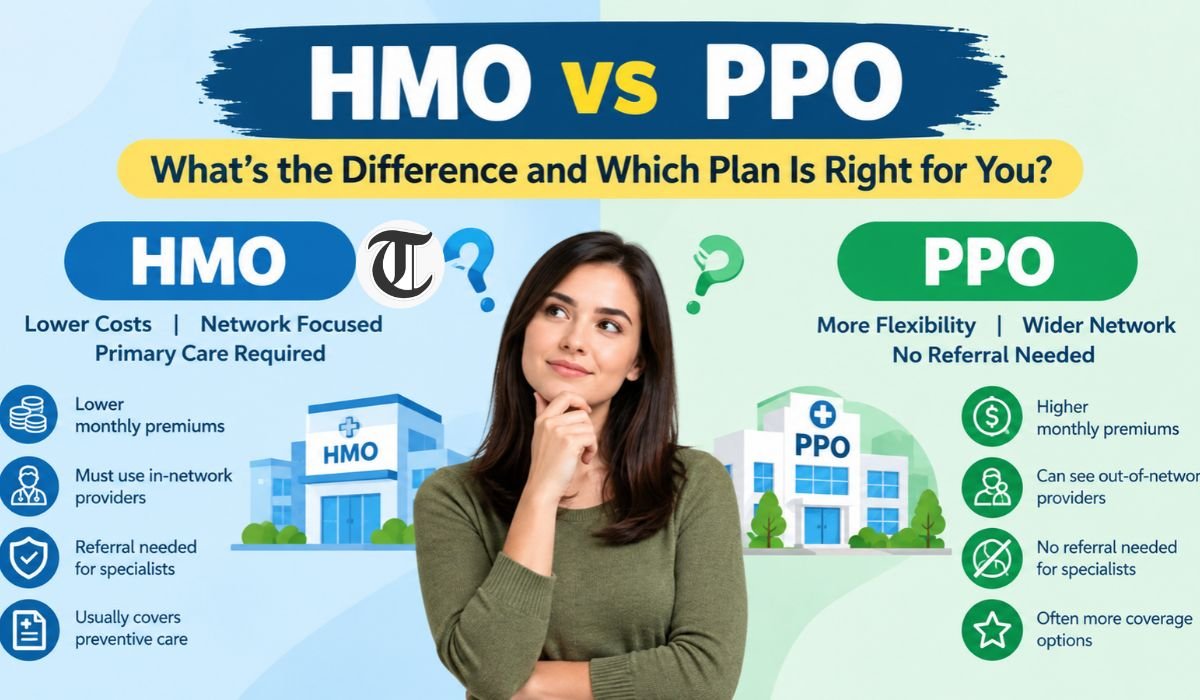
The main difference between an HMO vs PPO comes down to how your care is organized and how much flexibility you have when choosing healthcare providers. An HMO usually keeps care within a defined network and emphasizes coordinated treatment. A PPO generally gives you more freedom to see providers outside the network, although you’ll usually pay more when you do.
Neither option is automatically better. The right choice depends on your healthcare needs, preferred doctors, budget, and how much flexibility you want.
Quick Bio Information
HMO Meaning: HMO stands for Health Maintenance Organization.
PPO Meaning: PPO stands for Preferred Provider Organization.
HMO Network: HMO plans generally emphasize care from providers within their network.
PPO Network: PPO plans generally pay less for in-network care while allowing out-of-network care at an additional cost.
HMO Referral: Many HMO plans require referrals for certain specialist services.
PPO Referral: Many PPO plans allow members to see specialists without a referral.
HMO Cost: HMOs often have lower premiums, although actual costs vary by plan.
PPO Cost: PPOs often have higher premiums in exchange for greater provider flexibility.
In-Network: An in-network provider has a contract with the health plan.
Out-of-Network: An out-of-network provider doesn’t participate in the plan’s network.
Premium: A premium is the amount paid to maintain health insurance coverage.
Deductible: A deductible is the amount you pay for certain covered services before the plan begins paying its share.
Copay: A copay is a fixed amount paid for a covered healthcare service.
Coinsurance: Coinsurance is the percentage of a covered healthcare cost that you pay.
Out-of-Pocket Maximum: This is the maximum amount you pay for covered services during the plan’s coverage period under the plan’s rules.
Provider Directory: A provider directory helps you determine which doctors and facilities participate in a particular plan.
Drug List: A plan’s covered-drug list can help you determine whether your prescriptions are included and what cost-sharing may apply.
What Is an HMO Health Insurance Plan?
HMO stands for Health Maintenance Organization. It is a type of health insurance plan that generally limits coverage to doctors, hospitals, and other providers that work for or contract with the HMO. Out-of-network care is usually not covered except in certain situations, such as emergencies. Some HMOs also require members to live or work within a particular service area.
One of the biggest features of an HMO is coordinated care. Your primary care doctor often serves as the starting point for your healthcare needs and can help coordinate treatment with specialists.
Many HMO plans also require a referral before you see certain specialists. The exact rules vary by plan, so it’s important to check the plan documents rather than assuming every HMO works in exactly the same way.
The trade-off is straightforward: you generally have less freedom to go outside the network, but an HMO can provide a more structured approach to healthcare.
What Is a PPO Health Insurance Plan?
PPO stands for Preferred Provider Organization. A PPO also has a network of participating doctors, hospitals, and other healthcare providers, but it generally gives you more flexibility.
You normally pay less when you use providers within the PPO network. You can also receive care from providers outside the network, although the additional cost can be significant depending on the plan.
Another important difference is specialist access. Many PPO plans allow you to see a specialist without first getting a referral from a primary care doctor.
For people who already have preferred doctors, frequently need specialist care, or simply don’t want their healthcare choices tied as closely to one network, that flexibility can be valuable.
HMO vs PPO: What’s the Key Difference?
The simplest way to understand HMO vs PPO is to think about cost and flexibility.
An HMO generally places more emphasis on staying within its network and coordinating care. A PPO typically gives you a wider range of provider choices, including the ability to use out-of-network providers for an additional cost.
HMOs often have lower premiums than comparable PPO plans, although that isn’t a rule that applies to every plan. PPOs often cost more in exchange for greater provider flexibility.
The distinction also doesn’t tell you which plan offers better doctors. An HMO doctor isn’t automatically less qualified than a PPO doctor. The insurance arrangement determines how care is covered; it doesn’t, by itself, determine a physician’s professional qualifications.
HMO vs PPO: How Do the Costs Compare?
Cost is one of the biggest reasons people compare HMO vs PPO plans in the first place.
An HMO may have a lower monthly premium, making it attractive to someone who wants to keep regular insurance expenses under control. A PPO may have a higher premium, but that additional expense can make sense for someone who values a broader choice of providers.
Still, comparing premiums alone can be misleading.
Your actual healthcare spending can include your premium, deductible, copayments, coinsurance, prescription costs, and other out-of-pocket expenses. HealthCare.gov recommends looking at estimated total yearly costs rather than focusing only on the monthly premium.
In other words, the plan with the cheapest monthly payment isn’t necessarily the plan that will cost you the least over an entire year.
What Are Premiums, Deductibles, Copays, and Coinsurance?
These insurance terms can make an otherwise simple comparison unnecessarily confusing.
A premium is the amount you pay to keep your health insurance active, usually every month. You generally pay it whether or not you use medical services.
A deductible is the amount you pay for certain covered healthcare services and prescription drugs before the plan begins paying its share, although some services may be covered before the deductible.
A copayment, or copay, is a fixed amount you pay for a covered service. Coinsurance is a percentage of the cost that you pay after the applicable deductible requirements are met.
Your plan may also have an out-of-pocket maximum, which limits how much you pay for covered services during a coverage period under the plan’s rules. HealthCare.gov recommends considering all of these costs when comparing plans.
HMO vs PPO: What Does “In-Network” Really Mean?
The term in-network is central to understanding both HMO and PPO insurance.
An insurance network is made up of doctors, hospitals, pharmacies, and other healthcare providers that have contracted with the health plan.
With an HMO, staying in the network is especially important because out-of-network care generally isn’t covered except in situations such as emergencies.
A PPO gives you more room to go outside the network, but that doesn’t mean out-of-network care is inexpensive. You may face higher cost-sharing, and the specific rules depend on the plan.
That’s why checking the actual provider directory before enrolling matters. A doctor who accepts one insurance plan from an insurer may not necessarily participate in every plan or network offered by that insurer.
Do You Need a Referral to See a Specialist?
This is another major difference people consider when comparing HMO vs PPO.
Many HMO plans use a primary care doctor to coordinate treatment and may require a referral before you see certain specialists. PPO plans commonly allow members to see specialists without a referral.
However, these are general characteristics rather than universal rules. The specific plan documents should always be checked before making assumptions about specialist access.
For someone who expects to see several specialists, the convenience of direct specialist access through a PPO may be worth considering. Someone who prefers having one primary doctor coordinate their treatment may find an HMO’s structure more appealing.
Can You Keep Your Current Doctor With an HMO or PPO?
Possibly, but don’t assume your doctor is covered just because the doctor’s office accepts the insurance company’s name.
The important question is whether the doctor participates in the specific network attached to your specific plan.
Before enrolling, check the plan’s provider directory and confirm the information with the insurer or the doctor’s billing office. HealthCare.gov also recommends reviewing provider directories and checking whether your doctors and medical facilities are covered by the plan you’re considering.
This simple check can prevent an unpleasant surprise after enrollment.
HMO vs PPO for Prescription Drugs and Ongoing Treatment
Prescription coverage deserves just as much attention as doctor networks.
Two plans from the same insurance company can have different drug coverage, cost-sharing arrangements, or preferred medications. If you take prescription medicine regularly, check the plan’s covered-drug list and determine how your medications are treated.
The same applies to ongoing treatment. If you regularly see a specialist, receive therapy, need specific medical equipment, or expect another recurring healthcare expense, investigate how the plan handles that care before choosing it.
HealthCare.gov advises consumers to review plan materials, provider directories, and covered-drug information when comparing plans.
HMO vs PPO for People With Chronic or Existing Healthcare Needs
For people who expect frequent medical care, the difference between an HMO and PPO can become much more noticeable.
Someone managing an ongoing condition may care less about having the lowest premium and more about whether their doctors, specialists, treatments, and medications are covered conveniently.
An HMO can work well when your preferred providers are in-network and you appreciate coordinated care. A PPO may be more appealing when you want greater freedom to choose specialists or continue seeing providers outside the network.
The key is to look beyond the plan label. Review the actual network, prescription coverage, cost-sharing rules, and expected healthcare expenses before making a decision.
HMO vs PPO for Families
Families have another layer of considerations because different members may use healthcare in different ways.
One person may rarely visit a doctor, while another may need regular specialist appointments or prescription medication. Children may also need pediatricians, urgent care, or other services throughout the year.
An HMO can be attractive when a family wants coordinated care and is comfortable using a defined provider network. A PPO can make sense for families that place a higher value on provider flexibility.
The best choice isn’t determined by family size alone. Consider the healthcare needs of everyone covered by the plan and compare the likely total costs.
HMO vs PPO for Frequent Travelers
Travel can make network rules particularly important.
If you spend significant time away from your normal service area, an HMO may require more planning because of its stronger reliance on its network and service area. A PPO can offer greater flexibility because it generally allows members to use out-of-network providers for an additional cost.
That doesn’t mean a PPO automatically provides unlimited coverage everywhere. Travelers should still examine the plan’s geographic coverage and out-of-network rules before enrolling.
Emergency care is a separate consideration. HealthCare.gov states that many health plans must allow access to out-of-network emergency room care without charging higher cost-sharing solely because the emergency facility is outside the network, although certain grandfathered plans are treated differently.
Are HMO Doctors Less Qualified Than PPO Doctors?
No. The HMO or PPO label describes the insurance arrangement, not the professional quality of the physician.
A doctor may participate in an HMO network, a PPO network, both, or neither. What matters to the patient is whether the provider is part of the network attached to the plan they are considering.
Quality should be evaluated separately. When choosing a plan, consider the doctors and hospitals available through the network, their locations, the services they provide, and whether they meet your family’s healthcare needs.
HMO vs PPO: Which Plan Is Better for You?
There isn’t a universal winner in the HMO vs PPO debate.
An HMO may be the better fit if keeping costs manageable, using a defined network, and having care coordinated through a primary doctor are important to you.
A PPO may be more suitable if you want greater provider choice, prefer direct access to specialists, or want the option of using out-of-network providers despite the additional expense.
The right choice depends on what you value most. A person who rarely needs medical care may reach a different conclusion from someone who sees several specialists every month.
How to Compare HMO and PPO Plans Before Enrolling
Start with your actual healthcare needs rather than the plan name.
Check whether your preferred primary care doctor, specialists, hospitals, and other important providers are in-network. Then review your medications and make sure they’re covered under the plan’s drug list.
Next, compare the premium, deductible, copayments, coinsurance, and out-of-pocket maximum. Look at the likely total yearly cost instead of focusing on one number. HealthCare.gov specifically recommends considering both the monthly premium and the costs you may face when receiving care.
It’s also useful to review the Summary of Benefits and Coverage, provider directory, and prescription drug information available for the plan.
Remember that Bronze, Silver, Gold, and Platinum Marketplace categories describe how costs are generally shared between the plan and the consumer. They aren’t ratings of healthcare quality, and each category can include different plan and network types.
Final Thoughts
The HMO vs PPO decision isn’t really about finding the one insurance plan that’s best for everyone. It’s about finding the plan that fits the way you and your family actually use healthcare.
An HMO can provide a structured, network-focused approach that may help keep costs manageable. A PPO generally offers more flexibility, particularly when it comes to choosing providers and accessing out-of-network care.
Before enrolling, look past the labels. Check your doctors, specialists, hospitals, prescriptions, premium, deductible, copayments, coinsurance, and potential out-of-pocket costs. Most importantly, compare the specific plans available to you rather than assuming every HMO or every PPO works the same way.
When you understand those details, choosing between an HMO and PPO becomes far less confusing—and much more practical.
FAQs About HMO vs PPO
Is HMO Better Than PPO?
Not necessarily. An HMO may be better for someone who wants coordinated care and potentially lower premiums, while a PPO may be better for someone who values provider flexibility and direct specialist access. The better option depends on your healthcare needs and the specific plan.
Is PPO More Expensive Than HMO?
A PPO often has a higher premium than an HMO, but that’s not guaranteed. The total cost also depends on deductibles, copayments, coinsurance, prescriptions, and how often you use healthcare services.
Can You See a Specialist With an HMO?
Yes, but many HMO plans require a referral from a primary care doctor before certain specialist visits. The exact requirements depend on the plan.
Can You See a Specialist Directly With a PPO?
Many PPO plans allow members to see specialists without a referral. Even so, you should check the specific plan because benefits and cost-sharing rules can differ.
Does an HMO Cover Out-of-Network Doctors?
Generally, HMO plans don’t cover routine out-of-network care, although exceptions can apply, particularly for emergencies. Always check the terms of your specific plan.
Does a PPO Cover Out-of-Network Care?
Generally, yes. PPO plans typically allow members to use out-of-network providers, but the member usually pays more. The exact coverage and cost-sharing rules depend on the plan.
Can You Keep Your Current Doctor With an HMO or PPO?
You can if your doctor participates in the specific network connected to your plan. Check the provider directory and confirm directly with the insurer or doctor’s office before enrolling.
Which Is Better for a Family, HMO or PPO?
Either can work well. An HMO may suit a family that values coordinated care and predictable network use, while a PPO may be preferable when family members need more provider choice or frequent specialist care. Compare the actual network and total costs before deciding.
Learn more and explore exciting content on: Laryngitis Explained: Causes, Symptoms, Treatment, and Recovery
[…] Learn more and explore exciting content on: HMO vs PPO: What’s the Difference and Which Plan Is Right for You? […]