
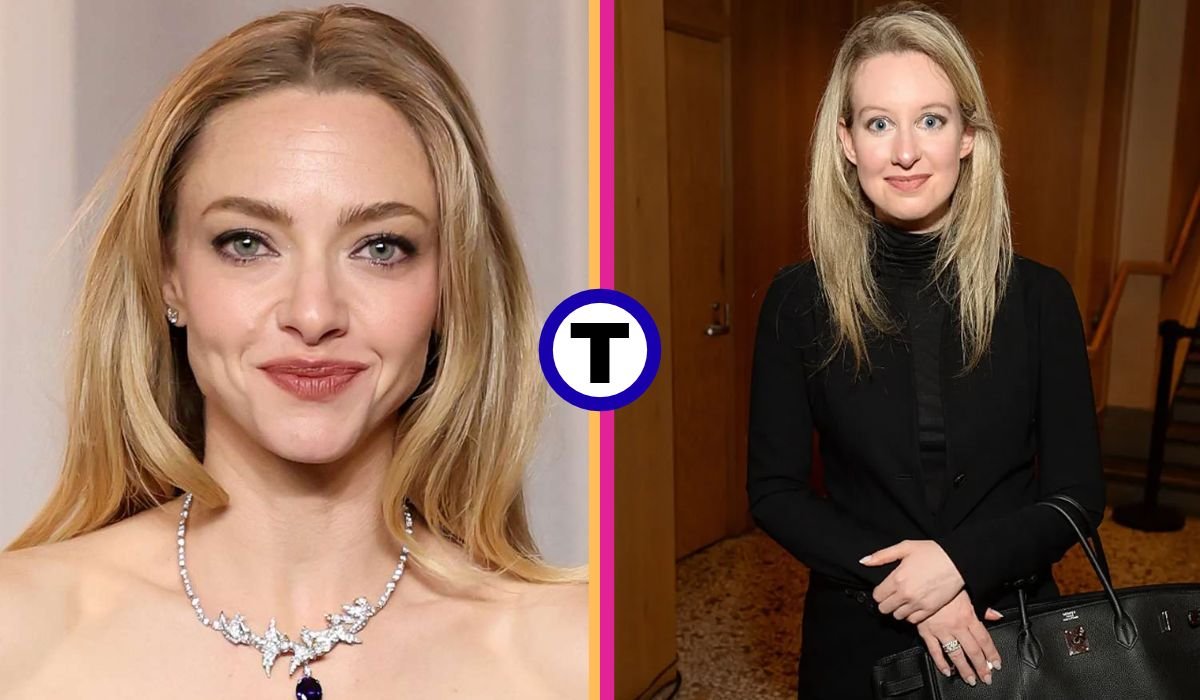
The Elizabeth Holmes Documentary has brought one of Silicon Valley’s most controversial figures back into the spotlight. But this time, the story isn’t simply about the rise and fall of Theranos. It’s about what happened after the scandal, the people who remained close to Elizabeth Holmes, and the surprising involvement of an actress who had already brought her story to television.
Titled You Can See Everything, the 2026 documentary follows Holmes during the final weeks before she enters federal prison. Directed by Nathan Fielder and Lance Oppenheim, the film begins as a personal portrait before developing into something considerably more complicated.
One of its biggest surprises comes when Amanda Seyfried, who won an Emmy for portraying Holmes in Hulu’s The Dropout, unexpectedly joins the production. Her appearance leads to unusual reenactments, uncomfortable conversations, and a tense confrontation with Holmes’s partner, Billy Evans.
Beyond these dramatic moments, the documentary raises a fascinating question: How much can audiences truly understand about someone simply by watching their life unfold on camera?
Spoiler Warning: This article discusses major documentary revelations, including Amanda Seyfried’s unexpected appearance and important conversations involving Billy Evans.
Quick Bio Information About the Elizabeth Holmes Documentary
| Information | Details |
|---|---|
| Documentary Title | You Can See Everything |
| Main Subject | Elizabeth Holmes |
| Documentary Genre | True Crime and Biography |
| Directors | Nathan Fielder and Lance Oppenheim |
| Featured Actress | Amanda Seyfried |
| Featured Partner | William “Billy” Evans |
| Distributor | A24 |
| Theatrical Release Date | October 16, 2026 |
| Runtime | 2 Hours and 55 Minutes |
| Release Year | 2026 |
| Country | United States |
| Original Language | English |
| Central Story | Elizabeth Holmes Before and During Imprisonment |
| Narrative Time Span | Approximately Three Years |
| Amanda Seyfried’s Role | Herself and Holmes in Reenactments |
| Related Television Series | The Dropout |
| Central Scandal | Theranos Investor Fraud |
| Major Confrontation | Amanda Seyfried and Billy Evans |
| Main Themes | Truth, Reputation, Trust, and Media Influence |
What Is the Elizabeth Holmes Documentary About?
The Elizabeth Holmes Documentary, officially titled You Can See Everything, begins just 34 days before the former Theranos founder is scheduled to report to federal prison.
At first, the premise appears straightforward. Filmmakers Nathan Fielder and Lance Oppenheim are given unusually close access to Holmes as she prepares for a dramatic change in her life.
Their cameras capture private conversations, family interactions, and moments in which Holmes reflects on the events that destroyed her once-celebrated business career.
Yet the documentary doesn’t remain a conventional portrait for long.
As filming continues, the filmmakers become increasingly involved in the story. New participants appear, personal relationships become more complicated, and reenactments begin to challenge the boundaries between documentary observation and dramatic performance.
The result is a film that explores Holmes’s life while questioning the reliability of the stories people tell about themselves.
Distributed by A24, You Can See Everything was released theatrically on October 16, 2026, with a runtime of approximately two hours and 55 minutes.
Why the Elizabeth Holmes Documentary Is Attracting Attention
Few Silicon Valley stories have attracted as much fascination as the rise and collapse of Theranos.
Elizabeth Holmes was once celebrated as a visionary entrepreneur who promised to transform medical testing. Her company attracted influential supporters, substantial investment, and enormous media attention.
That image eventually collapsed when investigations exposed serious problems with Theranos’s technology and business claims.
While earlier productions concentrated on the scandal itself, You Can See Everything approaches Holmes from a different direction.
Instead of asking only how Theranos failed, the documentary examines what happens when someone whose reputation has been shattered attempts to explain their life afterward.
Nathan Fielder’s unconventional approach makes that question even more interesting. His involvement goes beyond ordinary interviews, while Amanda Seyfried’s unexpected participation adds another layer to an already complicated story.
The documentary isn’t simply interested in what Holmes says. It also asks viewers to consider how she presents herself and how others influence that presentation.
Amanda Seyfried’s Surprise Appearance in You Can See Everything
Amanda Seyfried’s appearance is one of the film’s most unexpected developments.
The actress joins the documentary midway through the project, initially appearing as herself before taking on the role of Elizabeth Holmes in several reenactments.
Her participation had been kept secret during the film’s early publicity, allowing audiences to discover her involvement as the story unfolded.
It’s an unusual creative decision, particularly because Seyfried had already portrayed Holmes in The Dropout.
This time, however, she isn’t working solely from a dramatic script. She’s responding to footage of the real Holmes, including conversations and interactions that offer a different perspective on the woman she previously played.
The documentary uses Seyfried to recreate moments that weren’t originally captured on camera.
Her involvement creates an intriguing relationship between the actress, the real person behind her famous performance, and the filmmakers attempting to document that person’s life.
How Amanda Seyfried Joined Nathan Fielder’s Documentary
Seyfried’s involvement began with a connection through fellow actress Emma Stone.
According to interviews published in November 2026, Stone helped Nathan Fielder contact Seyfried after he became interested in hearing her thoughts about footage he had already recorded.
Initially, the arrangement was informal. Fielder wanted her perspective, particularly because she had spent considerable time studying Holmes while preparing for The Dropout.
As their conversations continued, however, the possibility of a larger role emerged.
Seyfried became interested in helping the filmmakers recreate conversations that hadn’t been captured during filming.
What makes her decision especially noteworthy is that she reportedly had no creative control or final approval over the documentary.
For an established actress, that meant accepting considerable uncertainty about how her involvement would ultimately appear on screen.
Seyfried later acknowledged that the experience made her nervous. Nevertheless, she was drawn to the opportunity because it offered something genuinely different from her previous work.
Amanda Seyfried’s Emmy-Winning Performance in The Dropout
Long before appearing in You Can See Everything, Amanda Seyfried had become closely associated with Elizabeth Holmes through Hulu’s 2022 limited series The Dropout.
The drama followed Holmes’s transformation from an ambitious young entrepreneur into the founder of a company facing serious questions about its technology and business practices.
Seyfried’s portrayal attracted widespread praise and earned her the Primetime Emmy Award for Outstanding Lead Actress in a Limited or Anthology Series or Movie.
Her performance examined Holmes’s distinctive voice, public personality, ambition, and complicated relationships.
The documentary brings that earlier portrayal into an entirely different setting.
In one particularly revealing sequence, Holmes watches part of The Dropout and becomes emotional.
Fielder subsequently shows Seyfried footage of Holmes responding to her performance.
It’s a striking reversal. The actress who once studied Holmes to understand her character is now watching Holmes react to the fictionalized version of herself.
The moment illustrates how dramatic storytelling can influence the people whose lives inspire it.
What Happened Between Amanda Seyfried and Billy Evans?
Among the documentary’s most discussed moments is a tense dinner involving Amanda Seyfried and Billy Evans, Holmes’s longtime partner.
The meeting takes place at Evans’s home in Texas, where Seyfried joins Nathan Fielder.
Before meeting Evans, Seyfried had watched footage that left her uncomfortable with aspects of his behavior toward Holmes.
She wanted to understand his perspective and ask questions about his involvement in managing Holmes’s public image.
The conversation eventually turns to Holmes’s social media presence and whether she has sufficient control over how she is represented.
Evans, meanwhile, reportedly criticizes Seyfried’s performance in The Dropout and challenges her over previous public political comments.
What begins as a conversation becomes increasingly confrontational.
Seyfried later described Evans’s behavior as aggressive and disrespectful. She explained that she had initially hoped to establish some understanding with him but became more defensive as the discussion progressed.
It’s important to distinguish her interpretation from independently established facts about Evans’s intentions.
Nevertheless, the encounter becomes a significant part of the documentary because it exposes competing opinions about Holmes, her public reputation, and the people who speak on her behalf.
Elizabeth Holmes’s Unexpected Phone Call
The dinner takes another surprising turn when Elizabeth Holmes unexpectedly calls from prison.
At that moment, Seyfried finds herself in an extraordinary situation.
She’s sitting with Holmes’s partner while speaking about the woman she previously portrayed in a critically acclaimed television drama.
The real Holmes is physically absent but suddenly becomes part of the conversation.
In a November 2026 interview with Rolling Stone, Seyfried explained that she hadn’t expected Holmes to call.
Fielder also clarified that the interaction wasn’t directed through predetermined dialogue, unlike the documentary’s reenacted sequences.
That distinction matters.
The film deliberately combines reconstructed conversations with events that unfold naturally during filming. As a result, audiences must pay attention to which moments are staged and which are captured as they happen.
The phone call is particularly memorable because it brings the documentary’s central themes together: identity, performance, personal relationships, and the difficulty of controlling one’s public image.
Nathan Fielder’s Unusual Approach to Documentary Filmmaking
Nathan Fielder has built a reputation for exploring situations in which everyday behavior and performance become difficult to separate.
His earlier projects, including The Rehearsal and The Curse, examine how people behave when they know they’re being observed or placed in unusual circumstances.
With You Can See Everything, Fielder brings a similarly experimental perspective to documentary filmmaking.
Working alongside Lance Oppenheim, he gains unusually close access to Holmes and Billy Evans.
At one point, Fielder even stays at their home, placing himself inside the personal environment he’s attempting to document.
The production eventually develops into a story spanning approximately three years.
As the project continues, Fielder becomes more than an interviewer standing behind the camera. His decisions and interactions increasingly influence the documentary’s direction.
That approach creates compelling material, but it also raises important ethical questions.
When filmmakers become personally involved with their subjects, their presence may affect the behavior they’re trying to observe.
Rather than hiding that complication, the documentary makes it part of the story.
Who Is Elizabeth Holmes and What Happened to Theranos?
To understand the documentary’s significance, it’s worth revisiting the events that made Elizabeth Holmes internationally famous.
Holmes founded Theranos in 2003 with the ambition of transforming medical testing.
The company claimed that its technology could perform numerous diagnostic tests using extremely small blood samples.
If successful, the technology could have changed how patients accessed medical information.
The promises attracted substantial investment and helped establish Holmes as one of Silicon Valley’s most recognizable entrepreneurs.
However, investigations revealed that Theranos’s technology did not consistently perform as advertised.
Questions about the company’s testing practices, accuracy, and representations to investors eventually contributed to its collapse.
Holmes faced federal criminal charges and was convicted in January 2022 on four counts involving fraud and conspiracy against investors.
In November 2022, she received a prison sentence of 11 years and three months.
She began serving that sentence in May 2023.
An important legal distinction is that Holmes was not convicted on the patient-related charges considered by the jury.
Her conviction centered on fraudulent conduct involving investors, a fact that should remain clear when discussing the Theranos scandal.
Elizabeth Holmes’s Life Before Entering Federal Prison
The documentary begins during the final weeks before Holmes reports to prison.
By this point, her circumstances have changed dramatically.
The entrepreneur once associated with ambitious medical technology claims is preparing to leave her family and begin serving a federal sentence.
Holmes is living with Billy Evans and their children while confronting the consequences of her conviction.
The filmmakers capture conversations and domestic interactions that offer viewers a perspective rarely seen in earlier coverage.
These moments reveal aspects of her family circumstances, but they don’t erase the seriousness of the crimes for which she was convicted.
That distinction is essential.
A documentary can examine someone’s personal experiences without excusing their conduct or minimizing the harm associated with it.
In many ways, this tension gives You Can See Everything its emotional and ethical complexity.
Shocking Revelations and Untold Stories in the Documentary
Although Amanda Seyfried’s appearance has attracted considerable attention, the documentary contains other moments that invite closer examination.
Some involve Holmes discussing her past decisions and her continuing interest in technological innovation.
In one sequence, she considers the possibility of pursuing technological work despite her imprisonment.
Another revisits the Theranos blood-testing device and raises questions about what the company’s technology could actually accomplish.
The documentary also includes moments in which Holmes discusses her own honesty.
These statements are revealing, but they should be understood as Holmes’s personal account rather than independent proof of her claims.
What makes the film interesting isn’t simply the information it presents.
It’s the way different people respond to that information.
Fielder challenges certain explanations, Seyfried reacts to footage she hasn’t previously seen, and Evans offers his own perspective on Holmes’s circumstances.
Together, these interactions create a documentary concerned as much with interpretation as with events themselves.
Why Amanda Seyfried Was Nervous About the Project
For Seyfried, joining You Can See Everything meant accepting risks she wouldn’t ordinarily face in a scripted production.
She had no guarantee of how the documentary would portray her participation.
She also knew that becoming involved in Holmes’s personal circumstances could expose her to criticism or unexpected conflict.
During interviews following the film’s release, Seyfried acknowledged concerns about her career, her public reputation, and the possibility of contributing to negative perceptions of Holmes.
Those worries became especially relevant during her confrontation with Billy Evans.
Still, Seyfried believed the project offered a rare creative opportunity.
Rather than returning to a familiar acting role, she could participate in something unpredictable, where her reactions weren’t entirely controlled by a script.
That uncertainty was frightening, but it was also part of what attracted her.
Why Amanda Seyfried Feels Relieved After the Documentary’s Release
After months of keeping her participation private, Amanda Seyfried finally began discussing the documentary publicly in November 2026.
Speaking with PEOPLE, she expressed relief and excitement that audiences now knew about her involvement.
The secrecy had prevented her from openly discussing the experience, even though it had become a significant creative undertaking.
Once the film was released, she could explain what attracted her to the project and how she felt about its more uncomfortable moments.
Despite the challenges, Seyfried made clear that she didn’t regret participating.
She viewed the experience as an opportunity to explore unfamiliar territory and test herself professionally.
At the same time, she acknowledged that she wouldn’t want to repeat a documentary experience quite like this one.
Her comments suggest that the project was rewarding precisely because it was so unusual.
How the Elizabeth Holmes Documentary Compares With The Dropout
Although The Dropout and You Can See Everything share Elizabeth Holmes as their central subject, they tell very different stories.
The Dropout is a scripted drama examining the development of Theranos and the events that contributed to its collapse.
It explores Holmes’s ambitions, business relationships, and the consequences of the company’s misleading claims.
The documentary begins much later, focusing on Holmes’s circumstances around imprisonment and the continuing influence of her public reputation.
Seyfried’s involvement creates a direct connection between the productions, but their storytelling methods remain distinct.
A dramatic series reconstructs events through scripts, performances, and creative interpretation.
A documentary, meanwhile, organizes recorded footage and interviews into a narrative shaped by filmmakers’ decisions.
Both can offer valuable insights, but neither automatically presents a complete or entirely objective account.
For viewers interested in understanding Holmes’s story, recognizing those differences is important.
Elizabeth Holmes Documentary Release Date and Where to Watch
You Can See Everything received its theatrical release through A24 on October 16, 2026.
The documentary runs approximately two hours and 55 minutes, making it a substantial exploration of Holmes’s circumstances and the filmmakers’ unusual experiences.
The film also appeared in the 2026 New York Film Festival program, drawing attention to its unconventional approach.
For audiences searching for where to watch the Elizabeth Holmes Documentary, theatrical availability remains the confirmed release option in the information reviewed.
As of November 12, 2026, a specific streaming release date hasn’t been established through the official details available here.
Viewers should consult current theatrical schedules and official distribution announcements for updated viewing information.
Public Reaction and Controversy Surrounding the Documentary
The documentary has prompted discussion because it approaches a convicted fraudster’s story in an unusually personal way.
One concern involves whether extensive access to Holmes’s family life could encourage audiences to overlook the seriousness of the Theranos scandal.
Another relates to the filmmakers’ role.
Fielder doesn’t simply observe events from a distance. His interactions influence the story, raising questions about the boundaries between documentation and participation.
Seyfried’s involvement introduces another complication.
By bringing an actress who previously portrayed Holmes into the real woman’s personal world, the film creates situations that would be difficult to imagine in a conventional documentary.
The confrontation with Billy Evans further complicates the narrative by exposing disagreements about representation, privacy, and personal control.
These elements make the film more than a straightforward account of corporate wrongdoing.
They invite viewers to consider how documentary filmmaking shapes the reality it presents.
What the Documentary Reveals About Truth and Reputation
Perhaps the most interesting aspect of You Can See Everything is its examination of how public reputations are created, challenged, and maintained.
Elizabeth Holmes once represented the promise of technological innovation.
Following the Theranos investigations and her criminal conviction, that image changed dramatically.
The documentary explores how she and the people close to her respond to the consequences of that transformation.
Billy Evans, Amanda Seyfried, and Nathan Fielder each approach Holmes from a different position.
Evans is personally connected to her. Seyfried previously interpreted her life through acting. Fielder is attempting to document her circumstances while becoming involved in the events himself.
Their perspectives don’t always agree.
That disagreement is part of what makes the film compelling.
It demonstrates that even when audiences are given access to private conversations, personal relationships, and intimate footage, understanding another person’s motivations remains complicated.
The documentary’s title becomes especially meaningful in this context.
Seeing everything isn’t necessarily the same as knowing the truth.
Will Amanda Seyfried Work With Nathan Fielder Again?
Amanda Seyfried has made it clear that she values the experience of participating in You Can See Everything.
Despite the anxiety, difficult conversations, and uncertainty surrounding the project, she has expressed no regrets.
However, when asked whether she would undertake another similar documentary, her response suggested that she wasn’t eager to repeat the experience.
That doesn’t necessarily mean she would refuse another collaboration with Nathan Fielder.
Instead, her comments reflect how demanding this particular production became.
For an actress accustomed to scripted performances, the documentary offered an entirely different kind of challenge.
Her participation demonstrated a willingness to explore unfamiliar creative territory, even when the outcome couldn’t be predicted.
Final Thoughts
The Elizabeth Holmes Documentary offers an unusual perspective on a story that has already received extensive public attention. While the Theranos scandal remains its foundation, You Can See Everything moves beyond the familiar account of a failed technology company and its disgraced founder.
Instead, the film examines what happens when someone with a deeply damaged public reputation allows cameras into their personal life.
Amanda Seyfried’s unexpected involvement gives the documentary an additional dimension. Her earlier portrayal of Holmes, combined with her real-world interactions with Nathan Fielder and Billy Evans, creates a fascinating connection between dramatic storytelling and lived experience.
Yet the documentary’s most important questions extend beyond its celebrity appearance or uncomfortable conversations.
It asks viewers to think about how stories are constructed, how people attempt to shape their reputations, and how easily personal access can be mistaken for complete understanding.
For audiences interested in Elizabeth Holmes, the Theranos scandal, or the ethics of documentary filmmaking, You Can See Everything offers plenty to consider.
Ultimately, its most compelling idea is also its simplest: Watching someone’s life unfold doesn’t necessarily mean we understand the whole story.
FAQs About Elizabeth Holmes Documentary
What Is the Elizabeth Holmes Documentary Called?
The documentary is titled You Can See Everything. Directed by Nathan Fielder and Lance Oppenheim, it examines Elizabeth Holmes’s life surrounding imprisonment, her relationships, and the continuing consequences of the Theranos scandal. The film also explores how public figures attempt to influence the stories told about them.
Is Amanda Seyfried in the Elizabeth Holmes Documentary?
Yes. Amanda Seyfried appears as herself and portrays Elizabeth Holmes in reenactments. Her participation was initially kept secret, making her appearance one of the documentary’s biggest surprises. She had previously won an Emmy Award for portraying Holmes in Hulu’s The Dropout.
Who Directed You Can See Everything?
Nathan Fielder and Lance Oppenheim directed the documentary. Their approach combines personal access, observational footage, unexpected interactions, and reenactments. Fielder also becomes an active participant in parts of the story, making the documentary different from traditional true-crime productions.
Why Did Amanda Seyfried Play Elizabeth Holmes Again?
Seyfried became interested after watching footage recorded by the filmmakers. The material gave her new insights into Holmes and offered an opportunity to revisit her previous portrayal from a different perspective. She also welcomed the challenge of participating in an unconventional documentary project.
What Happened Between Amanda Seyfried and Billy Evans?
Seyfried and Billy Evans had a tense conversation during a dinner at his Texas home. Their disagreement involved Holmes’s social media presence, her public representation, and Seyfried’s earlier portrayal of her in The Dropout. Seyfried later characterized the encounter as aggressive and uncomfortable.
Is the Elizabeth Holmes Documentary Based on Real Events?
Yes. The documentary follows real events involving Holmes before and during her imprisonment. It includes genuine conversations and observational footage, alongside reenactments featuring Amanda Seyfried. Viewers should distinguish reconstructed scenes from events directly captured by the filmmakers.
Where Can I Watch the Elizabeth Holmes Documentary?
You Can See Everything opened theatrically on October 16, 2026, through A24. Its runtime is approximately two hours and 55 minutes. As of November 12, 2026, a specific streaming release date hasn’t been confirmed in the official information reviewed. Current theatrical listings and distributor announcements provide the most reliable viewing updates.
Did Amanda Seyfried Regret Joining the Documentary?
No. Seyfried has said she doesn’t regret participating, despite the uncertainty and uncomfortable situations she encountered. She described the experience as creatively rewarding and expressed relief after her involvement became public. However, she also indicated that she wouldn’t want to repeat a documentary experience of this kind.
Learn more and explore exciting content on: Lanterns Cast: Meet the Stars and Characters of HBO’s DC Series
[…] Learn more and explore exciting content on: Elizabeth Holmes Documentary: Amanda Seyfried’s Shocking Secrets, Surprises, and Untold Stories […]