
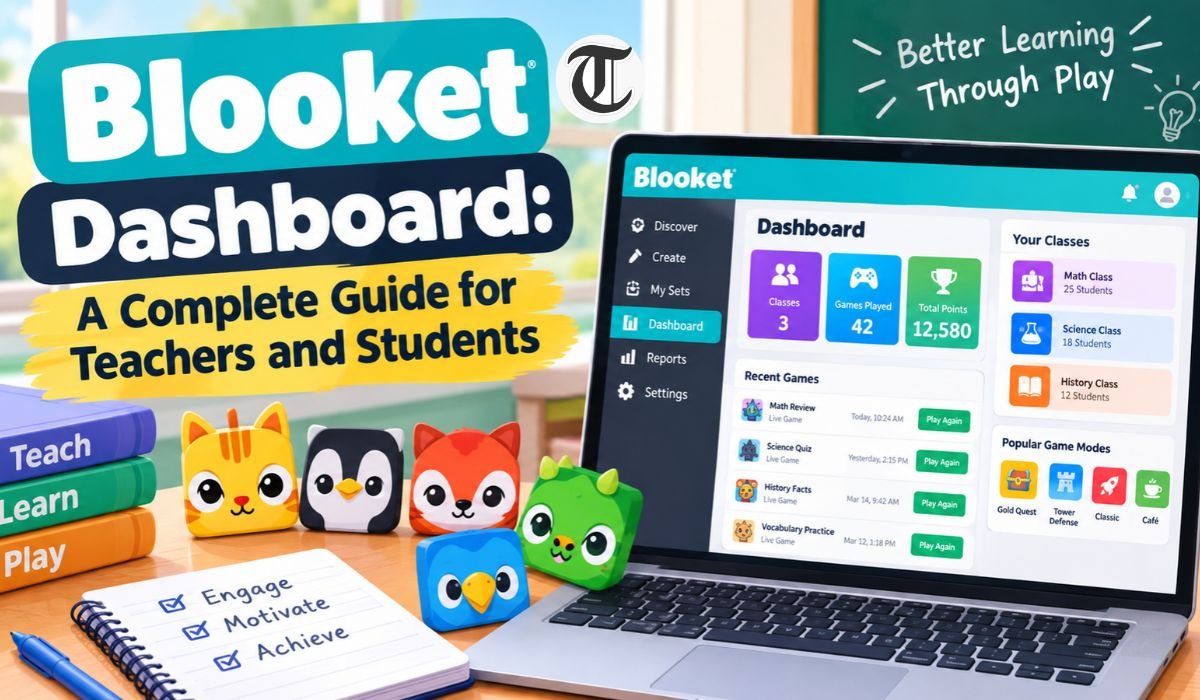
The Blooket Dashboard brings much of the platform’s learning experience into one place. For teachers, it’s where question sets are prepared and organized, classroom games are hosted, homework is assigned, and available results can be reviewed. For students, the experience is more streamlined, with a focus on joining games, completing assignments, and using account features such as Blooks and other game-related elements.
At its core, Blooket follows a fairly simple learning cycle. Teachers can find or create a question set, choose a game mode, have students play or complete the activity, and then look at the results. That combination makes Blooket more than a collection of online quiz games. When it’s used with a clear learning objective, it can make practice more engaging while giving teachers another source of feedback about student understanding.
It’s worth remembering that Blooket is an evolving platform. Dashboard layouts, available game modes, account features, and subscription benefits can change as the service is updated. So, rather than treating every button or label as permanent, this guide focuses on the core features and practical ways teachers and students can use the Blooket Dashboard.
Quick Bio Information About Blooket Dashboard
Platform: Blooket
Main Purpose: Game-Based Learning And Review
Primary Users: Teachers And Students
Teacher Role: Content Creation, Game Hosting, Assignments, And Results
Student Role: Game Participation, Homework, And Account Activity
Question Sets: Teachers Can Use Existing Sets Or Create Their Own
Discover: A Library For Finding Existing Question Sets
Live Games: Students Can Join With A Game ID
Homework: Blooket Supports Asynchronous Learning Activities
Reports: Available Results Can Help Teachers Review Performance
Blooks: Character-Style Avatars Used Within The Blooket Experience
Tokens: Part Of Blooket’s In-Game Reward System
Market: Connected To Blook Packs And Collection Features
Account Types: Teacher And Student
Game Modes: Blooket Offers Multiple Modes That Can Change Over Time
Learning Feedback: Reports Can Help Highlight Areas That Need More Attention
Classroom Use: Review, Practice, Reinforcement, And Engagement
Current Consideration: Dashboard Features May Vary With Updates And Account Access
What Is The Blooket Dashboard?
The Blooket Dashboard is the account-based area where users manage their experience on the platform. What appears there depends largely on whether someone is using Blooket as a teacher or as a student.
Teachers need tools that help them prepare educational content and manage classroom activities. Students have a much simpler set of needs. They generally need to access games, complete assigned homework, and use personal account features when available.
Blooket’s account setup separates Teacher and Student accounts, which reflects these different roles. A teacher is responsible for creating or selecting content and managing activities, while a student primarily participates in them.
In that sense, the dashboard is best thought of as a central control area. It connects content preparation, gameplay, assignments, and feedback instead of treating each part as a completely separate experience.
Teacher And Student Dashboard Differences
The biggest difference between the teacher and student experiences comes down to responsibility.
Teachers have to make decisions before, during, and after a Blooket activity. They may need to find or create questions, select a game mode, organize students into an activity, assign homework, and review the information produced afterward.
Students have a more direct journey. They receive an activity, join the game or homework assignment, answer questions, and interact with the personal features available through their account.
That difference can be confusing for new users. A student shouldn’t expect to see the same content-management options as a teacher, and teachers shouldn’t assume that every student needs an account simply to participate in a live game.
Understanding this distinction makes the rest of the Blooket Dashboard much easier to navigate.
Discover And Finding Blooket Question Sets
For teachers, Discover can be one of the most useful places to begin. There’s no reason to write every question from scratch if a suitable set already exists. Teachers can search the library for material related to the subject, topic, or level they’re teaching.
That can save a surprising amount of preparation time. A teacher working on vocabulary, mathematics, science, history, or another common subject may find an existing set that provides a strong starting point.
Still, finding a question set doesn’t automatically mean it’s ready for the classroom. Teachers should look through the questions before assigning them. The wording, answer choices, difficulty, curriculum alignment, and factual accuracy all need to make sense for the particular students using the activity.
Search terms matter, too. A highly specific search that combines a topic with a grade level can be more useful than a broad search that produces a huge number of unrelated results. The goal isn’t simply to find more sets. It’s to find material that requires less editing and better fits the lesson.
Creating And Managing Blooket Question Sets
Sometimes Discover won’t have exactly what a teacher needs. That’s where creating a custom question set becomes useful.
Building an original set gives teachers much more control over the content. Questions can be written around a specific chapter, vocabulary list, classroom discussion, unit, or review session. The activity can then reflect what students have actually been learning rather than relying on generic material.
Once teachers begin creating and saving sets, My Sets becomes increasingly important. It’s the personal library where teachers can manage their Blooket content.
Organization might seem unimportant when there are only a few sets. That changes quickly once the library grows. Titles such as “Quiz,” “Review,” or “Test” may seem convenient at first, but they’re difficult to distinguish months later.
A more descriptive naming system is far more practical. Including the unit, topic, grade level, or approximate question count makes old material much easier to find and reuse.
Hosting A Live Blooket Game
Hosting is the point where a question set turns into an interactive classroom activity. The teacher selects the content, chooses an available game mode, and starts the session.
Students then use the information provided by the host to enter the game. The Blooket play interface includes a Game ID field for joining a live activity.
For teachers, a few minutes of preparation can make this process much smoother. Displaying the joining information clearly and giving students time to connect before beginning the activity can prevent unnecessary interruptions.
If several students can’t join, the problem isn’t necessarily the Game ID. Internet connectivity, browser settings, or restrictions on a school network can also affect access.
Blooket’s diagnostic information indicates that live games rely on certain browser and network capabilities. That means a school firewall or network configuration can sometimes cause problems even when the teacher has set up the game correctly.
If Blooket is going to be an important part of a lesson, testing it on the classroom network beforehand is a sensible precaution.
Choosing The Right Blooket Game Mode
The question set isn’t the whole experience. The selected Blooket Game Mode can significantly change how students interact with the same questions.
That’s useful because teachers can reuse strong educational content without making every activity feel exactly the same. The questions can remain familiar while the style of participation changes.
The choice of mode should, however, serve the lesson. A competitive activity might work particularly well for an energetic review, while another format may be more suitable for individual practice or homework.
It’s easy to focus on which mode looks the most entertaining. A better question is whether the mode supports what students are actually supposed to learn.
Blooket’s collection of game modes can change and expand over time, so teachers shouldn’t assume that the available selection will always remain the same.
Blooket Homework And Asynchronous Learning
Not every Blooket activity needs to happen while an entire class is online together. Teachers can also use supported activities for homework and asynchronous practice.
This gives students an opportunity to work through assigned questions outside the normal classroom session. Homework activities can include information such as the teacher, due date, and a completion goal.
That makes Blooket useful beyond live classroom review. A teacher can use an assignment after introducing a new topic, giving students another opportunity to recall and apply what they’ve learned.
It can also provide teachers with additional feedback about independent practice. Students aren’t always going to perform in exactly the same way when they’re working on their own, so that information can complement what teachers see in class.
The key is keeping the assignment focused. Blooket homework is most useful when it reinforces a specific learning goal rather than simply adding more screen time to a student’s day.
Blooket History And Reports
The reporting side of the Blooket Dashboard is arguably one of its most useful features for teachers because it connects gameplay with what happens next in the classroom.
Blooket promotes reports as a way for educators to identify knowledge gaps and understand student performance after a game. That makes it worthwhile to look beyond the final scores.
Suppose a large portion of the class misses questions about the same concept. That pattern could signal that the concept needs to be explained again or practiced in another way. If only a few students struggle with particular questions, a teacher might instead provide more targeted support.
There is an important distinction here, though. A Blooket score shouldn’t be treated as a complete assessment of what a student knows. A wrong answer doesn’t necessarily explain why the student got it wrong, and a game result doesn’t capture every aspect of understanding.
The best approach is to use Blooket results alongside classroom discussion, assignments, observation, and other forms of assessment. In that context, the dashboard’s reporting tools can provide useful additional evidence.
The Student Blooket Dashboard
The Student Blooket Dashboard is much more focused than the teacher experience. Students aren’t expected to manage question libraries or configure classroom sessions, so their journey is primarily about participation.
For a live activity, students can use Blooket’s play interface and enter the Game ID supplied by the host.
Students can also complete homework activities assigned by their teachers. Depending on their account and the activity, they may have access to additional personal features as well.
The simpler design makes sense. Students don’t need to understand how the teacher created the question set or configured the game. Their job is to participate, answer questions, and complete the activity.
For students who create accounts, the experience can extend beyond individual games through account-based features connected to their progress and collection.
Tokens, XP, Blooks, And The Market
Blooket adds a collection and reward layer to its learning activities. Tokens, XP, Blooks, and the Market are all part of that game-style experience.
Blooks are character-style avatars that students can use within Blooket. They’re primarily connected with personalization and collecting rather than academic achievement.
The token system gives students an in-game currency associated with the collection experience, while the Market provides access to Blook packs and related collection features.
For students who enjoy collecting virtual items, these mechanics can provide an extra reason to keep participating. From a teaching perspective, however, the educational objective should remain the priority.
The reward system works best when it encourages students to practice and participate. It shouldn’t become more important than the material they’re supposed to learn.
There’s also no good reason to use unofficial shortcuts. Students should be cautious about websites, scripts, browser extensions, or downloads that promise free Tokens, Blooks, or automatic rewards. Unknown tools can create unnecessary account, privacy, or device-security risks.
Blooket Starter And Plus
Blooket offers free and paid options for educators, although the exact features, limits, and benefits associated with each plan can change.
That makes it important to check the current official plan information before making a decision based on a particular player limit, homework duration, reporting feature, or other subscription detail.
For many teachers, the free experience can provide the core Blooket workflow they need. They can work with question sets and use them for classroom activities without necessarily requiring every advanced feature.
Paid functionality may make more sense for educators with larger classes or specific reporting and management needs. The important point is to evaluate a plan based on actual classroom requirements rather than simply choosing the option with the longest list of features.
Class size, frequency of Blooket use, reporting needs, and the types of assignments being created are all more useful considerations when deciding whether additional functionality is worthwhile.
Getting More Value From The Blooket Dashboard
The most effective teachers don’t treat Blooket as an isolated game. They fit it into a larger teaching process.
That process can begin with Discover. A teacher searches for relevant material, reviews a suitable set, and adapts it if necessary. If nothing appropriate exists, creating a custom set gives the teacher greater control.
Next comes the activity itself. The teacher chooses a game mode that matches the purpose of the lesson and gives students a clear path into the game or assignment.
Then comes the step that’s easiest to overlook: reviewing the results.
Looking at the available feedback can help teachers spot concepts that deserve another explanation. It can also show whether a question was too difficult, unclear, or poorly matched to the lesson.
This turns the Blooket Dashboard into part of a teaching cycle rather than simply a game launcher. Content is prepared, students practice, results are reviewed, and the next instructional decision is informed by what happened.
Simple habits can make a noticeable difference, too. Keeping sets organized, checking questions before assigning them, varying game formats, and connecting every activity to a clear objective all help ensure that the technology supports the lesson rather than taking it over.
Common Mistakes And Troubleshooting
One of the most common mistakes is focusing so heavily on the game that the results are forgotten. If teachers never look at available feedback, they lose an opportunity to connect student responses with future instruction.
Another problem is repetition. Running the same game mode every time can make activities feel predictable, even when the questions themselves are useful. Switching between appropriate available formats can keep the experience fresher.
Poor organization is another issue that tends to appear over time. Teachers who create many question sets without a consistent naming system can eventually spend more time searching for content than preparing it.
Technical issues are possible, too. If the Blooket Dashboard or a game doesn’t load properly, checking the internet connection and refreshing the browser are sensible first steps. If the issue continues across devices, the school network could be restricting a service Blooket needs.
When students can’t join a live game, the teacher should first confirm the Game ID and make sure students are using the correct Blooket play interface. Students should also check their browser and internet connection.
If a question set seems to have disappeared, checking the correct account and the saved-set area is a good place to begin. It’s also worth remembering that Blooket’s interface can change as the platform is updated, so an older guide may not always match the current screen.
Blooket Safety And Privacy Considerations
Because Blooket can be used with children and students, privacy and responsible use deserve a place in any serious guide to the platform.
Blooket’s Privacy Policy, updated June 1, 2026, explains how the service collects and processes information and outlines practices involving students, educators, schools, and visitors.
The policy says that visitors invited to play a game or complete homework may only need to provide a chosen username, while account users may provide additional information. It also describes responsibilities for educational institutions and educators using the service with students.
Schools should pay particular attention to their own privacy policies and any applicable student-data requirements before introducing Blooket across a school or district. Requirements can vary by location and institution, so one school’s process shouldn’t automatically be assumed to apply to another.
Blooket also states that it doesn’t sell or rent personal information for advertising or marketing purposes and describes technical and organizational safeguards intended to protect information.
For everyday users, the safest approach is straightforward. Use legitimate Blooket features, avoid entering unnecessary personal information, protect account credentials, and don’t install unofficial tools that promise rewards or shortcuts.
Final Thoughts
The Blooket Dashboard is more than a launchpad for classroom games. It brings together question-set management, interactive activities, homework, student engagement, and performance feedback in one broader learning environment.
For teachers, the best results come from using those features with purpose. Start with the learning goal, find or create questions that support it, choose an appropriate activity, and make the joining process easy for students. Once the session is over, take a moment to review the available results.
That final step is particularly important. Blooket’s value isn’t simply that it can make review more enjoyable. The information gathered through activities can also give teachers another perspective on what students appear to understand and which concepts may deserve more attention.
At the same time, Blooket shouldn’t be expected to replace traditional teaching or assessment. It’s one tool among many. When combined with classroom discussion, direct instruction, assignments, observation, and other forms of assessment, it can fit naturally into a broader teaching strategy.
Since Blooket continues to evolve, teachers should verify current game modes, account features, subscription details, and privacy information when planning to use a specific feature. With that in mind, the Blooket Dashboard can be a practical addition to the modern classroom—one that brings a little more interaction to practice while keeping learning at the center.
FAQs About The Blooket Dashboard
Is The Blooket Dashboard Free?
Blooket provides a free experience as well as paid options for educators. The exact features and limits attached to each plan can change, so teachers should check current plan information before relying on a particular feature.
Do Students Need A Blooket Account?
Not necessarily. Students can join a live Blooket game through the play interface by entering the Game ID provided by the host. An account can provide access to additional personal features, depending on the current Blooket experience and account setup.
How Do Teachers Create Blooket Question Sets?
Teachers can create their own question sets for classroom activities, practice, or review. They can also search Discover for existing material and use an appropriate set as a starting point. Existing content should always be reviewed before being assigned because it may not perfectly match a teacher’s curriculum or expectations.
Where Can Teachers See Blooket Results?
Teachers can use the available History and reporting features to review results from Blooket activities. The information available can vary according to the activity, account access, and current platform features. Reports can help teachers identify patterns in student performance and areas that may require additional attention.
How Do Students Join A Blooket Game?
Students enter the Game ID supplied by the host in Blooket’s play interface. If the process doesn’t work, the teacher should verify the code while the student checks the browser and internet connection. School network restrictions can also affect access.
What Are Blooks?
Blooks are character-style items used within the Blooket experience. They’re mainly associated with personalization and collection and aren’t a measure of academic performance.
Can Blooket Be Used For Homework?
Yes. Blooket supports homework activities that students can complete outside a live classroom session. Homework pages can display information such as the teacher, due date, and completion goal, depending on the activity.
Why Is The Blooket Dashboard Useful For Teachers?
The dashboard brings several stages of classroom practice together. Teachers can find or create content, choose an activity, let students practice, and review available feedback afterward. Its greatest value comes when those results are used to guide what happens next in the classroom.
Learn more and explore exciting content on: Startup Booted: A Simple Guide to Building and Growing Without Early Funding
[…] Learn more and explore exciting content on: Blooket Dashboard: A Complete Guide for Teachers and Students […]