
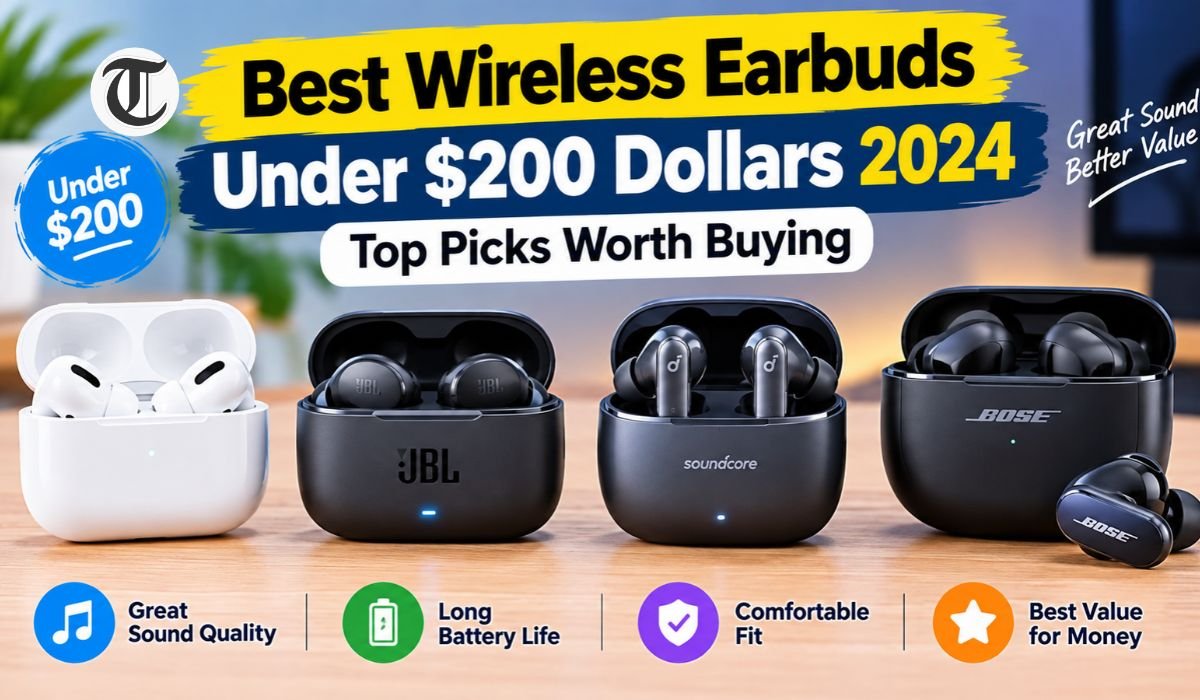
Introduction: What Can You Really Get for Under $200?
Shopping for the Best Wireless Earbuds Under 200 Dollars 2024 doesn’t mean you have to compromise on the features that matter. In this price range, you can find earbuds with active noise cancellation, impressive sound, useful companion apps, capable microphones, water resistance, multipoint connectivity, and fast charging. The harder part is figuring out which of those features will actually make a difference in your daily life.
The Soundcore Liberty 4 Pro, Beats Fit Pro, and EarFun Air Pro 4 each take a slightly different approach. One is built around an extensive feature set, another puts extra attention on workout stability, while the third aims to deliver useful features without requiring you to spend the full $200. That variety is exactly why choosing wireless earbuds isn’t simply about finding the model with the longest specification sheet.
This guide focuses on the products and technology associated with the 2024 market while adding useful context for readers in 2026. There’s also an important date distinction worth making: the Sony WF-C710N belongs to a later product generation, so it shouldn’t be described as a 2024 launch. It can still be useful as a current comparison, but it shouldn’t be presented as though it was released during the original 2024 buying period.
Best Wireless Earbuds Under 200 Dollars at a Glance
The Soundcore Liberty 4 Pro is a feature-packed option for someone who wants one pair of earbuds to handle music, commuting, calls, and everyday listening. Its specifications include dual dynamic drivers, adaptive noise cancellation, multipoint connectivity, IPX5 water resistance, customizable EQ, six microphones, and a charging case with an integrated display. Soundcore rates the earbuds for up to 10 hours of playback and up to 40 hours with the case under its stated testing conditions.
The Beats Fit Pro approaches the market from a different angle. Its flexible wingtip design is intended to keep the earbuds more securely positioned during physical activity. Active Noise Cancellation and Transparency Mode make them useful outside the gym as well. The earbuds carry an IPX4 rating for sweat and water-splash resistance, although the charging case doesn’t have the same protection.
Then there’s the EarFun Air Pro 4, which is worth considering for buyers who don’t necessarily want to spend close to $200. Its appeal comes from offering many modern wireless-earbud features at a lower price. For shoppers focused on value, that can be just as important as having a premium brand name.
How We Evaluated the Best Wireless Earbuds Under $200
A useful earbud comparison needs to go beyond what’s printed on the packaging. Sound quality is obviously important, but it isn’t the only thing that determines whether a pair will be enjoyable to use. An earbud that sounds great but constantly slips out, causes pressure, or produces poor call quality can quickly become frustrating.
That’s why this comparison considers several parts of the ownership experience. Sound, Active Noise Cancellation, microphone performance, comfort, battery life, connectivity, durability, software support, and everyday convenience all matter. The goal isn’t to find one pair that’s perfect for everyone. Instead, the aim is to understand where each model makes the most sense.
It’s also important to separate official specifications from personal impressions. Battery figures are generally based on controlled testing, while comfort and sound preferences vary from one person to another. Keeping that distinction clear makes a buying guide more useful and trustworthy.
Soundcore Liberty 4 Pro: Best Overall Feature Set
The Soundcore Liberty 4 Pro makes a strong case for buyers who want a versatile pair of wireless earbuds. It uses two dynamic drivers, including a 10.5mm driver and a 4.6mm driver, and supports Bluetooth 5.3. Soundcore also lists Adaptive ANC 3.0, HearID sound customization, multipoint connectivity, and IPX5 water resistance.
One of its most unusual features is the charging case. Rather than serving only as a place to store and charge the earbuds, the case has a built-in display and touch control. This gives users a convenient way to interact with certain settings without reaching for their phone.
The earbuds also use six microphones and AI-assisted call processing. Soundcore says the system is designed to improve voice pickup and reduce unwanted noise, including wind noise. A five-minute charge is rated to provide up to four hours of playback under the company’s stated conditions.
Taken together, those features make the Liberty 4 Pro particularly interesting for someone who wants a single pair for music, work calls, commuting, and switching between devices.
Beats Fit Pro: A Strong Choice for Workouts
The Beats Fit Pro is built around one particularly important idea: keeping the earbuds in place. Instead of relying solely on the ear tip, the flexible wingtip creates an additional point of support inside the ear. For runners and gym users, that can be a meaningful advantage.
The earbuds include Active Noise Cancellation and Transparency Mode, so users can choose between reducing surrounding noise and allowing more environmental sound through. Beats rates the earbuds IPX4 for sweat and water-splash resistance.
There is, however, an important distinction between the earbuds and the case. The IPX4 protection applies to the earbuds, not the charging case. That means users shouldn’t assume the entire package is waterproof simply because the earbuds are designed to handle sweat and splashes.
For people who frequently exercise, the secure fit may be more valuable than having the longest possible battery rating or the largest selection of advanced audio features.
EarFun Air Pro 4: A Lower-Cost Alternative
Not everyone needs to spend the entire $200 budget. That’s where the EarFun Air Pro 4 becomes an interesting alternative. It gives budget-conscious shoppers another route into the modern wireless-earbud market without requiring them to choose an entry-level model with very few features.
Its biggest attraction is value. Buyers looking for Active Noise Cancellation, customizable listening, and modern connectivity may find that a less expensive pair covers most of their needs.
There’s also a broader lesson here. A higher price doesn’t automatically mean a better experience for every listener. If a less expensive earbud fits your ears comfortably, sounds the way you like, and provides the features you actually use, spending another $50 or $100 may not improve your day-to-day listening very much.
Because earbud prices change regularly, it’s best to judge the Air Pro 4—and any competing model—by its current selling price rather than relying on an old price range.
Sound Quality: What Should You Listen For?
Sound quality is one of the most personal parts of choosing wireless earbuds. Some listeners want powerful bass for electronic music or hip-hop. Others care more about natural vocals, detailed instruments, or clear speech for podcasts and audiobooks.
A good pair should keep vocals easy to understand without allowing bass to overpower the rest of the recording. At the same time, listeners who enjoy a more energetic sound may prefer a stronger low end.
The Liberty 4 Pro offers EQ customization through Soundcore’s HearID system, giving users more control over the final sound. That flexibility can be helpful because people don’t all hear or enjoy music in exactly the same way.
It’s also worth remembering that driver size alone doesn’t determine sound quality. Tuning, software processing, the ear-tip seal, Bluetooth connection, source material, and personal preference all play a role in what you ultimately hear.
Noise Cancellation: What Makes ANC Useful?
Active Noise Cancellation, commonly called ANC, uses microphones to detect surrounding sounds and processing to reduce the amount of unwanted noise reaching the listener. It tends to be particularly useful against steady sounds such as aircraft engines, train rumble, buses, and air-conditioning systems.
ANC isn’t magic, though. It doesn’t necessarily eliminate every voice, sudden sound, or unpredictable noise around you. That’s one reason the physical fit of an earbud matters so much.
A good seal provides passive isolation before electronic noise cancellation even gets involved. If the ear tip is too loose, outside noise can leak in and bass can sound noticeably weaker. In other words, even sophisticated ANC can underperform when the earbuds don’t fit properly.
The Liberty 4 Pro uses multiple sensors and adaptive processing as part of its noise-cancellation system. Sony’s later WF-C710N also uses dual microphones to help detect surrounding noise. These specifications are useful reference points, but manufacturer claims shouldn’t be confused with a universal independent ranking. Actual ANC performance can differ according to ear shape, fit, environment, and the type of noise you’re trying to block.
Call Quality and Microphone Performance
Wireless earbuds are no longer just music accessories. Many people use them for work meetings, video calls, phone conversations, and quick conversations while they’re out and about. That makes microphone quality a feature worth taking seriously.
A microphone can perform perfectly well in a quiet room and struggle when wind, traffic, or nearby conversations enter the picture. That’s why microphone performance needs to be considered in the context of where you’ll actually use the earbuds.
The Liberty 4 Pro uses six microphones and AI-assisted processing for calls, with wind-noise reduction included in its feature set. These technologies are designed to make the user’s voice easier for the other person to hear.
Still, microphone performance isn’t guaranteed to be identical in every situation. Wind direction, background noise, phone compatibility, microphone placement, and the surrounding environment can all affect the final call.
Comfort and Ear-Tip Fit
Comfort is one of the easiest things to overlook when shopping online. Product specifications can tell you about Bluetooth versions and battery life, but they can’t tell you exactly how an earbud will feel inside your ears.
The right fit should feel secure without creating painful pressure. If the earbud constantly moves, outside noise may leak in and bass can become weaker. A poor seal can also make Active Noise Cancellation less effective.
It’s worth trying all of the ear-tip sizes included with a pair rather than automatically sticking with the size that comes pre-installed. Some people even need different sizes in their left and right ears.
If silicone tips aren’t comfortable, compatible memory-foam tips can be another option. They can create a different type of seal and may work better for listeners who struggle with conventional silicone tips.
The important thing is not to confuse a slightly unfamiliar fit with genuine discomfort. If an earbud causes pain after extended use, another tip size or a different design may be a better solution.
Battery Life and Long-Term Ownership
Battery life is one of the most heavily advertised wireless-earbud features, but the number on the box isn’t necessarily what you’ll experience every day. Playback time can change depending on volume, Active Noise Cancellation, Bluetooth settings, calls, temperature, and other functions.
Soundcore rates the Liberty 4 Pro for up to 10 hours of playback from the earbuds and up to 40 hours with the charging case under its specified conditions. With ANC enabled, its stated figures are lower. The company also says that a five-minute charge can provide up to four hours of playback under its testing conditions.
The Sony WF-C710N, which belongs to a later generation rather than the 2024 launch period, is rated for up to 8.5 hours with noise cancellation enabled. Sony also notes that actual battery performance varies and that rechargeable batteries naturally lose capacity as they age.
That battery aging is something every wireless-earbud buyer should expect. Keeping the earbuds away from excessive heat and taking sensible care of the charging case can help support longer-term use, although no rechargeable battery maintains its original capacity forever.
Android and iPhone Compatibility
Both Android and iPhone users have plenty of options in the under-$200 category, but the software experience can differ depending on the phone you use.
The Liberty 4 Pro supports Bluetooth 5.3, multipoint connectivity, and customizable EQ. It also supports LDAC on compatible devices, giving certain Android users access to higher-quality Bluetooth audio when the device and settings support it.
The Beats Fit Pro is particularly appealing to people already using Apple products because of its integration with the Apple ecosystem. However, Android users aren’t excluded. Beats provides an Android app that allows users to customize certain functions, including the press-and-hold control, and access their device’s default voice assistant.
For people who regularly switch between a phone and a computer, multipoint connectivity can be especially useful. Instead of repeatedly disconnecting and reconnecting, compatible earbuds can maintain connections with multiple devices.
Travel, Running, and Everyday Use
Travel changes what you should look for in wireless earbuds. A frequent flyer will probably care more about noise cancellation, comfort, battery life, and transparency mode than about having every possible audio feature.
For long flights, ANC performance against steady engine noise can make a noticeable difference to the listening experience. Battery life with ANC enabled is also more relevant than a headline figure measured with ANC and other features switched off.
Commuters have similar needs. A good transparency mode can be useful when you need to hear announcements, conversations, or environmental sounds without removing the earbuds.
Workout users have a different priority. Stability becomes critical when you’re running, jumping, or moving quickly. The Beats Fit Pro’s flexible wingtip gives it a design advantage for people who don’t like traditional earbuds shifting during exercise.
Its IPX4 rating also means the earbuds are designed to resist sweat and water splashes. That doesn’t make them waterproof, however, and they shouldn’t be deliberately submerged.
The Sony WF-C710N deserves particular clarification. Its current specifications include Bluetooth 5.3, multipoint connectivity, Active Noise Cancellation, Ambient Sound Mode, and IPX4 protection. Sony rates it for up to 8.5 hours of music playback with noise cancellation enabled. Those specifications make it relevant to a current comparison, but they shouldn’t be used to suggest that the model was launched in 2024.
Features You Actually Need Under $200
The best features are often the ones you end up using without thinking about them. Active Noise Cancellation can make a crowded commute much easier. Transparency Mode lets you hear your surroundings when necessary. Multipoint connectivity can make switching between your phone and laptop much simpler.
Good microphones are especially valuable for people who work remotely or make frequent calls. Water resistance can also provide useful protection for exercise and everyday use.
There are more advanced features, of course. Spatial audio, head tracking, advanced Bluetooth codecs, and detailed sound personalization can all be worthwhile for certain listeners. But they shouldn’t distract you from the basics.
A comfortable fit, dependable connection, enjoyable sound, useful ANC, and reliable battery life are usually more important than simply having the longest feature list.
Common Buying Mistakes to Avoid
One of the most common mistakes is choosing earbuds solely because they advertise a large battery number. Maximum playback figures are measured under particular conditions and don’t necessarily reflect how long the earbuds will last with ANC, higher volume, calls, and other features running.
Another mistake is ignoring the fit. A poor seal can affect bass, outside-noise isolation, and ANC performance all at once.
It’s also easy to spend extra money on features that you’ll barely use. Before buying, think about your normal routine. Someone who spends hours on airplanes has very different priorities from someone who listens to podcasts at home. A runner may care much more about stability and water resistance than someone who spends most of the day at a desk.
The smartest purchase isn’t necessarily the most expensive one. It’s the model whose strengths match your actual needs.
How to Get the Best Fit
Start by trying the different ear-tip sizes that come with your earbuds. Don’t assume the factory-installed size will be right for you.
A proper seal should feel secure without creating painful pressure. Music should sound full, particularly in the bass, and outside noise shouldn’t overwhelm your listening experience.
If changing the ear-tip size suddenly improves bass or reduces outside noise, the original fit probably wasn’t ideal. That’s normal, and it’s one of the easiest things to fix.
Your two ears may also have slightly different shapes. There’s nothing unusual about needing one size on the left and another on the right.
Memory-foam tips can be another possibility for compatible earbuds. They may provide a different kind of seal and can be worth trying if conventional silicone tips don’t feel comfortable.
Price, Warranty, Returns, and Long-Term Value
Wireless-earbud prices can move considerably during sales, which makes the current selling price more useful than an old “typical price.” A model that sits near $200 at its regular price may occasionally fall well below that amount.
It’s also important to consider where you’re buying. Check the seller, warranty coverage, return conditions, and what accessories are included before placing an order.
Long-term value extends beyond the initial purchase. Battery aging, physical durability, replacement ear tips, software support, and warranty service can all influence how worthwhile a pair remains after the first few months.
If you’re buying online, keeping the original packaging, ear tips, and accessories until you’ve confirmed that the earbuds fit comfortably is a sensible precaution. It gives you more flexibility if the fit or performance doesn’t meet your expectations.
Final Thoughts: Finding the Right Wireless Earbuds Under $200
The Best Wireless Earbuds Under 200 Dollars 2024 will depend on what you actually need from them. The Soundcore Liberty 4 Pro is a particularly versatile option for buyers interested in adaptive ANC, sound customization, multipoint connectivity, six microphones, and a feature-rich charging case.
The Beats Fit Pro takes a more specialized approach. Its flexible wingtip design and IPX4 sweat and splash resistance make it particularly relevant for people who spend a lot of time running or exercising.
The EarFun Air Pro 4 offers another path for shoppers who want to keep their spending comfortably below the $200 ceiling while still getting a modern set of wireless-earbud features.
The most important takeaway is simple: don’t choose earbuds based on a single specification. Consider how they fit your ears, what phone and other devices you use, where you normally listen, whether you make frequent calls, and how much you value noise cancellation or workout stability.
A $200 budget is enough to buy a highly capable pair of wireless earbuds. The real challenge isn’t finding good earbuds. It’s finding the pair whose strengths line up with your everyday life.
FAQs About Best Wireless Earbuds Under 200 Dollars
Are Wireless Earbuds Under $200 Worth Buying?
Yes. The under-$200 category includes models with features that were once associated mainly with more expensive earbuds. Active Noise Cancellation, Transparency Mode, customizable sound, multipoint connectivity, capable microphones, and water resistance are all available in this range.
The important thing is to decide which features matter most to you instead of assuming every premium feature is necessary.
Which Earbuds Are Best for Running?
The Beats Fit Pro is designed with workout stability in mind. Its flexible wingtip gives the earbuds additional support, which can help keep them in position during movement. The earbuds are also rated IPX4 for sweat and water-splash resistance.
They’re not waterproof, though, so users shouldn’t deliberately expose them to large amounts of water or submerge them.
Which Earbuds Are Good for Travel?
Travelers should look for effective Active Noise Cancellation, comfortable ear tips, dependable battery life, and a useful transparency mode.
The Soundcore Liberty 4 Pro is a versatile option because of its ANC and extensive feature set, while the later Sony WF-C710N is another current option with ANC, Ambient Sound Mode, multipoint connectivity, and a stated 8.5-hour ANC playback rating.
Which Earbuds Are Best for Calls?
Call performance depends heavily on the environment, but earbuds with multiple microphones and background-noise processing can be helpful in busy surroundings.
The Liberty 4 Pro uses six microphones and AI-assisted call processing according to Soundcore. That makes it an interesting option for people who regularly use wireless earbuds for phone calls and online meetings.
Do More Expensive Earbuds Always Sound Better?
No. Price doesn’t automatically determine sound quality. The final listening experience depends on tuning, drivers, software, fit, Bluetooth performance, and personal preference.
A more expensive pair may offer additional features, but that doesn’t guarantee that you’ll personally prefer its sound or comfort. That’s why fit and listening preferences should remain central to the buying decision.
How Long Do Wireless Earbuds Last?
The answer depends on construction, frequency of use, battery care, and how quickly the rechargeable batteries lose capacity.
The batteries inside wireless earbuds naturally age over time. As they do, maximum playback time gradually decreases. Taking reasonable care of the earbuds and avoiding excessive heat can help support longer-term use, but battery degradation is ultimately unavoidable.
Are Beats Fit Pro Compatible With Android?
Yes. Beats Fit Pro can be used with Android devices, and Beats provides an Android app that allows users to customize certain controls and access their device’s default voice assistant.
Apple users receive additional ecosystem-specific conveniences, but Android compatibility means the earbuds aren’t limited to iPhone owners.
What Matters Most When Buying Wireless Earbuds Under $200?
Start with fit and comfort. If the earbuds don’t sit properly in your ears, even excellent sound and noise cancellation can become disappointing.
After fit, consider sound quality, Active Noise Cancellation, microphone performance, battery life, connectivity, water resistance, and software features. Think about your everyday routine and choose the combination that genuinely benefits you.
That approach is much more reliable than simply buying the model with the biggest list of specifications.
Learn more and explore exciting content on: What Is Messagenal? A Simple Guide to Clear Digital Communication
[…] Learn more and explore exciting content on: Best Wireless Earbuds Under 200 Dollars 2024: Top Picks Worth Buying […]