
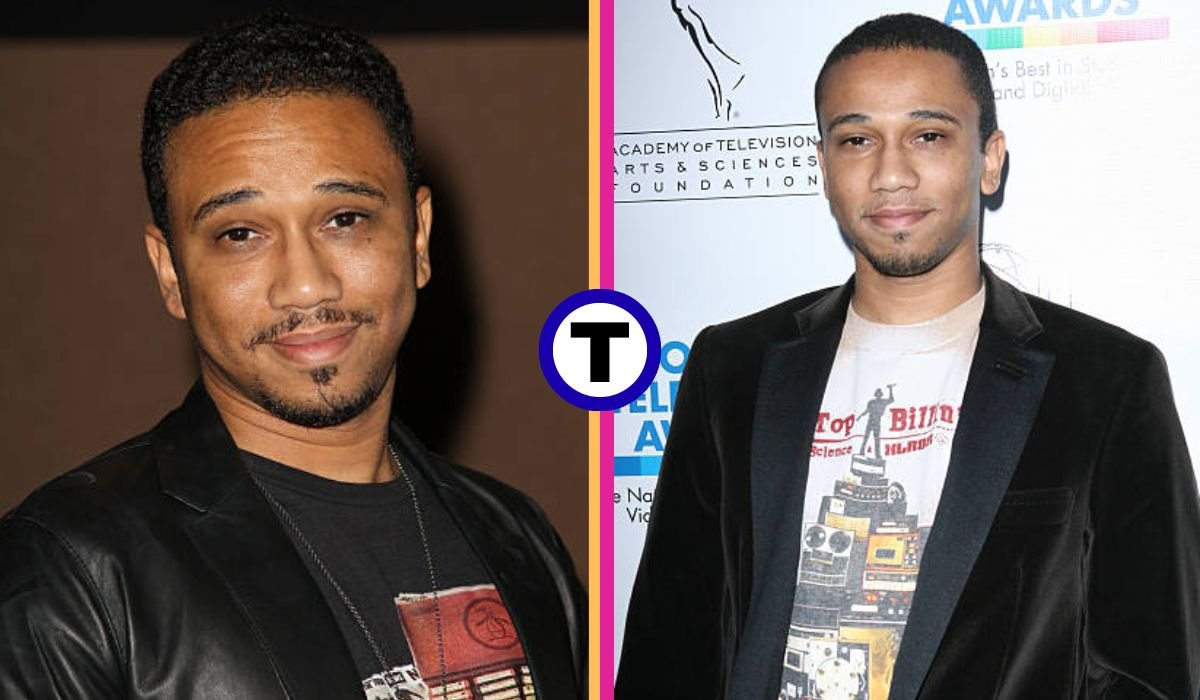
Aaron McGruder has never been the kind of creator whose work fits comfortably into one category. He’s a cartoonist, writer, producer, and satirist, but he’s best known as the creator of The Boondocks, a comic that grew from an ambitious young artist’s idea into one of the most recognizable works of Black political satire in modern American popular culture.
What made McGruder stand apart wasn’t simply his willingness to be controversial. His work arrived with a clear point of view and an unusual mix of influences. Politics, race, Black identity, hip-hop, television, celebrity culture, history, and everyday American life could all find their way into the same story.
That approach gave The Boondocks an identity unlike most newspaper comics around it. McGruder wasn’t interested only in delivering a quick punchline. His characters argued, contradicted one another, made mistakes, and forced readers to think about larger questions hiding beneath the humor.
The project eventually moved beyond newspapers and into books and television, introducing Huey Freeman, Riley Freeman, and their grandfather to a much larger audience. Along the way, McGruder became both celebrated and criticized for refusing to soften his political and cultural observations.
His public presence has become quieter in more recent years, but the influence of his work hasn’t disappeared. For anyone exploring Aaron McGruder’s biography in 2026, his career offers a fascinating story about comics, Black culture, political satire, television, and the creative risks involved in challenging an audience.
Quick Bio Information
| Bio Information | Details |
|---|---|
| Full Name | Aaron Vincent McGruder |
| Known As | Aaron McGruder |
| Date Of Birth | May 29, 1974 |
| Birthplace | Chicago, Illinois, United States |
| Age In 2026 | 52 Years Old |
| Nationality | American |
| Profession | Writer, Cartoonist, Producer |
| Best Known For | Creating The Boondocks |
| Major Comic | The Boondocks |
| Famous Characters | Huey Freeman And Riley Freeman |
| Education | University Of Maryland |
| Field Of Study | African American Studies |
| Television Work | The Boondocks And Black Jesus |
| Graphic Novel | Birth Of A Nation: A Comic Novel |
| Major Themes | Race, Politics, Media, Culture And Identity |
| Creative Influences | Hip-Hop, Comics, Politics, Anime And Popular Culture |
| Major Television Association | Adult Swim |
| Notable Recognition | NAACP Chairman’s Award |
| Personal Life | Largely Kept Private |
Aaron McGruder Early Life And Family Background
Aaron Vincent McGruder was born on May 29, 1974, in Chicago, Illinois. While he was still young, his family relocated to Columbia, Maryland, after his father accepted a position with the National Transportation Safety Board. McGruder spent much of his formative life in Maryland and grew up alongside his older brother.
That childhood move becomes especially interesting when viewed through the world McGruder later created. In The Boondocks, Huey and Riley Freeman also leave Chicago and find themselves living in Woodcrest, a fictional, largely white suburban community.
It would be inaccurate to call the comic a straightforward retelling of McGruder’s childhood. The Freeman brothers are fictional characters, and their stories frequently push reality into exaggerated territory for comedic and political effect. Still, there are recognizable connections between McGruder’s background and the questions that eventually became central to his work.
Growing up in different social environments gave him a useful perspective on race and identity. Those issues aren’t experienced only through national politics; they can also emerge through neighborhoods, schools, friendships, class differences, and ordinary interactions.
McGruder eventually turned those observations into satire. Rather than explaining race through abstract arguments alone, he built stories around characters who experienced cultural differences directly.
Aaron McGruder Education And College Years
After attending school in Maryland, McGruder enrolled at the University of Maryland and studied African American Studies. The subject was a natural fit for a young creator who would later spend much of his career examining Black history, politics, racial identity, media, and American institutions.
His university years were important for another reason: this was where his creative interests began developing into serious professional work.
The Boondocks took shape during this period and gained exposure through early outlets, including the University of Maryland’s student newspaper, The Diamondback. That environment gave McGruder something every developing writer needs—an audience.
He could experiment with characters, sharpen jokes, test political ideas, and see how people reacted when difficult subjects were presented through a comic strip rather than an essay or speech.
The experience also helped him refine the balance that would later define The Boondocks. The comic could be funny without abandoning serious ideas, and it could discuss politics without losing the personalities of its characters.
McGruder’s rise therefore wasn’t an overnight success story. The work developed through experimentation, early publication, criticism, audience response, and a young cartoonist gradually finding his voice.
Creative Influences Behind Aaron McGruder’s Work
McGruder’s style didn’t grow entirely out of traditional newspaper cartooning. His creative influences came from several different corners of popular culture, which helps explain why The Boondocks has always felt difficult to place inside one neat category.
Hip-hop was especially important. By the time McGruder was developing his voice, hip-hop had become much more than a musical genre. It was a cultural force with its own language, politics, fashion, generational tensions, commercial pressures, and debates about Black identity.
Those contradictions gave McGruder plenty to work with.
Comics and political satire were equally important. He admired creators who demonstrated that comic strips could discuss real events rather than existing only as light entertainment. Political commentary could live beside character comedy, provided the writing remained sharp enough to support both.
Then there was popular culture. McGruder has long been associated with a deep enthusiasm for Star Wars, while Japanese animation influenced the visual character of The Boondocks, particularly when the property made the transition to television.
Together, these influences produced an unusual creative language. A joke about rap could become an argument about commercialization. A television reference could turn into criticism of racial representation. Even a disagreement between children could lead into a much larger conversation about American politics.
How Aaron McGruder Created The Boondocks
At the heart of Aaron McGruder’s career is The Boondocks. The project developed during his university years before gaining broader exposure through early online and print publication and eventually entering national newspaper syndication.
Its basic setup was deceptively simple.
Huey Freeman and his younger brother Riley live with their grandfather, Robert Freeman, in Woodcrest. Yet the brothers couldn’t be more different.
Huey is thoughtful, politically conscious, skeptical of authority, and intensely interested in history and power. Riley is fascinated by rap culture, money, status, toughness, and the exaggerated image of gangster life promoted by parts of popular entertainment.
Granddad brings yet another worldview. He doesn’t simply exist to agree with either child; he has his own priorities, frustrations, contradictions, and generational assumptions.
Putting these personalities together gave McGruder an almost unlimited storytelling framework.
By moving the Freeman family into a largely white fictional suburb, he could explore race, class, assimilation, education, politics, generational conflict, media, and popular culture through everyday situations.
It’s also important not to assume that Huey is simply McGruder speaking through a fictional character. McGruder has pushed back against that interpretation. The different characters often represent competing ideas, allowing the satire to develop through disagreement rather than a single political lecture.
The Boondocks Becomes A National Comic
The decisive breakthrough came in April 1999, when Universal Press Syndicate launched The Boondocks nationally. More than 150 newspapers reportedly carried the strip at its debut, giving McGruder an unusually large platform for a new comic.
The timing couldn’t have been much better for the type of work he was creating.
Hip-hop had become a dominant cultural and commercial force. Political divisions were becoming increasingly visible. Conversations about race, representation, media, and Black identity were changing, while the internet was beginning to transform the way audiences encountered culture.
McGruder brought those conversations into a part of the newspaper that wasn’t traditionally known for confronting them so directly.
The Boondocks could address elections, politicians, race relations, television, rap music, celebrity behavior, foreign policy, or media coverage and still function as a character-driven comic.
Predictably, the strip attracted strong reactions.
Some readers welcomed a nationally syndicated comic willing to place young Black characters at the center of political and cultural conversations. Others considered particular jokes, portrayals, or political arguments offensive.
Whatever readers thought of McGruder’s opinions, ignoring the strip became increasingly difficult. That visibility transformed him from a promising cartoonist into a nationally recognized satirical voice.
Why The Boondocks Became So Influential
Controversy helped The Boondocks attract attention, but controversy alone wouldn’t have given the work its longevity.
Its real strength came from the characters.
Huey might question American institutions, political leaders, and mainstream narratives. Riley could reveal the absurdities of commercialized hip-hop culture while enthusiastically embracing many of those same ideas. Granddad often tried to control both boys while exposing his own weaknesses.
The supporting cast made the fictional world even broader.
Because these characters disagreed with one another, McGruder could explore Black identity without pretending that Black Americans shared one political or cultural perspective.
That mattered.
At the time, relatively few nationally syndicated newspaper strips placed Black characters at the center of outspoken discussions about contemporary politics, media, and culture. The Boondocks entered that space without attempting to make itself politically harmless.
Readers could laugh at a character’s behavior while simultaneously recognizing a larger argument underneath the joke.
That combination of entertainment and criticism became one of the defining qualities of McGruder’s work.
Controversy And Political Satire
Aaron McGruder’s reputation for controversy wasn’t accidental. The Boondocks repeatedly explored subjects that many mainstream newspaper comics avoided.
Politicians, war, race, Black conservatism, television networks, celebrities, popular music, consumer culture, and media coverage could all become targets.
Some newspapers responded by withholding individual strips, moving the comic to editorial pages, or otherwise reconsidering where it belonged. The debate itself became part of The Boondocks story.
McGruder could be equally outspoken outside his fictional world. His public appearances sometimes generated headlines because he wasn’t particularly interested in softening his opinions to suit an audience.
Yet describing his work simply as left-wing political satire misses part of what made it unpredictable.
McGruder could sharply criticize conservative politicians while also targeting liberal institutions, wealthy celebrities, Black media companies, entertainment executives, or trends within hip-hop culture.
No group was guaranteed immunity.
For McGruder, satire worked best when it challenged comfortable assumptions. That philosophy inevitably created conflict, but it also prevented The Boondocks from becoming predictable.
The Boondocks Television Series
The world of The Boondocks changed dramatically when it moved from newspaper panels to television.
The animated series premiered on Adult Swim in November 2005, giving McGruder a much larger creative canvas. Ideas that once had to fit into a handful of panels could now unfold through full episodes, voice performances, music, elaborate action scenes, and longer conversations.
Characters including Huey, Riley, Granddad, Uncle Ruckus, and Tom DuBois became fully animated personalities.
The television format also allowed the show’s visual influences to become far more obvious. Anime-inspired action sequences gave The Boondocks a distinctive look, while hip-hop music and cultural references helped establish an identity separate from other American adult cartoons.
The subject matter remained unmistakably McGruder.
Episodes dealt with race, celebrity culture, politics, entertainment, masculinity, social expectations, and the contradictions of American life. Some stories were deliberately outrageous, while others used absurdity to expose serious cultural tensions.
McGruder served as showrunner for the first three seasons. When a fourth season arrived in 2014, however, he was no longer involved.
That creative break remains an important dividing line in the history of the television series.
Why Aaron McGruder Left The Boondocks
When McGruder’s absence from the fourth season became public, fans naturally wanted to know what had happened.
McGruder confirmed in 2014 that he wouldn’t be returning. In his farewell statement, he spoke warmly about the characters and described The Boondocks as an important part of his life’s work.
He also thanked Sony and Adult Swim for supporting the first three seasons while acknowledging that television is ultimately a business.
That statement is important because the years since have produced numerous theories about his departure. Some may sound convincing, but a responsible biography needs to distinguish confirmed information from fan speculation.
What is clear is that McGruder’s departure represented a major creative change.
He had spent years building Huey, Riley, Granddad, and their world, first through comics and later through television. The fourth season therefore continued the franchise without the creator who had shaped its original voice.
For readers trying to understand the show’s history, that distinction is more useful than repeating unsupported explanations about behind-the-scenes disagreements.
Aaron McGruder Books And Published Work
Television introduced The Boondocks to millions of viewers, but McGruder’s books remain an important part of his career.
Collections such as The Boondocks: Because I Know You Don’t Read the Newspaper, Fresh for ’01… You Suckas!, A Right to Be Hostile, Public Enemy #2, and All the Rage: Boondocks Past and Present preserved his newspaper work in a form readers could revisit.
These books are particularly valuable for anyone who discovered the Freeman brothers through Adult Swim.
The original strips reveal how the characters developed before television gave them voices, movement, music, and longer storylines. They also capture political and cultural moments from the period in which McGruder was writing them.
His published work wasn’t limited to The Boondocks collections.
McGruder also co-wrote Birth of a Nation: A Comic Novel with filmmaker Reginald Hudlin, with artwork by Kyle Baker. The graphic novel uses an exaggerated political scenario to explore questions involving race, citizenship, independence, and American identity.
The project reinforced a pattern already visible throughout McGruder’s career: comedy was rarely just comedy. It was a vehicle for examining something larger.
Black Jesus And Other Screen Work
McGruder’s television career didn’t end when he stepped away from The Boondocks.
One of his best-known later projects was Black Jesus, a live-action Adult Swim comedy starring Gerald “Slink” Johnson. The series places Jesus in modern-day Compton, where he spends time with friends and residents of the neighborhood.
The premise was provocative from the start, which wasn’t surprising given McGruder’s creative history.
Yet beneath the deliberately irreverent humor were familiar themes involving friendship, faith, community, morality, social conditions, and identity.
Black Jesus premiered in 2014 and ultimately ran for three seasons.
McGruder also contributed to screenwriting work connected with Red Tails, the George Lucas-produced film inspired by the Tuskegee Airmen.
Those projects are reminders that calling Aaron McGruder simply a cartoonist doesn’t fully describe his career. His work has crossed newspaper comics, publishing, television development, screenwriting, animation, and production.
Aaron McGruder Awards And Professional Recognition
McGruder’s work has earned recognition beyond ratings, newspaper circulation, and book sales.
He received the Chairman’s Award from the NAACP, while The Boondocks television series received major recognition of its own, including a Peabody Award.
The distinction between individual honors and awards given to a production is worth maintaining. Combining them can make a biography sound more impressive, but it also makes it less accurate.
Perhaps an equally meaningful measure of McGruder’s achievement is the number of formats his work successfully crossed.
The Boondocks began as a comic and became a nationally syndicated newspaper property before expanding into books and television. Moving between those formats isn’t easy, particularly when the original work depends heavily on political commentary.
Yet the franchise retained its identity.
It didn’t become a conventional family comedy simply because television offered a larger audience. The politics, cultural criticism, and confrontational humor remained central to the experience.
Aaron McGruder Personal Life And Net Worth
For someone whose work has generated so much public discussion, Aaron McGruder has kept a surprising amount of his private life out of public view.
Reliable information about his marriage, wife, children, or current relationships is limited. Search results may produce claims about these subjects, but repetition online isn’t the same as verification.
A careful biography shouldn’t fill those gaps with assumptions.
The same principle applies to Aaron McGruder’s net worth.
Some celebrity-finance publications have estimated his wealth at around $5 million. That figure is frequently repeated, but it hasn’t been publicly confirmed by McGruder through detailed financial records.
It is therefore more accurate to call it an unofficial estimate.
McGruder has worked in several areas capable of generating substantial income, including newspaper syndication, book publishing, television writing, production, and screen projects. Without verified financial disclosures, however, his exact earnings, investments, assets, and overall wealth remain private.
Being transparent about what isn’t known is just as important as reporting what is.
What Happened To The Boondocks Revival?
Years after McGruder left the original television production, news of a planned Boondocks revival created considerable excitement among fans.
In 2019, a new version of the series was announced, with McGruder expected to return as showrunner and executive producer. HBO Max subsequently ordered a two-season revival planned around 24 episodes.
For longtime viewers, the announcement mattered because it suggested that McGruder would once again have direct creative involvement with the characters he had created.
The project, however, never reached audiences as originally planned.
By 2022, reports confirmed that the proposed HBO Max revival was no longer moving forward. Actor Cedric Yarbrough, who had been associated with the franchise through his voice work, also discussed the cancellation publicly.
That history matters in 2026 because old announcements can easily create confusion. Someone encountering the original revival news without later context might reasonably assume the project is still being developed.
As things stand, the previously announced HBO Max revival should be considered canceled. Any claim that another version of The Boondocks is definitely coming back would require fresh confirmation from McGruder, a studio, a network, or another reliable entertainment source.
Aaron McGruder’s Writing Style And Cultural Legacy
McGruder’s greatest creative skill may be his ability to make a cultural argument without completely sacrificing entertainment.
A story can begin with rap music, television, suburban life, or celebrity behavior and gradually reveal a much broader question about race, politics, media power, commercialization, or generational conflict.
The audience doesn’t necessarily have to agree with the conclusion.
In fact, disagreement has always been part of the experience.
That approach gave The Boondocks an unusual place in American animation. The series showed that an animated production centered primarily on Black characters could be politically aggressive, culturally specific, visually ambitious, and commercially visible without flattening its identity for a mainstream audience.
Its visual language also mattered. The combination of American political satire, Black cultural references, hip-hop, and anime-inspired action helped create a style that viewers could recognize almost immediately.
More importantly, many of the questions McGruder explored haven’t disappeared.
Debates about racial representation, media influence, political frustration, celebrity culture, commercialization, identity, and generational differences remain part of American life.
That’s one reason The Boondocks can still feel culturally relevant years after its original newspaper and television runs.
Where Is Aaron McGruder Now?
The question “What happened to Aaron McGruder?” has become increasingly common because he isn’t as publicly visible as he was during the height of The Boondocks.
As of 2026, widely reported information about major new McGruder projects following the canceled revival remains limited.
That absence naturally encourages speculation. But a quieter public profile isn’t evidence of a mysterious disappearance, retirement, or personal crisis.
Sometimes a creator is simply private.
McGruder has long kept significant parts of his personal life outside the public eye, and recent years have offered fewer confirmed professional announcements than the earlier stages of his career.
The responsible approach is therefore straightforward: acknowledge what is known without inventing explanations for what isn’t.
Until McGruder, a publisher, studio, network, or another reliable source confirms a new project, his recent professional activity should simply be described as comparatively private.
His existing body of work, meanwhile, continues to attract new audiences.
Final Thoughts On Aaron McGruder
Aaron McGruder built his career around a deceptively simple idea: comics and animation could make people laugh while still asking difficult questions.
From his university years to the national syndication of The Boondocks, he developed a creative voice that was unmistakably connected to Black culture, hip-hop, politics, history, and the media environment around him.
Then he took that voice somewhere even bigger.
The television adaptation of The Boondocks helped demonstrate that Black-centered adult animation didn’t have to avoid political confrontation or cultural specificity to reach a wide audience. Huey, Riley, Granddad, and the residents of Woodcrest could be funny, frustrating, contradictory, intelligent, and deeply flawed—all while reflecting arguments taking place far beyond their fictional neighborhood.
That complexity is central to McGruder’s legacy.
His importance isn’t simply that he caused controversy or created memorable television episodes. It’s that he gave audiences characters through whom complicated ideas about race, politics, entertainment, identity, and power could collide.
Some viewers agreed with him. Others strongly disagreed. Often, that was precisely the point.
For readers looking at Aaron McGruder’s biography in 2026, the lasting evidence of his influence is found in the work itself. The Boondocks remains recognizable because many of the cultural questions it raised are still being debated.
McGruder may spend less time in the public spotlight today, but the conversations his work helped create haven’t gone quiet. In comics, television satire, Black popular culture, and adult animation, his influence continues to be felt—and that may ultimately be the clearest measure of his career.
FAQs About Aaron McGruder
Who Is Aaron McGruder?
Aaron McGruder is an American writer, cartoonist, producer, and political satirist best known for creating The Boondocks. His work frequently examines race, politics, Black identity, hip-hop, media, entertainment, and American society through comedy.
How Old Is Aaron McGruder?
Aaron McGruder was born on May 29, 1974, in Chicago, Illinois. He turned 52 years old in May 2026. Much of his childhood and education took place in Maryland before his professional career gained national attention.
Did Aaron McGruder Create The Boondocks?
Yes. Aaron McGruder is the original creator of The Boondocks and developed characters including Huey and Riley Freeman. The project evolved from a comic into a nationally syndicated newspaper strip before becoming the Adult Swim animated television series.
Why Did Aaron McGruder Leave The Boondocks?
McGruder confirmed that he wouldn’t participate in the fourth season of The Boondocks. He had served as showrunner during the first three seasons and described the project and its characters as an important part of his life. Various theories about his departure have circulated, but unsupported speculation shouldn’t be treated as confirmed fact.
What Books Did Aaron McGruder Write?
McGruder’s published work includes The Boondocks collections Because I Know You Don’t Read the Newspaper, Fresh for ’01… You Suckas!, A Right to Be Hostile, Public Enemy #2, and All the Rage: Boondocks Past and Present. He also co-wrote Birth of a Nation: A Comic Novel with Reginald Hudlin.
What Is Aaron McGruder’s Net Worth?
Some celebrity-finance publications estimate Aaron McGruder’s net worth at around $5 million. However, that figure isn’t a publicly verified financial disclosure. His exact wealth remains private, so the amount should be treated as an estimate rather than an established fact.
Is Aaron McGruder Bringing Back The Boondocks?
A new Boondocks series involving McGruder was announced and later received a two-season order from HBO Max. The proposed revival was subsequently reported as canceled in 2022. As of 2026, claims of another confirmed return should be treated cautiously unless supported by a new announcement from a reliable source.
What Is Aaron McGruder Doing Now?
Aaron McGruder has maintained a relatively low public profile in recent years, and reliable information about major current projects is limited. There is no need to interpret that privacy as anything more dramatic without evidence. Future professional projects should be considered confirmed only when announced by McGruder or another credible source.
Learn more and explore exciting content on: Stewart Copeland Biography: Early Life, The Police, Family, and Music Career
[…] Learn more and explore exciting content on: Aaron McGruder Biography: Early Life, Career, Books, and The Boondocks […]