
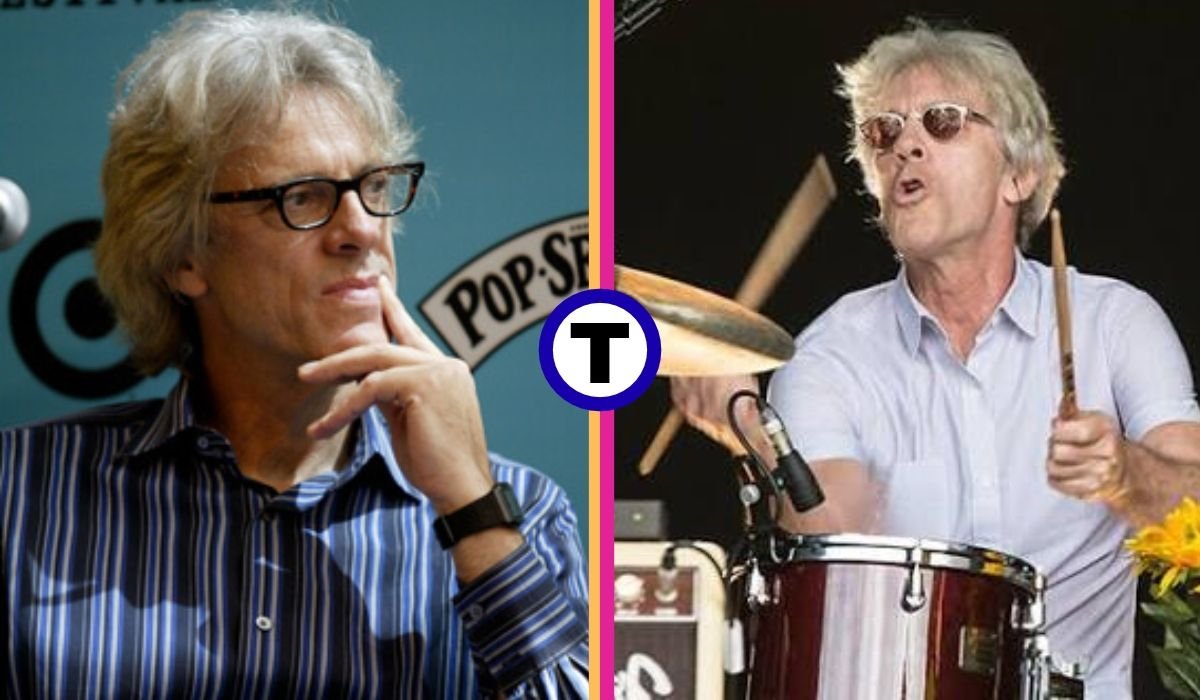
Stewart Copeland may always be closely associated with The Police, but describing him simply as the band’s drummer leaves out much of the story. Over several decades, the American musician has moved between rock, film scoring, orchestral composition, opera, experimental music, and collaborative projects while maintaining a musical personality that is unmistakably his own.
His path was unusual from the beginning. Born in Virginia and raised partly in the Middle East, Copeland experienced different cultures and sounds long before he entered Britain’s rapidly changing music scene. When The Police emerged in the late 1970s, his crisp Hi-Hat work, unexpected accents, and energetic rhythms became central to the trio’s identity.
Worldwide fame could easily have defined the rest of his career. Instead, Copeland kept moving. He composed for film and television, wrote for orchestras, explored opera, joined new groups, and found fresh ways to revisit music from his past.
In 2026, Stewart Copeland’s biography reads less like the story of a drummer from a famous rock band and more like the record of a lifelong musical explorer.
Quick Bio Information
| Bio Detail | Information |
|---|---|
| Full Name | Stewart Armstrong Copeland |
| Known As | Stewart Copeland |
| Date Of Birth | July 16, 1952 |
| Age In 2026 | 74 Years Old |
| Birthplace | Alexandria, Virginia, United States |
| Nationality | American |
| Profession | Drummer, Composer, Musician, Songwriter |
| Famous For | Co-Founder And Drummer Of The Police |
| Main Instruments | Drums And Percussion |
| Former Band | The Police |
| Earlier Band | Curved Air |
| Solo Identity | Klark Kent |
| First Wife | Sonja Kristina |
| Later Wife | Fiona Dent |
| Brothers | Miles Copeland III And Ian Copeland |
| Rock Hall Induction | With The Police In 2003 |
| Notable Film Score | Rumble Fish |
| Notable Later Collaboration | Divine Tides With Ricky Kej |
| Musical Areas | Rock, New Wave, Film Music And Orchestral Composition |
Stewart Copeland’s Early Life And Childhood
Stewart Armstrong Copeland was born on July 16, 1952, in Alexandria, Virginia. His American birthplace, however, tells only a small part of his childhood story. Because of his father’s international work, the Copeland family spent significant periods overseas, and Stewart grew up partly in the Middle East.
Lebanon became an important part of those formative years. Copeland attended the American Community School in Beirut and lived in an environment shaped by different languages, cultures, and musical traditions. Arabic was part of the world around him, giving his childhood a distinctly international character.
Music was present at home as well. Copeland has spoken about his early exposure to classical music, something that gained greater significance as his own career developed. The young drummer who would eventually become famous through rock music later found himself writing for orchestras and exploring large-scale compositions.
It would be an oversimplification to claim that his childhood directly created the distinctive drumming style heard on Police records. What can reasonably be said is that Copeland grew up with a broader cultural frame of reference than many American rock musicians of his generation. His later willingness to cross musical boundaries fits naturally into that larger story.
Parents And Musical Family Background
The Copeland household wasn’t conventional. Stewart’s father, Miles Copeland Jr., had a musical background before becoming associated with American intelligence work. His mother, Lorraine Copeland, pursued archaeology, bringing another international and intellectual dimension to family life.
Those careers meant the Copeland children grew up around far more than popular entertainment. Music, history, travel, politics, and different cultures were all part of their environment.
Stewart wasn’t the only member of the family to build a career around music. His brother Miles Copeland III became a notable manager and record-industry executive, with a particularly important connection to I.R.S. Records. Another brother, Ian Copeland, established himself as a booking agent and became influential within the live music business.
Stewart chose the stage.
Rather than managing artists or arranging their performances, he became the musician under the lights. Eventually, his career would intersect naturally with the same international music industry in which his brothers were building reputations of their own.
How Stewart Copeland Started His Music Career
Long before stadium tours and hit singles, Copeland had to learn how the professional music business actually worked.
During the mid-1970s, he played drums with the British progressive rock group Curved Air. The experience gave him something aspiring musicians can’t learn entirely through practice: life inside a working band. Touring, recording, rehearsing, and performing night after night helped sharpen both his technique and his professional instincts.
His timing was also significant.
British popular music was changing quickly. Progressive rock had become increasingly elaborate, while punk was arriving with a very different attitude. The emerging movement favored urgency, directness, and raw energy over lengthy arrangements and technical display.
Copeland recognized the excitement surrounding that change. Rather than remaining tied to one musical style, he became interested in what could happen next.
That instinct for movement and reinvention would soon lead him toward The Police.
Stewart Copeland And The Formation Of The Police
The Police began taking shape in 1977, with Copeland playing a central role in the group’s creation. Sting joined as bassist and lead singer, while guitarist Henry Padovani belonged to the earliest version of the band.
Andy Summers later entered the picture. Following Padovani’s departure, the lineup that would become famous around the world was established: Copeland on drums, Sting on bass and vocals, and Summers on guitar.
What made the trio work wasn’t similarity. In many ways, it was the opposite.
Sting developed into a sophisticated songwriter with an increasingly strong melodic identity. Summers brought experience, unusual chord voicings, and atmospheric guitar textures. Copeland supplied a rhythmic engine that could be explosive, precise, restless, and unexpectedly spacious.
The band’s sound didn’t emerge fully formed. The Police developed it by absorbing elements from the musical environment around them. Punk supplied energy, while reggae-influenced rhythms, pop melodies, rock instrumentation, and new-wave experimentation helped create something harder to categorize.
Before long, that combination became instantly recognizable.
The Police’s Rise To International Fame
The Police released their debut album, Outlandos d’Amour, in 1978. The record contained songs that would become permanent parts of the band’s catalog, including Roxanne and Can’t Stand Losing You.
Success accelerated from there.
The trio followed with Reggatta de Blanc, Zenyatta Mondatta, Ghost in the Machine, and Synchronicity. Across those albums, listeners could hear a band becoming more confident and ambitious without losing the tension that made its earliest recordings exciting.
Copeland was fundamental to that evolution.
His drum parts rarely behaved like generic rock accompaniment. He could create a remarkable amount of motion while still leaving space for Sting’s bass lines, vocals, and Summers’ guitar. At other moments, he would strike with enough force to push an entire arrangement forward.
By the time Synchronicity appeared in 1983, The Police had become one of the defining rock groups of their era. Yet that album also marked the end of their studio catalog. Regular activity eventually stopped during the mid-1980s, although the story of the trio wasn’t completely finished.
Why Stewart Copeland’s Drumming Style Is Unique
Plenty of successful drummers have excellent technique. What separates Stewart Copeland is how recognizable his technique became.
His Hi-Hat work is a particularly important part of that sound. Instead of treating the instrument as little more than a device for keeping steady time, Copeland turned it into an expressive voice. Quick openings, tightly controlled strokes, shifting accents, and intricate patterns could change the entire character of a song.
Syncopation was equally important. He regularly emphasized beats and spaces that listeners might not expect, giving his playing a nervous sense of forward motion.
Reggae-influenced rhythmic ideas also became part of his musical vocabulary. Rather than simply imitating traditional reggae patterns, however, Copeland adapted those ideas to fit the very different setting of The Police.
His playing could sound frantic without becoming careless and powerful without depending entirely on volume. He has also been associated with traditional grip, which is less common among rock drummers than matched grip.
Perhaps the most valuable lesson in Copeland’s technique is the importance of space. He demonstrated repeatedly that a drummer doesn’t have to hit everything to sound exciting. Sometimes an open Hi-Hat, an unexpected accent, or a carefully placed silence can carry more personality than another heavy beat.
Solo Career And The Klark Kent Project
Copeland’s curiosity wasn’t confined to The Police. Even as the band was building its reputation, he began releasing independent music under the name Klark Kent.
The project gave him freedom to move beyond the expectations attached to his role as The Police’s drummer. He could write, arrange, experiment in the studio, and explore other instruments without having to fit every idea into the trio.
That makes Klark Kent more significant than a simple side project.
It revealed something that became increasingly clear later in Copeland’s career: he didn’t see himself exclusively as a percussionist. He was interested in how music was constructed as a whole.
When he eventually moved deeper into film scores, orchestral compositions, and other projects, the transition wasn’t as sudden as it might appear. The desire to create beyond the drum kit had already been there.
Film And Television Composition Career
One of the most important chapters in Stewart Copeland’s post-Police career came through composing for the screen.
His score for Francis Ford Coppola’s Rumble Fish, released in 1983, became an important early demonstration of what he could do outside a conventional band setting. The project required a different way of thinking about music. Instead of building a song around verses, choruses, and instrumental performances, he had to consider characters, images, emotion, pacing, and dramatic tension.
Further screen work followed, including music associated with projects such as Wall Street, alongside numerous other film and television assignments.
Composing for the screen expanded Copeland’s musical vocabulary because it regularly forced him into unfamiliar territory. A film composer can’t always follow personal instinct. The music has to serve the story, work alongside dialogue, fit exact moments, and respond to a director’s broader vision.
Copeland has spoken about the value of that process. It pushed him toward musical techniques he might not otherwise have explored and helped prepare him for increasingly ambitious orchestral work.
Classical Music, Opera, And Orchestral Work
For anyone who knows Copeland only from The Police, his classical and orchestral career can come as a surprise.
It shouldn’t.
Classical music had been part of his listening environment since childhood, and years of screen composition gave him practical experience working with instruments far beyond the traditional rock-band setup.
His creative ambitions eventually reached opera, ballet, and large-scale orchestral composition. Among the notable projects was Holy Blood and Crescent Moon, an opera commissioned by Cleveland Opera and premiered in 1989.
An orchestra offered possibilities unavailable to a three-piece rock group. Strings could provide movement and emotional weight. Brass could create force and drama. Woodwinds could introduce entirely different textures. Percussion could be expanded far beyond a standard drum kit.
Yet Copeland didn’t need to abandon his identity as a drummer to work in this world. Rhythm remained one of his strongest creative tools.
That ability to carry his rhythmic personality into orchestral music became an important bridge between the different stages of his career.
Stewart Copeland’s Wife And Family Life
Copeland’s personal life has included two widely documented marriages.
He married Sonja Kristina, the singer closely associated with Curved Air, in the early 1980s. Their marriage later ended in divorce. In 1993, Copeland married Fiona Dent.
He is also a father, although biographical accounts of his children and family relationships aren’t always presented consistently across entertainment publications. That makes careful sourcing particularly important when discussing this part of his life.
Copeland’s public identity has generally centered on music rather than extensive discussion of his private relationships. A responsible biography should respect that distinction.
His family remains relevant to understanding the person behind the music, but speculation adds little value. The better approach is to rely on established information while allowing relatives who aren’t public figures to retain their privacy.
Musical Collaborations And Creative Projects
One of the clearest signs of Copeland’s versatility is the range of musicians who have wanted to work with him.
His contribution to Peter Gabriel’s Red Rain is a memorable example. Copeland’s Hi-Hat work adds rhythmic character to the recording and demonstrates how distinctive his playing could remain even outside The Police.
Other collaborations pushed him into entirely different settings. His work with projects such as Animal Logic and Oysterhead gave him opportunities to interact with musicians whose backgrounds and styles differed from those of Sting and Andy Summers.
He also turned his attention to filmmaking.
Everyone Stares: The Police Inside Out was created using footage Copeland had recorded during the band’s rise. Rather than presenting The Police solely through polished archival material, the project offered a more personal view from someone who had actually been inside the group.
In later years, Police Deranged for Orchestra provided another fascinating connection between his past and present. Copeland didn’t simply reproduce old Police arrangements. He reconsidered familiar material using the orchestral language he had spent decades developing.
It was less an exercise in nostalgia than a conversation between two stages of the same musician’s life.
Awards, Grammy Success, And Rock Hall Recognition
Commercial success alone doesn’t explain Stewart Copeland’s reputation. His work has also received substantial recognition from major music institutions.
The Police were inducted into the Rock & Roll Hall of Fame in 2003, with Copeland entering alongside Sting and Andy Summers. The honor recognized a body of work that had continued influencing musicians long after the band’s original studio career ended.
Copeland’s Grammy history stretches across different periods of his professional life as well.
His success with The Police established him during the band’s peak years, while later projects demonstrated that major recognition wasn’t limited to his early career. His collaboration with Indian composer Ricky Kej on Divine Tides brought renewed Grammy success decades after Copeland first became internationally famous.
That later recognition is particularly meaningful.
Many musicians remain celebrated because of work they produced when they were young. Copeland has managed something different: maintaining enough creative range to earn attention for projects created in entirely different stages of his life.
The Police Reunion And Stewart Copeland’s Later Career
For years, a full Police reunion seemed unlikely. Then, in 2007, Copeland, Sting, and Andy Summers returned to the stage together.
The reunion developed into a major world tour that continued into 2008. Longtime fans could once again see the classic trio perform its catalog, while younger listeners had an opportunity to experience a version of the band they knew mainly through recordings.
The reunion carried obvious nostalgic appeal, but Copeland’s career afterward made clear that he wasn’t interested in living entirely in the past.
He continued composing, collaborating, and performing. His orchestral reinterpretations of Police material became especially revealing because they brought together two sides of his musical identity.
The drummer who had helped create those songs decades earlier could now approach them as an experienced composer, breaking familiar arrangements apart and rebuilding them for a different setting.
Few musicians get the opportunity to revisit their own history from such a transformed creative perspective.
Stewart Copeland’s Influence On Modern Drumming
Copeland’s influence is easier to understand when listening closely to what he doesn’t play as well as what he does.
He showed that rock drumming didn’t have to depend on relentless force. A small Hi-Hat opening could create tension. An unexpected accent could redirect the groove. A brief silence could make the next beat feel more powerful.
His use of reggae-influenced ideas also demonstrated how rhythms associated with one musical tradition could be incorporated into another setting without simply becoming decoration.
For drummers studying his work today, copying individual patterns can be useful, but it misses the larger lesson.
Copeland’s real strength lies in decision-making. His parts respond to the composition while remaining unmistakably his own. He knew how to serve a song without disappearing inside it.
That balance between musical discipline and individual personality is difficult to achieve. It’s also one of the strongest reasons his playing continues to be studied decades after The Police recorded their biggest albums.
Stewart Copeland In 2026
Stewart Copeland turned 74 on July 16, 2026, with a career that now connects several very different musical worlds.
His childhood gave him an international perspective. Britain’s changing music scene provided the environment in which The Police emerged. Global fame established him as a major rock drummer, but soundtrack composition forced him to learn new skills. Orchestral work then expanded those skills further.
Viewed together, these chapters don’t feel as disconnected as they might first appear.
Rhythm runs through almost everything.
Whether Copeland is sitting behind a drum kit, writing for a film, arranging music for an orchestra, or collaborating with another artist, his fascination with movement and musical texture remains apparent.
For people discovering him through The Police, the scale of his later catalog can be unexpected. For working musicians, his career offers another lesson: expertise in one area doesn’t have to become a creative limitation.
It can become a foundation for everything that comes next.
Stewart Copeland’s Legacy
Stewart Copeland’s place in music history begins with The Police, but it doesn’t end there.
As part of the trio, he helped create recordings that became enduring pieces of rock and pop culture. His drumming contributed substantially to the band’s identity, particularly through its sharp Hi-Hat articulation, syncopated rhythms, dynamic shifts, and unusual accents.
Had his career stopped there, his reputation would already have been secure.
Instead, Copeland spent the decades that followed expanding the definition of what his career could be. He composed for films and television, wrote operas, worked with orchestras, joined collaborative groups, made a documentary, released independent material, and eventually transformed songs from his own past into new orchestral arrangements.
That range is central to understanding his legacy.
He wasn’t a rock drummer who occasionally experimented with composition. Over time, he became a composer whose first instrument happened to be drums and whose rhythmic instincts continued to shape everything else he created.
Final Thoughts
Stewart Copeland became famous by sitting behind a drum kit, but his career makes far more sense when viewed through curiosity rather than celebrity.
The Police gave him a worldwide audience and produced some of the most recognizable recordings of their era. Yet Copeland never allowed that success to establish permanent creative boundaries around him. When one musical environment became familiar, he moved toward another.
Film scoring required different skills. Orchestral composition demanded another musical vocabulary. Opera opened yet another door. Collaborative groups placed him alongside musicians with different instincts, while later reinterpretations of Police songs allowed him to reconsider his own history from the perspective of an experienced composer.
Through all those changes, rhythm remained the connecting thread.
Copeland never treated drumming as nothing more than timekeeping. His best performances use space, texture, dynamics, accents, and surprise as compositional tools. That’s why a Stewart Copeland drum part can often be recognizable even before a listener consciously identifies what he’s doing.
For anyone who knows him primarily through Roxanne, Message in a Bottle, or Every Breath You Take, there’s a much larger body of work waiting beyond those famous recordings.
His journey from an American child raised partly overseas to a globally recognized drummer, composer, and musical experimenter is ultimately about more than success. It’s about what can happen when a musician achieves fame but keeps learning anyway.
That continuing curiosity may be the most important part of Stewart Copeland’s legacy.
FAQs About Stewart Copeland
Who Is Stewart Copeland?
Stewart Copeland is an American drummer, composer, songwriter, and musician best known as a co-founder and drummer of The Police. Outside the band, he has built a wide-ranging career involving film and television scoring, orchestral composition, opera, solo recordings, filmmaking, and musical collaborations.
How Old Is Stewart Copeland In 2026?
Stewart Copeland was born on July 16, 1952, in Alexandria, Virginia. He turned 74 years old on July 16, 2026.
Was Stewart Copeland A Founding Member Of The Police?
Yes. Copeland played a central role in forming The Police in 1977. Sting became the bassist and lead singer, while Henry Padovani was the group’s original guitarist. Andy Summers later joined, and Copeland, Sting, and Summers became the band’s classic lineup.
What Makes Stewart Copeland’s Drumming Special?
Copeland is especially respected for his detailed Hi-Hat technique, syncopation, unusual accents, dynamic control, speed, and ability to incorporate reggae-influenced rhythmic ideas into rock music. His playing can sound highly energetic while still leaving space for the other instruments.
What Did Stewart Copeland Do After The Police?
Copeland established a substantial career as a composer and continued performing. His work has included film and television scores, opera, orchestral compositions, solo recordings, collaborative groups, documentaries, and reinterpretations of Police music.
Is Stewart Copeland A Grammy Winner?
Yes. Stewart Copeland has received Grammy recognition during different periods of his career. His award history includes work connected with The Police as well as later collaborative projects, including Divine Tides with composer Ricky Kej.
Is Stewart Copeland In The Rock & Roll Hall Of Fame?
Yes. Stewart Copeland was inducted into the Rock & Roll Hall of Fame as a member of The Police in 2003. Sting and Andy Summers were inducted alongside him as members of the band’s classic lineup.
Is Stewart Copeland Still Active In Music?
Yes. Copeland has remained musically active long after The Police’s original era. His later work has included composing, collaborations, orchestral performances, and projects that reinterpret music from earlier stages of his career.
Learn more and explore exciting content on: Nancy Morgan Biography: Early Life, Acting Career, Marriage, and Personal Journey
[…] Learn more and explore exciting content on: Stewart Copeland Biography: Early Life, The Police, Family, and Music Career […]