
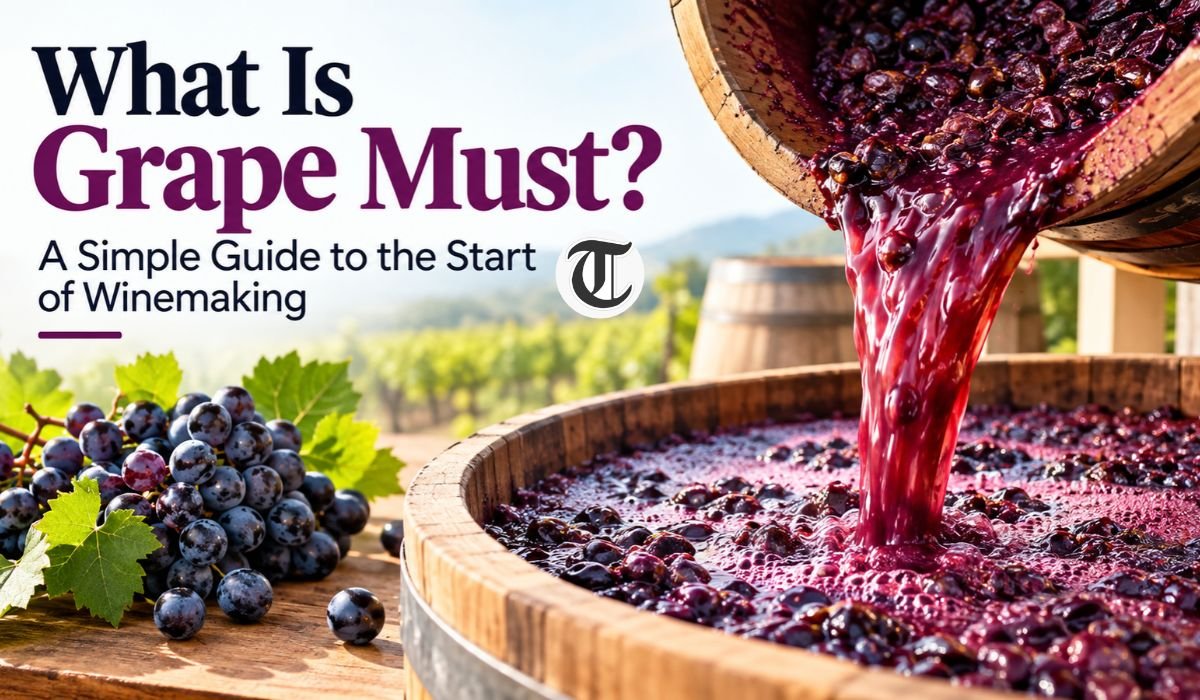
Wine doesn’t begin its life in a bottle, a barrel, or even a fermentation tank. It starts much earlier, in the vineyard, when freshly harvested grapes are crushed and their juice comes into contact with the other parts of the fruit. That early-stage mixture is known as Grape Must.
At first, Grape Must might seem like ordinary grape juice. There’s an important difference, though. In winemaking, Must refers to the fresh grape material produced through processes such as crushing, draining, or pressing. Depending on how the grapes are handled, the mixture can contain liquid as well as skins, seeds, pulp, and sometimes stems.
From there, fermentation changes everything. The natural sugars in the Must become the raw material for alcohol production, while acids, phenolic compounds, skins, seeds, and other grape components help influence the developing wine. In other words, Grape Must may be only the beginning, but it’s an important beginning.
Quick Bio Information
Grape Must: Fresh grape material produced through physical processes such as crushing, draining, or pressing.
Main Components: Depending on processing, Must can contain grape juice, pulp, skins, seeds, and sometimes stems.
Primary Purpose: Grape Must is a starting material for winemaking.
Natural Sugar: Fresh Must contains fermentable grape sugars.
Fermentation: Yeast converts fermentable sugars into ethanol, carbon dioxide, and other compounds.
Maceration: Controlled contact between grape solids and juice.
Pomace: Solid grape material remaining after pressing.
Red Wine: Red winemaking commonly involves more extensive skin contact than many white-wine production methods.
White Wine: Many white wines involve earlier separation of juice from grape skins and other solids.
Rosé Wine: Rosé can use limited skin contact or other production methods.
Alcohol: Fresh Must is generally unfermented, although small amounts of naturally produced ethanol can occur in certain Must categories.
Concentrated Grape Must: Must that has been partially dehydrated to concentrate its soluble components.
Süssreserve: Reserved unfermented grape juice used in some winemaking practices.
Wine Color: Color is influenced by grape variety, pigments, skin contact, extraction, temperature, and winemaking technique.
Tannins: Phenolic compounds that can contribute structure and astringency to wine.
Balsamic Vinegar: Traditional Balsamic Vinegar of Modena PDO uses cooked Grape Must as its raw material.
Food Safety: Untreated juice can carry harmful microorganisms.
Winemaking Foundation: Grape Must supplies the raw material needed for fermentation and later wine production.
What Is Grape Must?
Grape Must is fresh grape material produced during the early stages of winemaking. In simple terms, it consists of the liquid obtained from fresh grapes through crushing, draining, or pressing, although the amount of solid grape material left in the mixture depends on the winemaking method.
That distinction is worth making because “Must” doesn’t always mean exactly the same physical mixture from one winery to another. Some Must contains considerable amounts of skins, seeds, and pulp, while other production methods separate the juice from the solids much sooner. Grape Must can also be fresh, preserved, or concentrated depending on how it has been processed.
Fresh Grape Must is naturally rich in sugar and hasn’t yet undergone the full transformation associated with alcoholic fermentation. That’s what makes it so different from finished wine. It’s essentially the raw material waiting for the next stage of the process.
What Does Grape Must Contain?
There’s no single formula for Grape Must. Its composition can change with the grape variety, level of ripeness, vineyard conditions, harvest date, grape health, and the way the grapes are processed.
The liquid portion contains plenty of water, along with fermentable sugars, organic acids, minerals, amino acids, and compounds associated with grape flavor and aroma. The skins bring pigments and phenolic compounds into the mixture, while seeds contain tannins and other substances that can influence the character of the finished wine.
That’s one reason winemakers pay close attention to the grapes before fermentation even begins. Two batches of Must made in different vineyards, from different varieties, or under different growing conditions can have noticeably different sugar, acidity, flavor, and phenolic profiles.
How Is Grape Must Made?
The story begins with the harvest. Winemakers don’t necessarily pick grapes simply because they’re ripe; they consider factors such as sugar, acidity, flavor development, grape condition, and the style of wine they want to make.
After harvesting, grapes may be sorted to remove damaged fruit and unwanted material. They’re then crushed, destemmed, or sometimes processed as whole clusters, depending on the desired wine style.
Once the grapes are broken open, their juice is released. If that juice remains together with some of the skins, seeds, pulp, or other grape material, it forms part of the Grape Must used in the next stages of production.
What happens next depends heavily on the wine being made. Some grapes are pressed quickly so the juice can be separated from the solids. In other cases, particularly during red winemaking, the skins remain in contact with the juice for an extended period. That choice can have a major effect on the wine that eventually emerges.
Why Is Grape Must Important In Winemaking?
Grape Must gives winemakers the foundation they need for fermentation. Its natural sugars provide yeast with the material required to produce alcohol, while its acids and other grape compounds contribute to the developing wine’s structure and character.
The grape solids matter, too. Skins and seeds contain phenolic compounds that can affect color, tannin, flavor, and mouthfeel. For that reason, skin contact isn’t simply something that happens automatically after grapes are crushed. It’s a decision that winemakers can manage.
Skin contact can influence properties such as wine flavor and body. The amount and duration of contact, however, are only part of the picture.
It would be too simple to say that Grape Must determines the final wine on its own. Yeast selection, fermentation temperature, extraction, pressing, oxygen management, vessel choice, aging, and blending can all change the final result. Must sets the stage, but the rest of the winemaking process tells the larger story.
What Is Maceration?
Maceration is the period when grape skins and other solid material remain in contact with the juice. During that time, compounds from the grape material can move into the liquid.
The technique is particularly important in red winemaking. Red grape skins contain pigments that contribute to the wine’s color, while contact with skins and seeds can also affect tannins and other phenolic characteristics.
Maceration isn’t handled the same way for every wine. Many white wines are pressed and separated from their skins relatively early. Rosé wines can involve shorter periods of skin contact, although producers can use other techniques as well.
There’s also no universal rule saying that longer maceration automatically creates a better or darker wine. Grape variety, skin composition, temperature, extraction technique, and the winemaker’s goals all influence the outcome.
How Does Grape Must Become Wine?
The biggest change takes place during Fermentation. Yeast consumes the fermentable sugars in Grape Must and produces ethanol and carbon dioxide, along with many other compounds that contribute to the wine’s aroma and flavor.
Fermentation can begin through microorganisms naturally associated with grapes and the winery environment. Winemakers may also introduce selected wine yeasts when they want greater control over the process or a particular style of fermentation.
As fermentation progresses, the Must gradually loses its sweetness while alcohol increases. At the same time, the aroma and flavor profile develops as yeast metabolism creates new compounds.
This isn’t an instant transformation. Fermentation is a biological process that depends on suitable conditions. Professional winemakers monitor factors such as temperature, yeast health, nutrients, sugar concentration, acidity, and oxygen exposure because each can affect how fermentation develops.
Does Grape Must Contain Alcohol?
Fresh Grape Must is generally unfermented or not yet substantially fermented, so it doesn’t have the alcohol content associated with finished wine. Once fermentation gets underway, however, alcohol begins to develop as yeast converts fermentable sugar.
Small amounts of naturally produced ethanol can occur in certain categories of preserved Must. This is why it is more accurate to describe fresh Must as generally unfermented rather than claiming that every type of Must is always completely alcohol-free.
Sugar is important because it provides the raw material from which alcohol is produced. But sugar level alone doesn’t determine the final alcohol content. What happens during fermentation matters just as much.
It also explains an interesting point about sweetness. Fresh Grape Must can taste very sweet, yet the wine made from it may eventually be dry. If yeast consumes most of the fermentable sugar, relatively little sweetness remains in the finished wine.
Grape Must Vs. Grape Juice
Grape Must and Grape Juice are closely related, but the two terms aren’t interchangeable.
Grape Juice is generally produced as a beverage or food ingredient and is commonly processed and separated from most grape solids. Grape Must, by contrast, is a winemaking term for fresh grape material obtained through crushing, draining, pressing, or similar physical processes.
Their intended purposes are also different. Grape Must is normally part of a process that may lead to fermentation and wine production. Commercial grape juice is usually processed to control microorganisms and prevent unwanted fermentation.
So while the two products can begin with the same fruit, they’re handled very differently. A bottle of commercially processed grape juice shouldn’t be assumed to have the same composition or microbial condition as fresh Must produced at a winery.
Grape Must Vs. Wine
The simplest distinction is easy to remember: Grape Must is a starting material, while Wine is the result of fermentation and subsequent winemaking.
The journey can be thought of as:
Grapes → Grape Must → Fermentation → Young Wine → Finished Wine
During fermentation, yeast changes the sugar profile and produces alcohol and carbon dioxide. A wide range of other chemical and sensory changes happens at the same time.
Once fermentation is finished, the young wine may be clarified, stabilized, matured, blended, or otherwise treated before bottling. As a result, Grape Must and finished wine can differ dramatically in sweetness, aroma, texture, acidity, and alcohol, even when they’re made from the same grapes.
What Is Grape Pomace?
Grape Pomace is the solid material left behind after grapes have been pressed. It can include skins, seeds, pulp, and, depending on how the grapes were processed, stems.
It’s important not to use “Must” and “Pomace” as if they’re synonyms. Grape Must refers to fresh grape material used during winemaking, while Pomace generally refers to the solid residue remaining after pressing.
Pomace doesn’t necessarily have to become waste. Depending on the winery, local regulations, and available facilities, it may be composted, used in agriculture, or processed for other purposes. Some grape-processing residues can also be used in distillation.
The distinction becomes particularly useful when following the pressing stage of winemaking. Pressing separates more juice from the solid material, leaving the Pomace behind while the liquid continues toward fermentation and subsequent wine production.
Can You Drink Grape Must?
Fresh Grape Must shouldn’t automatically be treated like a ready-to-drink beverage. Because it can be raw and untreated, it may contain microorganisms associated with fresh agricultural products.
Untreated juice can cause foodborne illness, which is why pasteurized or otherwise appropriately treated juice is generally the safer choice for ordinary consumption. The concern is especially important for children, older adults, pregnant people, and individuals with weakened immune systems.
That doesn’t mean every sample of fresh Grape Must is contaminated. It means that being fresh or natural isn’t, by itself, a guarantee of microbiological safety.
Anyone considering tasting fresh Must should know how it was produced, handled, and stored. For someone simply looking for a glass of grape juice, appropriately processed commercial juice is a safer and more predictable choice.
Is Grape Must Sweet?
Fresh Grape Must is normally sweet because grapes naturally contain fermentable sugars. The level of sweetness varies with grape variety, maturity, growing conditions, and the timing of the harvest.
Those sugars are central to the entire winemaking process. Yeast uses them during fermentation, converting them into alcohol and other fermentation products. As a result, the sweetness of the Must can gradually disappear as fermentation continues.
That’s why winemakers pay close attention to sugar levels before and during fermentation. Sugar helps indicate the potential alcohol that can develop, while acidity plays an equally important role in the balance and structure of the eventual wine.
A Must with plenty of sugar but an unsuitable acid balance may not produce the style of wine a winemaker wants. The goal is to work with the natural characteristics of the grapes rather than looking at sweetness in isolation.
What Is Concentrated Grape Must?
Concentrated Grape Must is Grape Must that has been partially dehydrated, concentrating its soluble components.
This makes Concentrated Grape Must different from naturally sweet fresh Must. Concentration involves deliberately removing part of the water, which increases the concentration of sugars and other soluble grape components.
Depending on the product and applicable regulations, Concentrated Must can be used in food production and certain winemaking applications. It’s therefore better understood as a processed grape product rather than simply another name for fresh Grape Must.
What Is Süssreserve?
Süssreserve is a German winemaking term generally used for reserved, unfermented grape juice that can be used to provide sweetness in certain wines.
The basic idea is fairly simple. Rather than allowing every portion of the grape juice to ferment completely, a winemaker may reserve some unfermented grape material for later use. Exactly how this is done depends on the wine style, regional practices, regulations, and the producer.
Süssreserve isn’t a universal winemaking technique, nor is it used in every sweet wine. It’s best viewed as one example of how winemakers can manage grape-derived sweetness during production.
How Is Grape Must Used Outside Winemaking?
Grape Must has an interesting life outside the winery, too. One of the best-known examples is traditional balsamic vinegar.
For Traditional Balsamic Vinegar of Modena PDO, cooked Grape Must is the raw material. It undergoes alcoholic and acetic fermentation before being aged for an extended period in wooden vessels. The protected traditional product follows specific production requirements.
That doesn’t mean every bottle labeled “balsamic vinegar” is made in exactly this way. Different balsamic products can follow different production methods, ingredients, and aging processes.
Grape-processing materials can also be used in agriculture and composting, while certain grape residues can be processed for other food, industrial, or distillation purposes. These uses show that grape processing can create valuable secondary materials instead of producing nothing but waste.
How Grape Must Influences Wine Color, Flavor, And Tannins
The characteristics of Grape Must can have a noticeable influence on the wine that eventually develops. Grape skins contain pigments and phenolic compounds, while skins and seeds can contribute tannins. The juice itself provides sugars, acids, minerals, and compounds associated with aroma and flavor.
What matters is not simply what the grapes contain, but how much of those compounds are extracted during winemaking. Crushing, skin contact, maceration, temperature, pressing, fermentation, and other techniques all affect what moves from the grape material into the wine.
Grape variety is another major factor. Different varieties have different levels and types of pigments, acids, tannins, sugars, and aromatic compounds. Even two Musts produced using similar equipment can therefore behave very differently.
For an experienced winemaker, the question isn’t simply whether a Must is “good” or “bad.” The more useful question is whether its characteristics suit the wine being planned and how those characteristics can best be managed during fermentation and beyond.
Final Thoughts
Grape Must is where the transformation from fresh grapes to wine really gets underway. It carries natural sugars needed for fermentation, acids, flavor compounds, pigments, tannins, and other grape components that give winemakers a foundation to work with.
An easy way to remember the process is: Grapes become Grape Must, Grape Must undergoes fermentation, and fermentation helps turn Must into Wine.
But there’s more to the story. Skin contact, maceration, pressing, yeast selection, temperature, grape variety, aging, and other winemaking decisions all influence the finished wine.
Understanding Grape Must makes the early stages of winemaking easier to appreciate. What might look like nothing more than crushed grapes is actually a complex starting point—and one of the most important stages on the journey from vineyard to bottle.
FAQs About Grape Must
What Is Grape Must In Simple Terms?
Grape Must is the fresh grape material produced after grapes are crushed, drained, or pressed. Depending on how the grapes are processed, it can include juice along with skins, seeds, pulp, and sometimes stems.
Is Grape Must The Same As Grape Juice?
Not exactly. Grape Must is a winemaking term and can contain grape solids depending on how it is produced. Grape Juice is generally processed as a food or beverage and is usually handled to prevent unwanted fermentation.
Does Grape Must Contain Alcohol?
Fresh Grape Must is generally unfermented, so it doesn’t contain the alcohol level associated with wine. Once fermentation begins, yeast converts fermentable sugar into ethanol. Certain preserved Must categories can contain small amounts of naturally produced ethanol.
What Is The Difference Between Grape Must And Pomace?
Grape Must is the fresh grape material used during the early stages of winemaking. Pomace is mainly the solid residue left after pressing, including materials such as skins, seeds, and pulp.
Why Is Grape Must Important In Winemaking?
Grape Must provides the sugars needed for fermentation and contains acids, phenolic compounds, pigments, and other grape components that can influence the developing wine.
What Does Grape Must Taste Like?
Fresh Grape Must is generally sweet because it contains natural grape sugars. Its exact taste depends on the grape variety, ripeness, acidity, growing conditions, and how the grapes were processed.
Can You Drink Fresh Grape Must?
Fresh Must shouldn’t automatically be considered safe to drink because it may be untreated and can contain harmful microorganisms. Properly processed or pasteurized grape juice is a safer choice for ordinary consumption.
Can Grape Must Be Used To Make Vinegar?
Yes. Grape Must can be used in vinegar production. Traditional Balsamic Vinegar of Modena PDO, for example, begins with cooked Grape Must before undergoing fermentation and aging.
Learn more and explore exciting content on: Patek Flip Watch: A Complete Guide to Luxury, History, and Iconic Models
[…] Learn more and explore exciting content on: What Is Grape Must? A Simple Guide to the Start of Winemaking […]