
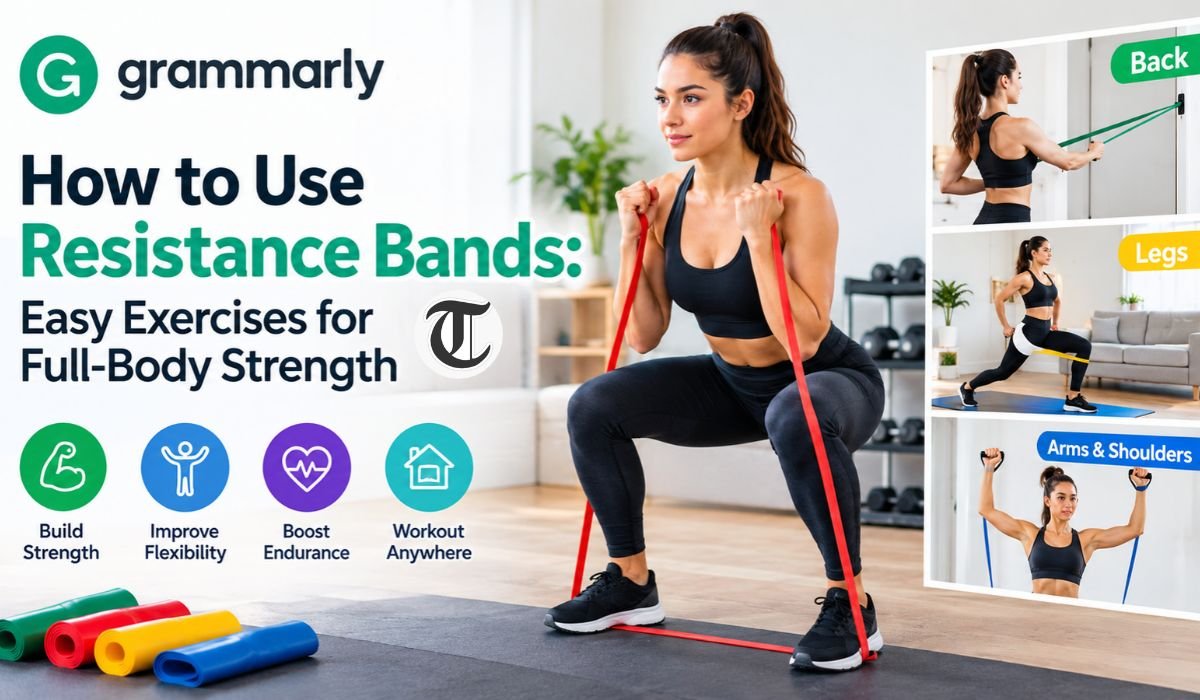
Resistance Bands Are One Of The Most Convenient Tools For Strength Training. They’re Lightweight, Easy To Store, And Versatile Enough To Work Nearly Every Major Muscle Group. Unlike A Home Gym Filled With Dumbbells And Machines, A Small Collection Of Resistance Bands Can Fit In A Drawer, Closet, Or Travel Bag.
For Beginners, They’re Also An Accessible Way To Get Familiar With Resistance Training Without Investing In A Lot Of Equipment. You Can Exercise While Standing, Sitting, Or Lying Down, And There Are Several Ways To Adjust The Difficulty By Changing The Band, Its Position, Or The Amount Of Tension.
Research Suggests That Elastic Resistance Training Can Improve Muscle Strength And, In Many Situations, Produce Strength Gains Similar To Those Seen With Conventional Resistance Training. A Systematic Review And Meta-Analysis Found No Meaningful Difference Between Elastic Resistance And Traditional Resistance Exercise For Upper- Or Lower-Body Strength.
Still, The Band Itself Isn’t What Makes A Workout Effective. Good Results Come From Choosing The Right Resistance, Learning Proper Technique, Progressing Gradually, And Giving Your Body Enough Time To Recover Between Challenging Sessions.
Quick Bio: Resistance Bands Facts
Resistance Bands Are Portable. Their Small Size Makes Them Convenient For Home Workouts, Travel, And Limited Spaces.
Resistance Bands Come In Multiple Resistance Levels. Different Strengths Allow You To Match The Equipment To Different Exercises.
Resistance Bands Can Train The Whole Body. With Appropriate Exercises, They Can Challenge The Legs, Glutes, Back, Chest, Shoulders, Arms, And Core.
Resistance Increases As A Band Stretches. The Exact Resistance Depends On The Band, Its Material, Its Starting Position, And How Far It Is Stretched.
Band Color Is Not Universal. Manufacturers Can Use Different Colors To Represent Different Resistance Levels, So Color Alone Isn’t A Reliable Way To Compare Brands.
Bands Can Support Strength Training. Research Supports Elastic Resistance As A Legitimate Form Of Resistance Training.
Mini Bands Are Compact. They’re Often Useful For Selected Hip, Leg, And Core Movements.
Handled Bands Provide A Grip. Handles Can Make Certain Exercises More Comfortable To Hold.
Damaged Bands Should Not Be Used. Cuts, Cracks, And Worn Areas Can Increase The Chance Of Breakage.
Bands Can Be Used For Progressive Training. Resistance, Repetitions, Sets, Tension, And Exercise Difficulty Can Be Adjusted Over Time.
Bands Can Assist Certain Movements. They Can Reduce The Effective Load During Some Assisted Exercises.
Bands Can Be Used At Different Angles. Their Versatility Allows Pulling, Pushing, Rotating, And Lower-Body Movements.
Resistance Bands Aren’t Automatically Easier Than Weights. A Properly Selected Band Can Provide A Meaningful Training Challenge.
Recovery Still Matters. Muscles Need Time To Adapt After Challenging Resistance Exercise.
Technique Matters More Than Band Color. The Most Suitable Resistance Is The One You Can Control Safely And Effectively.
Professional Guidance Can Be Valuable. People Returning From An Injury May Need Individualized Exercise Selection And Progression.
What Are Resistance Bands?
Resistance Bands Are Elastic Exercise Tools That Create Tension When They’re Stretched. That Tension Provides External Resistance, So Your Muscles Have To Work To Move Or Control The Band.
Unlike A Dumbbell, Which Provides A Relatively Consistent External Load, A Resistance Band Generally Becomes More Challenging As It Stretches. The Exact Amount Of Resistance Depends On Several Factors, Including The Band’s Material, Thickness, Length, Starting Position, And How Far It’s Stretched.
That’s Also Why Band Color Shouldn’t Be Used As A Universal Guide To Resistance. Manufacturers Can Assign Different Colors To Different Resistance Levels, So A Red Band From One Brand May Not Provide The Same Resistance As A Red Band From Another.
Resistance Bands Can Be Used For Strength Training, Muscle Development, Mobility Work, Stability Exercises, And Certain Rehabilitation Programs. They can also add resistance to bodyweight movements or provide assistance during exercises such as band-assisted pull-ups.
Types Of Resistance Bands
Resistance Bands Come In Several Basic Designs, And Each One Has Its Own Advantages. Standard Flat Bands Are Long Strips That Can Be Held Directly, Anchored, Or Connected To Create A Loop. They’re Among The Most Versatile Options And Can Be Used For A Wide Range Of Exercises.
Loop Bands Form A Continuous Circle And Come In Different Sizes. Smaller Mini Bands Are Often Used For Certain Hip, Leg, And Core Movements, While Larger And Heavier Superbands Can Provide Considerably More Resistance.
Handled Resistance Bands Have A Grip At Each End. That Extra Support Can Make Exercises Such As Rows, Chest Presses, Biceps Curls, And Overhead Presses More Comfortable To Perform.
There’s No Single Best Type For Everyone. A Mini Band May Be Ideal For One Exercise But Not Suitable For Another. Longer Bands Offer More Options For Upper-Body Movements, While Heavy Loop Bands Can be useful for larger muscle groups and assisted exercises. Your training goals, experience, and preferred exercises should guide your choice.
How To Choose Resistance Bands
When Choosing Resistance Bands, Start With The Amount Of Resistance You Can Control Rather Than Reaching For The Heaviest Option. A Beginner Should Generally Be Able To Complete The Intended Movement With Good Posture And A Controlled Range Of Motion.
If You Have To Swing Your Body, Twist, Hold An Awkward Position, Or Use Other Muscles To Force The Band Through A Repetition, It’s Probably Too Strong. A Lighter Band That You Can Control Properly Is Usually A Better Choice.
Other Factors Matter, Too. Band Thickness, Width, Length, And Material Can All Change How A Band Feels During Exercise. Latex And Rubber Are Common Materials, Although Fabric Options Are Also Available For Some Types Of Training.
If You Have A Latex Allergy, Check The Product Label Before Buying. It’s Also Practical To Have More Than One Resistance Level. The Band That Feels Right For Biceps Curls May Be Far Too Light For Squats, While A Band That Works Well For Lower-Body Training Could Be Excessive For Smaller Upper-Body Muscles.
How To Use Resistance Bands Safely
Safe Resistance Band Training Starts Before The Workout Even Begins. Take A Moment To Inspect Your Band For Cuts, Cracks, Punctures, Or Areas That Look Worn. If The Material Is Damaged, Don’t Try To Get A Few More Workouts Out Of It. Replace The Band Instead.
Pay Attention To Handles And Connection Points As Well. If You’re Anchoring A Band, Make Sure The Anchor Is Stable And Designed To Handle The Movement You’re Performing. Keep Bands Away From Sharp Edges And Follow The Manufacturer’s Instructions For Use And Maximum Stretch.
You Should Also Avoid Letting A Tensioned Band Snap Back Toward You. Control The Return Movement And Never Release A Band Suddenly While It’s Under Significant Tension.
During Exercise, Start Slowly And Focus On Technique. Muscle Effort And Fatigue Are Normal, But Sudden, Sharp, Or Severe Pain Isn’t Something You Should Push Through. Stop The Exercise If That Happens.
If You’re Recovering From An Injury, Have A Medical Condition That Affects Exercise, Or Simply Aren’t Sure Which Movements Are Appropriate, Talk With A Healthcare Professional Or Physical Therapist. Individualized Advice Can Help You Choose Exercises And Resistance That Match Your Situation.
How To Get Better Results From Resistance Band Exercises
One Of The Biggest Keys To Effective Resistance Band Training Is Control. At The Beginning Of A Repetition, The Band Should Usually Be Taut Enough To Remove Excess Slack, But Not So Tight That You’re Already Straining Before The Movement Starts.
From There, Focus On Stable Posture And A Comfortable Range Of Motion. Breathe Normally And Avoid Rushing. The Return Phase Deserves Just As Much Attention As The Main Movement. Instead Of Letting The Band Pull Your Arms Or Legs Back Quickly, Resist The Tension And Return To The Starting Position Slowly.
As Your Strength Improves, The Workout Should Become More Challenging. That Doesn’t Always mean immediately switching to the heaviest band. You can increase resistance, add repetitions or sets, create more tension, or move to a more difficult exercise variation.
Progressive Resistance Training Is A Core Principle Of Strength Development. Current American College Of Sports Medicine Guidance Supports Progressive Resistance Training For Improving Muscle Strength, Muscle Size, Power, And Physical Function In Healthy Adults.
Resistance Band Squats
Resistance Band Squats Are A Simple Way To Train The Legs And Glutes. Depending On The Band And Setup, They Can Also Challenge The Muscles Around The Hips And Trunk.
For A Suitable Loop-Band Variation, Position The Band Securely And Stand With Your Feet Around Shoulder-Width Apart. Keep Your Chest Stable And Your Back In A Natural Position. Push Your Hips Back And Bend Your Knees As You Lower Into The Squat.
Go Down Only As Far As You Can Without Losing Control. Then Push Through Your Feet And Return To Standing.
Don’t Worry About Squatting As Deep As Possible If Doing So Makes Your Form Break Down. A Comfortable Range Of Motion, Good Control, And Consistent Technique Matter More Than Forcing Extra Depth.
Resistance Band Seated Rows
Resistance Band Seated Rows Give You A Useful Pulling Movement For Training The Back And Arms. They’re A Natural Fit In A Full-Body Workout Because They Balance Out Pressing Exercises Such As Chest Presses And Overhead Presses.
Sit On The Floor With Your Legs Extended And Place The Middle Of The Band Around Your Feet. Hold An End In Each Hand And Begin With Your Arms Extended.
Pull Your Hands Toward Your Body By Driving Your Elbows Back. Keep Your Torso Upright Instead Of Leaning Far Back To Create Momentum. Once Your Hands Reach The End Of The Pull, Pause Briefly Before Slowly Extending Your Arms Again.
Think About Moving Your Elbows Rather Than Simply Pulling With Your Hands. That Cue Can Help You Keep The Movement Controlled And Put More Attention On The Back And Arm Muscles.
Resistance Band Chest Press And Skull Crushers
The Resistance Band Chest Press Trains The Chest, Shoulders, And Triceps. Depending On Your Equipment And Setup, You Can Perform It On A Stable Bench Or From The Floor.
Position The Band So It Provides Resistance Through The Press Without Creating An Unstable Or Unsafe Anchor. Press Your Hands Forward Or Upward While Keeping Your Body Stable, Then Slowly Return To The Starting Position.
Avoid Excessive Back Arching And Don’t Let The Band Pull Your Arms Back Suddenly. The Return Should Be Controlled, Just Like The Press.
Lying Skull Crushers Offer A More Focused Way To Train The Triceps. With The Band Properly Positioned And Held Securely, Bend Your Elbows To Lower Your Hands Toward Your Forehead Area, Then Straighten Your Arms Again.
Keep The Upper Arms Relatively Controlled Throughout The Movement. If The Resistance Makes It Difficult To Control Your Elbows Or Maintain Your Position, Use A Lighter Band.
Resistance Band Biceps Curls
Standing Biceps Curls Are One Of The Easiest Resistance Band Exercises To Learn. Stand On The Middle Of The Band With A Stable Foot Position And Hold The Ends Or Handles With Your Palms Facing Forward.
Keep Your Elbows Close To Your Sides As You Curl Your Hands Toward Your Shoulders. Once You Reach The Top Of The Movement, Lower Your Hands Slowly Instead Of Allowing The Band To Pull Them Down.
It’s Tempting To Lean Back Or Swing The Body When A Band Feels Heavy, But That Usually Makes The Exercise Less Controlled. If You Can’t Maintain Your Posture, Choose A Lighter Resistance.
The Aim Isn’t To Make The Repetition Look Difficult. It’s To Challenge The Biceps While Keeping The Movement Deliberate From Beginning To End.
Resistance Band Bicycle Crunches And Overhead Presses
A Mini Resistance Band Can Make Bicycle Crunches More Challenging. Place The Band Around Your Feet, Lie On Your Back, And Bend Your Knees. Extend One Leg While Rotating Your Torso Toward The Opposite Knee, Then Alternate Sides.
Keep Your Hands Behind Your Head For Support, But Don’t Pull On Your Neck. The Movement Should Come From Your Core And Torso Rotation Rather Than From Tugging Your Head Forward.
The Standing Overhead Press Adds A Vertical Pushing Movement To The Workout. Stand On The Middle Of The Band And Hold The Ends Or Handles Near Shoulder Height. Brace Your Core, Keep Your Body Stable, And Press Your Hands Overhead.
Lower Your Hands Under Control And Repeat. The Exercise Primarily Challenges The Shoulders And Triceps, With Additional Work From The Upper Chest And Stabilizing Muscles.
How To Build A Full-Body Resistance Band Workout
A Full-Body Resistance Band Workout Doesn’t Need To Be Complicated. Combining Squats, Rows, Chest Presses, Triceps Exercises, Biceps Curls, Core Work, And Overhead Presses Gives You A Mix Of Lower-Body, Pulling, Pushing, Arm, Shoulder, And Core Movements.
There Are Two Straightforward Ways To Organize The Session. You Can Perform The Exercises As A Circuit, Moving From One Exercise To The Next Before Beginning Another Round. Or You Can Complete Several Sets Of One Exercise Before Moving On To The Next.
For Beginners, A Moderate Number Of Controlled Repetitions Can Be A Good Starting Point. Around 8 To 15 Repetitions Is A Common Range For General Resistance Training, But It’s Not A Rule That Applies To Every Person Or Every Exercise.
Current Resistance-Training Guidance Emphasizes Progressive Training Rather Than One Fixed Formula. Training Frequency, Resistance, Volume, And Exercise Selection Can Be Adjusted According To Experience And Goals. For Healthy Adults, Recent American College Of Sports Medicine Guidance Supports Resistance Training At Least Twice A Week For General Strength Development, With The Program Adjusted According To The Desired Outcome.
How To Progress With Resistance Bands
Once Your Current Band No Longer Provides Enough Challenge, It’s Time To Consider Progression. You Could Move To A Stronger Band, Add Repetitions, Add Another Set, Increase Tension, Or Choose A More Difficult Variation.
There’s No Need To Change Everything At Once. Making One Adjustment At A Time Makes It Easier To See How Your Body Responds And Whether The New Level Is Appropriate.
A Good Sign That You’re Ready To Progress Is Being Able To Complete Your Planned Repetitions With Consistent Technique While The Exercise Still Feels Challenging. If A Stronger Band Causes Your Form To Fall Apart, The Jump In Resistance May Simply Be Too Large.
Progress Should Make The Workout More Demanding, Not Less Controlled.
Benefits Of Resistance Band Training
Resistance Bands Can Improve Muscular Strength And Functional Performance When They’re Used Consistently And Progressively. Research Comparing Elastic Resistance With Conventional Resistance Training Has Found Similar Strength Improvements In Several Populations And Training Settings.
Their Practical Advantages Are Just As Appealing. Bands Are Lightweight, Portable, And Easy To Store, Which Makes Them Particularly Useful For People Who Don’t Have Access To A Gym Or Prefer Working Out At Home.
They Can Also Play A Role In Training For Older Adults And In Some Rehabilitation Settings. Research In Older Adults Has Found Improvements In Muscle Strength With Progressive Elastic Resistance Training, Although Exercise Selection And Intensity Should Be Individualized.
That Last Point Matters. Resistance Bands Are Useful Training Tools, But They Aren’t A Treatment For An Injury. If You’re Recovering From A Medical Problem, A Band Workout Shouldn’t Replace Professional Rehabilitation Or Medical Care.
Resistance Bands Vs. Dumbbells
Resistance Bands And Dumbbells Both Have A Legitimate Place In Strength Training. The biggest difference is how they provide resistance. Dumbbells provide external weight, while bands create elastic tension that changes with stretch and position.
Neither Method Is Automatically Better For Everyone. Research Has Found Comparable Strength Improvements Between Elastic And Conventional Resistance Training In Several Settings, Although Results Can Vary Depending On The Program And Individual.
For Someone With Limited Space, Resistance Bands May Be The More Convenient Choice. Someone Who Prefers Traditional Free-Weight Training May Feel More Comfortable With Dumbbells. There’s Also Nothing Wrong With Using Both.
The Best Equipment Is Usually The Equipment That Fits Your Goals, Environment, Experience, And Training Habits Well Enough That You’ll Actually Use It Consistently.
Common Resistance Band Mistakes
Choosing Too Much Resistance Too Soon Is One Of The Most Common Problems. A Band That’s Too Strong Can Encourage Poor Technique, Shorten Your Range Of Motion, Or Cause You To Rely On Momentum Instead Of Controlled Muscle Work.
Another Frequently Overlooked Issue Is The Return Phase. Letting A Tensioned Band Snap Your Limbs Back Toward The Starting Position Reduces Control And May Place Unwanted Stress On The Body.
Equipment Safety Matters, Too. Using A Damaged Band, Anchoring It Incorrectly, Stretching It Beyond Its Intended Capacity, Or Exercising Near Sharp Objects Can Create Avoidable Risks.
Before Every Workout, Take A Few Seconds To Check The Band And Its Setup. That Small Habit Can Prevent An Otherwise Avoidable Problem.
How Often Should You Use Resistance Bands?
There Isn’t One Perfect Schedule For Everyone. Training Frequency Depends On Your Experience, Workout Intensity, Goals, Exercise Selection, And Recovery.
For General Strength Development, Consistency Matters More Than Trying To Pack As Much Exercise As Possible Into One Session. Recent American College Of Sports Medicine Guidance Supports Resistance Training At Least Twice A Week For Healthy Adults, With The Overall Program Adjusted To Match The Person’s Goals.
You Also Don’t Need To Train Every Muscle Hard Every Day. Muscles Need Time To Recover And Adapt After Challenging Resistance Exercise. If You’re Still Very Sore Or Your Technique Has Deteriorated, More Recovery May Be Appropriate.
When Should You Stop An Exercise?
Muscle Fatigue, Effort, And A Burning Sensation Can Be Normal Parts Of Resistance Training. Sudden, Sharp, Severe, Or Unusual Pain Is Different And Shouldn’t Be Ignored.
Stop The Movement If You Experience That Kind Of Pain. Depending On The Situation, You May Need Medical Advice Before Returning To The Exercise.
Extra Caution Is Appropriate If You Have An Existing Injury, Persistent Pain, Or A Medical Condition That Affects Exercise. People Using Resistance Bands As Part Of Rehabilitation Should Also Follow The Program Provided By Their Healthcare Professional Rather Than Choosing Exercises Or Resistance On Their Own.
Final Thoughts
Resistance Bands Are Much More Than A Convenient Piece Of Home Workout Equipment. They Can Provide Meaningful Resistance, Support Progressive Strength Training, And Give Both Beginners And Experienced Exercisers A Flexible Way To Train.
The Best Approach Is To Start With A Resistance You Can Control, Learn Each Movement Carefully, And Progress Gradually. Inspect Your Equipment Before Every Workout, Make Sure Anchors And Handles Are Secure, And Don’t Treat Pain As Something You Have To Push Through.
Used Consistently And Progressively, Resistance Bands Can Help Build Strength And Support General Fitness Without Requiring A Large Collection Of Equipment. Their Biggest Advantage May Be Their Simplicity: With A Few Bands And A Thoughtful Routine, You Can Train Almost Anywhere.
Frequently Asked Questions About Resistance Bands
Are Resistance Bands Good For Beginners?
Yes. Resistance Bands Can Be A Practical Starting Point Because They’re Available In Different Resistance Levels And Can Be Used For A Wide Range Of Movements. Beginners Should Start With A Manageable Band, Learn The Basic Technique, And Increase The Challenge Gradually.
Can Resistance Bands Build Muscle?
Yes. Resistance Bands Can Provide Enough External Resistance To Support Muscle Strength And Muscle Growth When Training Is Progressive And Sufficiently Challenging. They’re Not A Shortcut, Though. Consistent Training, Appropriate Resistance, Recovery, And Nutrition All Matter.
How Much Resistance Should A Beginner Use?
Choose A Band That Allows You To Perform Your Intended Repetitions With Good Form And Controlled Movement. If You Have To Swing, Strain Excessively, Or Change Your Body Position To Complete A Repetition, Reduce The Resistance.
Can You Get A Full-Body Workout With Resistance Bands?
Yes. A Well-Planned Resistance Band Workout Can Include Squatting, Pulling, Pushing, Arm, Shoulder, And Core Movements. Combining These Movement Patterns Can Train Most Major Muscle Groups During A Single Session.
Are Resistance Bands Better Than Weights?
Not Necessarily. Both Can Be Effective Resistance-Training Methods. Research Has Found Similar Strength Improvements Between Elastic And Conventional Resistance Training In Several Studies. The Better Choice Depends On Your Goals, Preferences, Available Space, And Training Experience.
How Do You Know When To Increase Resistance?
Consider Progressing When Your Current Band Feels Manageable And You Can Complete Your Target Repetitions Without Losing Good Form. Increase The Challenge Gradually Rather Than Jumping Immediately To A Much Stronger Band.
Can Resistance Bands Help With Weight Loss?
Resistance Band Training Can Support Strength, Muscle Development, And Overall Physical Activity, But It Shouldn’t Be Presented As A Standalone Weight-Loss Solution. Body Weight Is Influenced By Overall Energy Balance, Nutrition, Physical Activity, Sleep, And Other Factors.
Can Resistance Bands Replace A Gym?
For Many People, Resistance Bands Can Provide Enough Variety For Effective Strength Training At Home. However, A Gym Offers Access To A Much Wider Range Of Loads, Machines, Benches, And Specialized Equipment. Whether Bands Are Enough Depends On Your Goals And The Level Of Training You Want To Do.
Learn more and explore exciting content on: Grammarly AI Detector Review: How Accurate Is It Really?
[…] Learn more and explore exciting content on: How to Use Resistance Bands: Easy Exercises for Full-Body Strength […]