
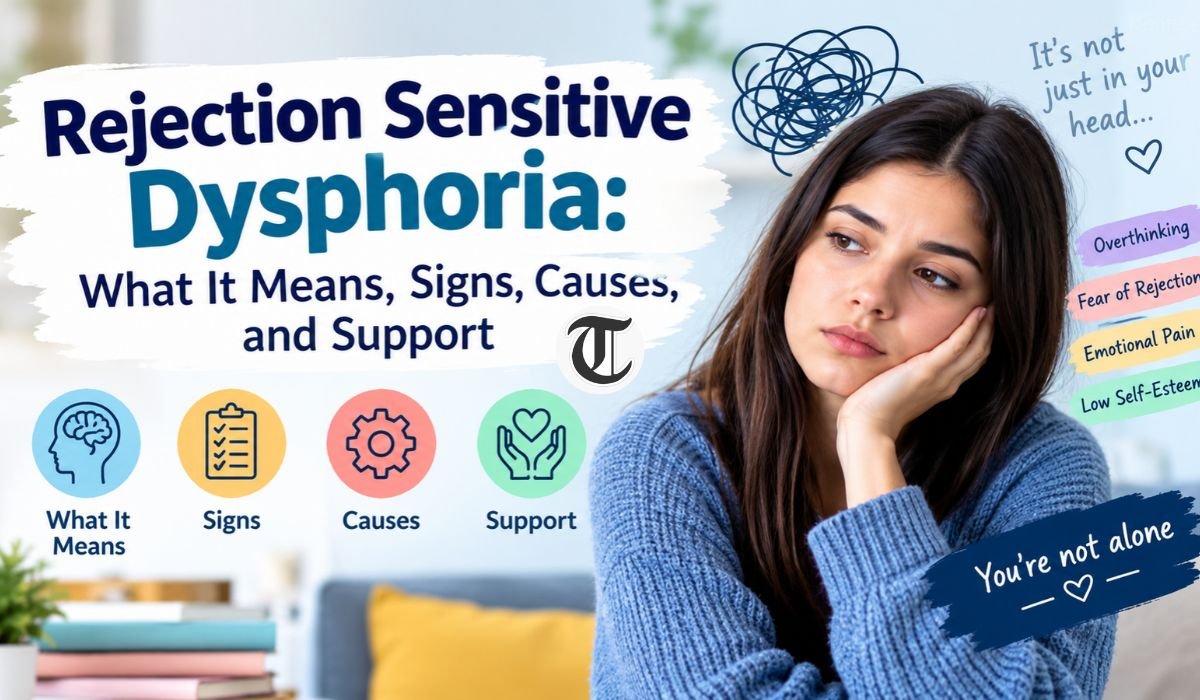
Rejection hurts. That’s a fairly universal human experience. But for some people, criticism, failure, disapproval, or even the possibility of being rejected can bring on an emotional reaction that feels far more intense than ordinary disappointment.
Rejection Sensitive Dysphoria (RSD) is a term often used to describe this experience. Someone might suddenly feel overwhelmed by sadness, shame, anxiety, anger, embarrassment, or emotional pain after an interaction that another person may have considered relatively minor.
RSD is frequently discussed in connection with Attention-Deficit/Hyperactivity Disorder (ADHD) and emotional dysregulation. There’s an important medical distinction to keep in mind, though: RSD isn’t currently recognized as a standalone medical diagnosis. Instead, it’s a descriptive term used to discuss a pattern of intense emotional responses. Researchers are still studying rejection sensitivity and emotional regulation, particularly among people with ADHD.
That doesn’t make the experience any less real for the person going through it. Strong reactions to rejection can affect relationships, confidence, school, work, and everyday decisions. Understanding what RSD means can help people recognize these patterns while avoiding the mistake of assuming that every strong reaction to rejection is RSD.
Quick Bio Information
Term: Rejection Sensitive Dysphoria.
Abbreviation: RSD.
Medical Status: RSD Is Not Currently A Standalone Official Medical Diagnosis.
Core Experience: Intense Emotional Distress Associated With Rejection, Failure, Criticism, Or Perceived Disapproval.
Common Association: Attention-Deficit/Hyperactivity Disorder, Or ADHD.
Possible Emotions: Sadness, Anxiety, Shame, Anger, Embarrassment, And Fear.
Possible Behaviors: Avoidance, Withdrawal, People-Pleasing, And Perfectionism.
Related Concept: Emotional Dysregulation.
Diagnosis: There Is No Specific Medical Test For RSD.
ADHD Diagnosis: ADHD Requires A Clinical Evaluation And Is Not Diagnosed Through An RSD Checklist.
Treatment: Care Depends On The Person’s Symptoms And Any Diagnosed Conditions.
Medication: There Is No Medication Specifically Approved To Treat RSD As A Standalone Condition.
Therapy: Psychotherapy Can Help Some People Develop Better Emotional Regulation And Coping Skills.
Children: Rejection-Related Emotional Difficulties Can Be Particularly Noticeable In Some Children With ADHD.
Adults: Rejection Sensitivity Can Affect Relationships, Work, Social Life, And Self-Confidence.
Research: Scientific Research Specifically On RSD Remains Limited.
Prevention: There Is No Established Method For Preventing RSD.
Emergency Support: Suicidal Thoughts Or Immediate Risk Of Self-Harm Require Urgent Professional Help.
What Is Rejection Sensitive Dysphoria?
Rejection Sensitive Dysphoria describes intense emotional distress associated with rejection, criticism, failure, disapproval, or the feeling that someone doesn’t accept or approve of you. Compared with ordinary disappointment, the reaction may feel much stronger and considerably harder to control.
The word “dysphoria” refers to significant discomfort or distress. When the term is used in connection with RSD, it describes the powerful emotional pain some people experience when they believe they’ve failed, disappointed someone, or been rejected.
The trigger doesn’t always have to be an obvious rejection, either. A delayed text message, a brief reply, a change in someone’s tone, constructive criticism, or being left out of an activity may sometimes be interpreted as rejection.
Research into rejection sensitivity has found that people who are particularly sensitive to rejection can have strong emotional reactions to social situations, especially when it’s unclear what another person’s behavior means. This is one reason perceived rejection is important when discussing RSD.
What Does Rejection Sensitive Dysphoria Feel Like?
There isn’t one way that RSD feels. People can experience it very differently.
One person might receive criticism and immediately feel a crushing wave of sadness. Another might become intensely angry. Someone else may shut down, stop communicating, or spend hours replaying the conversation and wondering what they did wrong.
For some people, the hardest part is the disconnect between what they know logically and what they’re feeling emotionally. They may understand that a friend didn’t answer because they were busy, for example, yet still feel deeply hurt by the silence. Similarly, a manager’s routine feedback may be interpreted emotionally as proof that the employee isn’t good enough.
Some people also experience physical signs of distress, such as tension, restlessness, or a strong desire to get away from the situation. These sensations aren’t unique to RSD, but they illustrate why severe rejection sensitivity can become disruptive rather than simply representing ordinary emotional sensitivity.
Common Signs And Symptoms Of RSD
The central feature associated with RSD Symptoms is intense emotional distress following actual or perceived rejection, criticism, failure, or disapproval.
A person may become unusually embarrassed or self-conscious. They may also begin questioning their abilities, appearance, relationships, or overall self-worth almost immediately after a perceived rejection.
Other commonly described experiences include sadness, anxiety, anger, shame, low self-esteem, withdrawal, avoidance, people-pleasing, and perfectionism. The reaction isn’t always visible. One person might cry or become angry, while another may become quiet and turn the distress inward.
Avoidance can become particularly significant. Someone who expects rejection may stop applying for jobs, avoid dating, hesitate to make new friends, or refuse to start a project because the possibility of failure feels overwhelming.
Perfectionism can take a different form. Instead of avoiding an opportunity altogether, a person may push themselves relentlessly in an attempt to eliminate every possible mistake and reduce the chance of criticism.
Still, these experiences don’t prove that someone has RSD. Anxiety, depression, social anxiety, trauma-related difficulties, ADHD, and other conditions can produce similar emotional patterns. That’s why symptoms alone shouldn’t be treated as a diagnosis.
RSD, Rejection Sensitivity, And Emotional Dysregulation
Rejection Sensitivity and Rejection Sensitive Dysphoria are closely related ideas, but they’re not interchangeable medical diagnoses.
Rejection sensitivity generally describes being particularly alert to, concerned about, or reactive to rejection. Someone may expect to be rejected, worry about it before a social situation, interpret ambiguous behavior negatively, or experience strong emotions when they believe rejection has occurred.
RSD is commonly used to describe the especially intense emotional pain that can accompany those experiences.
Then there’s Emotional Dysregulation, which is a broader concept involving difficulty managing the intensity, duration, or expression of emotions. A person may know that their reaction is stronger than they would like, yet struggle to bring it back under control.
These concepts can overlap, particularly in discussions about ADHD, but keeping them separate is important. It helps prevent people from assuming that one emotional symptom automatically means they have a particular condition.
Why Can Rejection Trigger Such A Strong Reaction?
There isn’t a single, proven explanation for RSD. Emotional responses involve several interconnected brain systems, and emotional regulation can be influenced by biological, psychological, and environmental factors.
Social rejection can also be deeply distressing because people are naturally social. Researchers have studied the relationship between social exclusion, emotional distress, and brain responses. However, this doesn’t mean that scientists have identified one specific brain abnormality that causes RSD.
That distinction matters. Some explanations of RSD describe neurological mechanisms with more certainty than the available evidence supports. At this point, it’s more accurate to say that brain function and emotional regulation are areas of ongoing research.
Cleveland Clinic similarly notes that experts aren’t certain exactly why RSD occurs. The connection with ADHD is an important area of interest, but the precise biological mechanisms remain unclear.
RSD And ADHD: What Is The Connection?
The relationship between RSD And ADHD gets considerable attention. Emotional dysregulation and rejection sensitivity are frequently reported among people with ADHD, and research has examined how emotional difficulties can affect relationships, academic performance, work, and quality of life.
ADHD itself is a recognized neurodevelopmental disorder involving persistent patterns of inattention and/or hyperactivity-impulsivity that interfere with everyday functioning.
There are several reasons ADHD and rejection sensitivity may become intertwined in someone’s life. A person with ADHD may struggle with forgetfulness, impulsive behavior, disorganization, missed deadlines, or difficulty completing tasks. Those difficulties can sometimes lead to criticism or frustration from other people.
Repeated negative experiences may contribute to becoming especially alert to criticism or rejection. However, that doesn’t mean every person with ADHD experiences RSD.
In fact, RSD Is Not An Official Diagnostic Criterion For ADHD. It isn’t used as one of the formal requirements for diagnosing ADHD. Likewise, having strong reactions to criticism doesn’t automatically mean a person has ADHD.
A proper ADHD evaluation considers the broader pattern of symptoms, how long they’ve been present, where they occur, and how much they interfere with daily life.
What Causes Rejection Sensitive Dysphoria?
The exact causes of Rejection Sensitive Dysphoria remain uncertain. Researchers are looking at a combination of possible biological, psychological, and environmental influences rather than one single cause.
Brain function and emotional regulation are two areas of interest. ADHD itself involves differences in brain development and functioning, but that doesn’t establish one particular neurological explanation for RSD.
Genetics may also be relevant because ADHD has a substantial genetic component. Still, this doesn’t mean there’s a specific “RSD gene.”
Life experiences can matter, too. Repeated criticism, bullying, trauma, difficult relationships, or chronic social rejection can influence how someone responds emotionally to future situations. However, these experiences shouldn’t automatically be described as direct causes of RSD.
For now, the most accurate conclusion is that RSD-like rejection sensitivity likely involves several factors, and researchers still have much to learn.
RSD In Adults
In adults, rejection sensitivity can quietly influence major decisions.
Someone might avoid applying for a promotion because they’re afraid of being turned down. Another person may hesitate to start a romantic relationship because the possibility of rejection feels too painful. Even relatively ordinary social situations can become stressful when every interaction is closely examined for signs of disapproval.
Relationships can be especially challenging. An ambiguous comment may be interpreted as evidence that a partner is angry or losing interest. That interpretation can lead to reassurance-seeking, withdrawal, arguments, or emotional exhaustion.
Work can be affected in a different way. Fear of criticism may contribute to procrastination, perfectionism, or avoiding situations where performance will be evaluated. Someone might spend far more time than necessary checking their work because making a mistake feels emotionally threatening.
Recognizing these patterns can be an important first step. The goal isn’t to eliminate every uncomfortable emotion. Instead, it’s to learn how to respond to difficult feelings without allowing them to control every decision.
RSD In Children And Teenagers
Children And Teenagers can have strong reactions to criticism, mistakes, losing games, poor grades, or being left out by friends. For a child who also has ADHD or another condition affecting emotional regulation, these experiences may feel especially difficult.
A child might cry after a small correction, become furious after losing a game, refuse to try something new, or become extremely focused on pleasing parents and teachers.
Such behavior can sometimes be mistaken for defiance, stubbornness, or deliberate overreaction. But it’s important to look at what’s happening underneath the behavior.
At the same time, parents shouldn’t automatically assume that a sensitive child has RSD. There is no standalone diagnostic test for RSD, and children can react strongly for many different reasons.
ADHD itself requires a proper clinical evaluation. Healthcare professionals consider symptoms across settings and also look at other possible explanations, including anxiety, depression, learning difficulties, and sleep problems.
For parents and caregivers, patience can make a meaningful difference. Children can be taught that mistakes and disappointment are normal parts of growing. Helping them understand what happened, name their emotions, learn from the experience, and try again can gradually build resilience.
How Is Rejection Sensitive Dysphoria Diagnosed?
There Is No Specific Medical Test For RSD.
Because RSD isn’t currently recognized as a standalone medical diagnosis, healthcare professionals don’t diagnose it in the same way they diagnose ADHD, depression, or an anxiety disorder.
Instead, a clinician may explore what triggers the emotional reaction, how intense it becomes, how long it lasts, and whether it affects relationships, school, work, or other areas of life.
They may also assess for ADHD, anxiety, depression, trauma-related conditions, or other possible explanations.
This broader assessment is important because several conditions can produce overlapping symptoms. Someone who becomes extremely upset after criticism may be dealing with social anxiety, depression, ADHD-related emotional difficulties, trauma, relationship stress, or another concern.
For that reason, online RSD quizzes and checklists should be viewed as informational rather than diagnostic. If the reactions are persistent or disruptive, speaking with a qualified professional is a more reliable next step.
What RSD Is Not
RSD Shouldn’t Be used to describe every strong reaction to rejection.
Feeling hurt after being criticized, excluded, or rejected is a normal human response. The question is whether the emotional reaction is unusually intense, recurring, difficult to regulate, or disruptive to everyday life.
RSD also shouldn’t automatically be equated with ADHD, bipolar disorder, borderline personality disorder, anxiety, or depression. Some symptoms overlap, but these conditions have different diagnostic criteria and may require different forms of care.
This distinction is especially important for people researching their symptoms online. Finding a description that feels familiar can be validating, but it isn’t the same as receiving a professional assessment.
How Is RSD Treated And Managed?
There Is No universally approved treatment specifically for RSD because it isn’t an established standalone medical diagnosis.
Instead, treatment generally focuses on the symptoms a person is experiencing and any underlying or co-occurring conditions.
When someone has diagnosed ADHD, appropriate ADHD treatment may help with some associated emotional difficulties. Medication decisions should be individualized and made with a qualified healthcare professional. There is no medication specifically approved as a cure for RSD.
Psychotherapy may also be useful. Therapy can help a person recognize emotional triggers, examine automatic interpretations, tolerate uncertainty, communicate more effectively, and develop healthier responses to criticism and disappointment.
The right approach will depend on the individual. Someone dealing primarily with anxiety may need a different treatment plan from someone whose rejection-related distress occurs alongside ADHD, depression, or another condition.
Practical Ways To Cope With RSD
One of the simplest strategies is to create some space between the trigger and the response.
If a message sounds unusually cold or criticism feels deeply personal, responding immediately may make the situation harder. Waiting until the strongest emotion has settled can give you more room to think about what actually happened.
Another useful approach is separating what happened from what you think it means. “My manager asked me to revise this section” describes an event. “My manager thinks I’m incompetent” is an interpretation. The first statement is something you know; the second is an assumption that may or may not be accurate.
Self-compassion matters as well. Making a mistake doesn’t turn someone into a failure. Being rejected doesn’t determine a person’s worth. Learning to acknowledge disappointment without turning it into a sweeping judgment about yourself can make difficult situations easier to handle.
Professional therapy, appropriate treatment for diagnosed conditions, stress management, supportive relationships, adequate rest, and emotional regulation skills can all become part of a broader coping strategy.
How To Support Someone Experiencing RSD
Support Starts With empathy.
If someone is deeply upset after feeling rejected, responding with “You’re overreacting” may make them feel even more misunderstood. A statement such as “I can see that this really hurt you” acknowledges their emotional experience without necessarily agreeing with every conclusion they’ve drawn.
That distinction is important. Supporting someone doesn’t mean confirming that every perceived rejection actually happened. A helpful conversation can recognize the person’s feelings while gently considering whether there might be another explanation for the situation.
For children, parents and caregivers can combine empathy with clear expectations. Patience doesn’t mean removing every boundary. Instead, it means helping a child understand what happened, identify the emotion, learn from the experience, and try again.
Repeated humiliation or harsh criticism is unlikely to teach effective emotional regulation. Supportive guidance gives children more opportunities to develop confidence and resilience.
Can RSD Be Prevented?
There Is Currently no proven way to prevent RSD. Researchers don’t understand its causes well enough to recommend a specific prevention strategy.
What people can do is pay attention to persistent emotional difficulties and seek appropriate help when they begin interfering with daily life. Identifying and treating ADHD, anxiety, depression, or another underlying condition may help reduce the overall burden of emotional difficulties.
It’s also important to distinguish prevention from management. A person may not be able to prevent every intense emotional response, but they can learn skills that make those reactions easier to understand and manage.
When Should You Seek Professional Help?
Consider Speaking With a healthcare or mental health professional when rejection-related emotions repeatedly interfere with relationships, work, school, social activities, or everyday functioning.
Professional support is particularly important when reactions are frequent, severe, difficult to control, or accompanied by persistent anxiety, depression, hopelessness, isolation, or significant avoidance.
A clinician can also help determine whether ADHD or another recognized condition may be contributing. ADHD diagnosis, for example, involves a broader assessment rather than a single symptom or online checklist.
Seeking help doesn’t mean that your feelings aren’t valid. In many cases, it simply provides a clearer way to understand what’s happening and what kind of support could be useful.
When Is Emotional Distress An Emergency?
Most Experiences Of rejection are painful without becoming an emergency. Severe emotional distress, however, should always be taken seriously.
If someone is thinking about suicide, self-harm, or seriously harming another person, immediate professional help is needed. In an emergency, contact local emergency services or go to the nearest emergency department. If someone appears to be in immediate danger, don’t leave them alone while waiting for appropriate help.
Urgent support isn’t an overreaction. Severe emotional pain deserves prompt attention, just as any other potentially dangerous health crisis would.
Final Thoughts
Rejection Sensitive Dysphoria is a term used to describe a pattern of intense emotional distress connected with rejection, criticism, failure, or perceived disapproval. It is frequently discussed alongside ADHD and emotional dysregulation, but RSD isn’t currently an official standalone medical diagnosis.
That distinction is worth remembering. The goal shouldn’t be to force every difficult emotional experience into an RSD label. Instead, it’s more useful to look at the complete picture: what triggers the reaction, how intense it becomes, how often it happens, and whether it is affecting relationships, work, school, confidence, or daily life.
Research into rejection sensitivity, emotional regulation, and ADHD continues to develop. As our understanding improves, people may have more precise ways to describe and treat these experiences.
For now, people who struggle intensely with rejection don’t have to dismiss their feelings or assume they’re simply “too sensitive.” Their distress deserves to be understood. With accurate information, appropriate professional support when needed, and practical coping strategies, it’s possible to develop healthier ways of responding to criticism, disappointment, and uncertainty.
A difficult moment doesn’t have to become a definition of who you are.
FAQs About Rejection Sensitive Dysphoria
Is Rejection Sensitive Dysphoria A Real Medical Diagnosis?
RSD Is A commonly used term for intense emotional distress associated with rejection or perceived rejection, but it isn’t currently recognized as a standalone official medical diagnosis. Researchers continue to study rejection sensitivity and emotional regulation, particularly in relation to ADHD.
Is RSD A Symptom Of ADHD?
RSD Is Not one of the formal diagnostic criteria for ADHD. However, emotional dysregulation and rejection sensitivity are frequently discussed in connection with ADHD. Having strong reactions to rejection doesn’t automatically mean someone has ADHD, and an ADHD diagnosis requires a broader clinical evaluation.
What Are The Main RSD Symptoms?
Commonly described experiences include intense sadness, anxiety, shame, anger, embarrassment, low self-esteem, avoidance, people-pleasing, perfectionism, and difficulty recovering after perceived rejection. These experiences can occur with other conditions, so they don’t establish an RSD diagnosis on their own.
Can You Have RSD Without ADHD?
The Relationship between RSD and ADHD isn’t fully understood, and research specifically focused on RSD remains limited. Rejection sensitivity can occur alongside different psychological experiences and conditions, so experiencing it doesn’t automatically indicate ADHD.
Is There Medication For RSD?
There Is No Medication specifically approved to treat RSD as a standalone medical condition. If someone has ADHD or another diagnosed condition, a healthcare professional may recommend appropriate treatment that could also improve related emotional difficulties. Medication should always be selected and monitored by a qualified clinician.
Can Therapy Help With RSD?
Therapy Can Help some people understand their emotional triggers, challenge unhelpful interpretations, improve emotional regulation, and develop healthier responses to criticism and disappointment. The most appropriate form of therapy depends on the person’s symptoms and overall circumstances.
Can RSD Go Away?
There Isn’t Enough research to predict exactly how RSD-like experiences develop or how long they last. Some people may find that their emotional reactions become easier to manage as they develop coping skills and receive appropriate treatment for related conditions.
How Can I Help Someone With RSD?
Start With empathy rather than criticism. Listen to what happened and acknowledge that the person is distressed without automatically confirming their interpretation of the situation. Encourage healthy coping strategies and professional support if emotional reactions are significantly affecting everyday life.
Learn more and explore exciting content on: What Is Growth Navigate? A Complete Guide to Its Services and Resources
[…] Learn more and explore exciting content on: Rejection Sensitive Dysphoria: What It Means, Signs, Causes, and Support […]