
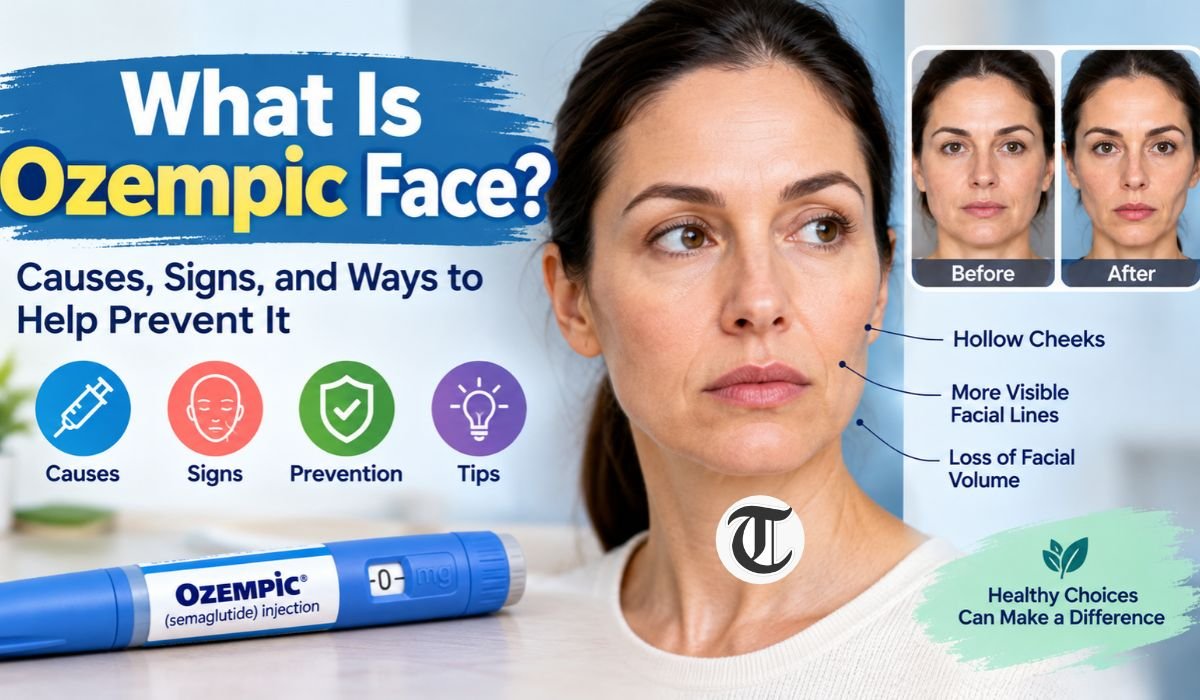
Losing weight can bring meaningful improvements to your health, but the changes don’t always stop at the waistline. For some people, significant weight loss also changes the way their face looks. The cheeks may appear less full, the area around the eyes may look more hollow, and loose skin or fine lines can become easier to notice. When those changes happen during treatment with Ozempic or another weight-loss medication, they’re often described online as Ozempic Face.
The name itself can be a little misleading. It may sound as though Ozempic directly damages the face or causes premature aging. That’s not what the term means.
Ozempic Face isn’t an official medical diagnosis. Instead, it’s a popular description for facial volume loss and related changes that can happen after significant or rapid weight loss. Similar changes may occur after bariatric surgery or substantial weight loss achieved through diet and exercise. Current clinical guidance also points to the amount and speed of weight loss as important factors, rather than treating facial changes as a unique effect of the medication.
That distinction is worth understanding. Weight loss can offer important health benefits, and concerns about appearance shouldn’t automatically overshadow those benefits. By understanding why facial changes occur, what they look like and what can realistically be done about them, people can make better-informed decisions about their treatment.
What Is Ozempic Face?
Ozempic Face is a commonly used term for a thinner, more hollow or sometimes older-looking facial appearance that follows significant weight loss. Someone may notice less fullness in the cheeks, deeper-looking lines, thinner-looking lips, hollow areas around the eyes or looser skin around the lower face and neck.
The phrase became popular through social media and cosmetic medicine discussions. However, doctors don’t generally use it as a formal diagnosis. More precise descriptions include facial volume loss, facial fat loss and skin laxity after weight loss.
Ozempic contains semaglutide, a GLP-1 receptor agonist. The current U.S. prescribing information doesn’t list “Ozempic Face” as a formal adverse reaction. Ozempic’s approved uses include improving blood sugar control in adults with Type 2 Diabetes and reducing certain cardiovascular and kidney risks in eligible patients with Type 2 Diabetes.
So, the connection is usually easier to understand as a chain of events: medication-assisted weight loss can lead to loss of body fat, some of that fat can come from the face, and reduced facial volume can change the way the skin and facial contours look.
Does Ozempic Really Cause Ozempic Face?
The short answer is that Ozempic can be associated with the appearance people call Ozempic Face because it can produce substantial weight loss, but that doesn’t mean the medication is directly damaging or aging the face.
When a person loses weight, the body doesn’t remove fat only from the areas they want to slim down. Fat can be lost from many parts of the body, including the face. Since facial fat helps provide volume and support to soft tissue, losing some of it can alter familiar facial contours.
This also explains why the same type of appearance can occur without Ozempic. Significant weight loss after bariatric surgery or through lifestyle changes can produce similar effects. In other words, Ozempic Face isn’t exclusive to semaglutide or even to GLP-1 medications.
There’s still more to learn, though. Recent research is exploring whether GLP-1 medicines might affect skin cells, fat compartments and other tissues through mechanisms that go beyond weight loss. Those findings are interesting, but they’re still an emerging area of research. They shouldn’t be turned into a definitive explanation for every facial change experienced by someone taking a GLP-1 medication.
For now, the clearest explanation remains facial fat and volume loss associated with weight reduction.
Why Does Rapid Weight Loss Change Your Face?
Your face isn’t simply covered by a thin layer of skin. Several types of tissue work together to create its shape and fullness. Subcutaneous fat, which sits beneath the skin, is one of them. It helps give the cheeks, temples and other areas of the face their soft, rounded appearance.
When that volume decreases, the face can look slimmer or more angular. If a substantial amount of fat is lost in a relatively short period, the change may be particularly noticeable.
The skin also has to adapt to the smaller volume underneath it. Depending on a person’s age, genetics and natural skin elasticity, it may not tighten completely around the new facial contours. That can leave some areas looking looser or less supported.
Recent research into medical weight loss suggests that several facial structures may be involved, including superficial fat compartments, deeper facial support and skin laxity. Researchers are still working to understand how these changes interact.
This is also why Ozempic Face can resemble natural facial aging. Aging gradually changes facial fat distribution and the tissues supporting the skin. A significant reduction in facial volume can make some of those familiar features appear over a much shorter period.
What Does Ozempic Face Look Like?
There’s no single look that defines Ozempic Face. One person might notice only slightly slimmer cheeks, while another may experience much more obvious facial hollowing.
Hollow or less-full cheeks are among the most recognizable changes. As facial fat decreases, the middle of the face can lose some of its previous roundness.
The eyes may appear more deeply set when the soft tissue surrounding them becomes less prominent. Lips can also look thinner because the surrounding facial volume has changed.
Wrinkles and fine lines may stand out more, particularly when there is less fullness beneath the skin. Loose skin can become visible around the cheeks, jawline and neck, and some people may notice more pronounced jowls.
At the same time, the cheekbones and jawline may become more prominent. This can create an interesting contrast: the face may look more sharply defined while also appearing older or more tired.
These changes are commonly associated with what people mean when they talk about Ozempic Face.
What Causes Facial Volume Loss During Weight Loss?
The basic explanation is fairly simple: when you lose body fat, you can also lose fat from your face.
The face contains several fat compartments, and they don’t all respond to weight loss in exactly the same way. Recent anatomical research suggests that medical weight loss can affect superficial areas of facial fat, including parts of the midface. That can contribute to flatter contours and more noticeable transitions between facial features.
Skin quality is another part of the picture. Collagen provides structural support for the skin, while elastin helps it stretch and return toward its original shape. It’s tempting to say that rapid weight loss simply “lowers collagen and elastin,” but the science is more complicated than that. It would also be inaccurate to claim that Ozempic directly destroys these proteins.
Researchers are still investigating how rapid weight loss and GLP-1 therapy may influence skin structure and elasticity. Current evidence supports facial volume loss as an important explanation for the appearance commonly called Ozempic Face, while the possible direct effects of GLP-1 medications on skin biology remain an area of ongoing research.
That distinction matters because it keeps the discussion grounded in what is known rather than turning early research into a medical certainty.
Is Ozempic Face More Likely With Fast Weight Loss?
The amount and speed of weight loss can affect how noticeable facial changes become. When a substantial amount of fat disappears over a relatively short period, changes in facial volume can become apparent quickly.
For that reason, Cleveland Clinic guidance recommends gradual weight loss and gives approximately one to two pounds per week as a general target. That figure shouldn’t be treated as a universal rule. The appropriate pace depends on factors such as a person’s starting weight, overall health, nutrition, treatment plan and medical needs.
Trying to lose weight as quickly as possible isn’t necessarily the healthiest approach. If you’re concerned that your weight is dropping too quickly or that your face is changing dramatically, it’s better to discuss those concerns with your healthcare professional.
Most importantly, don’t increase, decrease or stop a prescription medication on your own because of changes in facial appearance.
Who Is More Likely to Notice Ozempic Face?
Not everyone who loses weight develops noticeable Ozempic Face. In fact, the degree of facial change can vary considerably between people.
Age is one factor that may make a difference. Older adults often have less facial subcutaneous fat and may already have age-related changes in skin elasticity and facial volume. Additional fat loss can therefore be more visible.
The amount of weight lost matters, too. Someone who loses a large amount of weight may see more dramatic changes than someone who loses a smaller amount. The speed of that loss can also influence how quickly facial changes become apparent.
Then there are individual differences that can’t easily be predicted. Genetics, natural facial structure, baseline facial volume, fat distribution and skin characteristics all play a role.
That’s why comparing your face with someone else’s before-and-after photos isn’t particularly useful. Even people taking the same medication can have very different results.
Can You Prevent Ozempic Face?
There’s no guaranteed way to prevent facial volume loss when substantial weight loss occurs. Still, taking a gradual and medically appropriate approach may help make sudden changes less pronounced.
A balanced eating pattern, adequate protein and appropriate physical activity can support healthy weight management. Staying hydrated is important for general health, while sunscreen and a consistent skincare routine help protect the skin.
It’s important not to overstate what these measures can do. Protein doesn’t specifically preserve facial fat. Exercise can’t tell the body where to lose fat. Drinking more water can’t replace facial volume that has already been lost.
The most sensible strategy is to focus on sustainable weight management and work with your healthcare team. If you’re concerned about the rate at which you’re losing weight or about changes to your face, those are good topics to raise during a medical appointment.
Can Protein And Exercise Help During Weight Loss?
Protein and exercise have an important place in healthy weight management, particularly when preserving lean muscle is a goal.
Protein supplies amino acids needed to maintain and build muscle, while resistance exercise provides a stimulus that can help preserve muscle during weight loss.
But there’s an important limitation: neither approach specifically prevents Ozempic Face. Facial fat and skeletal muscle are different tissues, and there’s no reliable exercise that can tell your body to keep fat in your cheeks while removing it from another part of the body.
Think of protein and exercise as tools for maintaining healthier overall body composition and physical function. They’re valuable during weight loss, even though they can’t guarantee a particular facial appearance.
Your individual protein needs and exercise plan may depend on your health, age, activity level and other factors, so personalized guidance can be helpful.
Can Skincare Prevent Ozempic Face?
Good skincare can help keep your skin healthy, but it can’t replace facial fat that’s been lost during weight reduction.
Daily sunscreen is especially important because ultraviolet exposure contributes to premature skin aging. A simple routine that includes appropriate cleansing, moisturizing and sun protection can help support the skin barrier and overall skin quality.
What skincare can’t do is restore the underlying volume that has disappeared. That’s why it’s wise to be skeptical of products advertised as guaranteed “Ozempic Face” cures or creams that claim to rebuild facial fat.
Skincare still has a useful role. It simply needs to be viewed realistically: it supports the condition of the skin, while facial volume loss is a deeper structural change.
Does Ozempic Face Go Away?
There’s no universal timeline or guarantee because the answer depends on the individual and the type of facial change involved.
If facial fullness decreased because of weight loss, some fullness may return if weight is regained. But deliberately regaining weight simply to change the appearance of your face isn’t a sensible treatment strategy, particularly when the weight loss is improving your health.
For someone who maintains their weight loss, facial volume changes may remain noticeable. Some people find that their appearance feels more natural once their weight stabilizes, while others remain concerned about hollowing, wrinkles or loose skin.
It’s also important not to assume that every change will disappear once weight loss stops. Lost volume and loose skin may persist, and they may require different approaches if someone wants cosmetic correction.
Can You Restore Lost Facial Volume?
The right approach depends on what’s actually changed.
If facial volume loss is the main concern, a qualified professional may discuss treatments such as dermal fillers or fat grafting. If loose skin is the bigger issue, simply adding volume may not produce the result someone wants.
Dermal fillers can add volume to selected areas and may soften certain facial contours or lines. Lip fillers can also increase lip volume when that’s a concern.
Fat grafting takes fat from another part of the body and transfers it to selected facial areas. Because it uses the person’s own tissue, it’s a different approach from injectable fillers.
Recent research suggests that facial changes following medical weight loss can involve several tissue layers. That makes individualized assessment particularly important. A treatment that works well for one person may not be appropriate for another.
Anyone considering cosmetic treatment should speak with an appropriately qualified professional who can evaluate their facial structure, skin condition and goals.
Cosmetic Treatments For Ozempic Face
There are several cosmetic approaches that may be considered, depending on the person’s concerns.
Dermal fillers are designed to restore volume in selected facial areas. They can be useful when hollowing or loss of fullness is the main issue. Lip fillers may be considered when reduced lip volume is bothersome.
Microneedling and radiofrequency-based treatments are generally focused more on skin texture and tightening than on replacing substantial amounts of lost facial fat. PRP treatments are also used in some cosmetic settings, although evidence and treatment protocols can vary.
Fat grafting can restore facial volume using the patient’s own fat. For people with significant loose skin or lower-face laxity, surgical options such as a facelift or neck lift may be considered.
These treatments aren’t interchangeable. A procedure designed to add volume isn’t doing the same job as one designed to tighten or reposition loose skin. That’s why a proper assessment is more useful than choosing a treatment based on before-and-after photos online.
Cosmetic procedures also have risks, costs and limitations. Anyone considering one should have a detailed discussion with a qualified professional about realistic results and potential complications.
What We Know And What Researchers Are Still Studying
The science surrounding GLP-1 medications, weight loss and skin health continues to develop.
The most established explanation for Ozempic Face is that substantial weight loss reduces fat volume in different parts of the body, including the face. Current clinical guidance supports this understanding.
Researchers are also investigating whether GLP-1 receptor agonists may have effects on skin cells, fat compartments and other tissues that aren’t explained entirely by weight loss. Recent reviews have discussed possible biological mechanisms as well as reported skin and tissue changes associated with GLP-1-related weight loss.
These findings are worth watching, but they need to be interpreted carefully. Much of this area remains under investigation, and more prospective research is needed to determine how much of the visible facial change comes from weight loss itself and whether GLP-1 medicines have meaningful direct effects on facial tissues.
For readers, the practical lesson is simple: distinguish between what’s well established and what’s still being studied. A headline or social-media post shouldn’t automatically be treated as proof that a medication directly causes facial aging.
Ozempic Face Vs. Natural Aging
Ozempic Face can look similar to natural facial aging because both can involve reduced facial fullness, wrinkles and changes in skin laxity.
As people age, facial fat gradually changes in both amount and distribution. The tissues that support the skin also change over time. Significant weight loss can produce some similar visual effects over a much shorter period.
That doesn’t necessarily mean weight loss has biologically “aged” the face. A face with less underlying fat simply has a different shape and less soft-tissue volume.
Recent anatomical research suggests that facial changes after GLP-1-associated weight loss can involve superficial fat loss, deeper structural changes and increased skin laxity. Researchers are still working to understand how these factors interact.
This is one reason the phrase Ozempic Face can be somewhat misleading. The face isn’t necessarily being aged by Ozempic itself. Instead, changes in facial volume can make certain features associated with aging more visible.
When Should You Talk To Your Healthcare Provider?
If you’re concerned about how quickly you’re losing weight, how your medication is affecting you or how your face is changing, bring it up with your healthcare provider.
Your clinician can review your treatment plan and determine whether your rate of weight loss is appropriate for your individual health needs. They can also discuss nutrition, physical activity and any concerns you have about maintaining a healthy weight.
Don’t increase, decrease or stop a prescription medication without professional guidance. Ozempic has specific approved uses, safety considerations and prescribing requirements, so decisions about treatment should be based on your medical situation rather than appearance alone.
If you’re considering dermal fillers, fat grafting, skin tightening or surgery, seek an appropriately qualified professional. A proper examination can help determine whether your concern is primarily lost volume, loose skin, wrinkles or a combination of changes.
Final Thoughts
Ozempic Face has become a familiar phrase, but understanding what it actually describes is more useful than the name itself. It isn’t a formal medical condition, and it shouldn’t automatically be interpreted as evidence that Ozempic is damaging or prematurely aging the face.
In most cases, the appearance is linked to significant or rapid weight loss and the resulting reduction in facial fat and volume. Hollow cheeks, sunken-looking eyes, thinner lips, wrinkles, loose skin and more prominent facial contours can all occur as the face adapts to a lower body weight.
The sensible response isn’t to fear weight loss or pursue a perfect appearance. Healthy, sustainable weight management should remain the priority. Gradual weight loss, appropriate nutrition, adequate protein, physical activity and sensible skin protection can all support overall health, even though none can guarantee a particular facial result.
If facial changes remain bothersome after your weight stabilizes, cosmetic treatments may offer options. The appropriate choice depends on whether you’re dealing mainly with lost volume, loose skin, wrinkles or a combination of changes.
Research into GLP-1 medications and their possible effects on skin and facial tissues is continuing. Until more evidence becomes available, the most trustworthy approach is to separate established findings from emerging theories.
For now, the central message is simple: when you lose a significant amount of weight, some of that lost volume can come from your face. Understanding that process can help you approach weight management with realistic expectations while keeping your focus where it belongs—on your overall health.
FAQs About Ozempic Face
What Exactly Is Ozempic Face?
Ozempic Face is an informal term for facial changes that can appear after significant or rapid weight loss. These changes may include reduced cheek fullness, facial hollowing, more visible wrinkles, thinner-looking lips and loose skin. It isn’t an official medical diagnosis, and it isn’t unique to people taking Ozempic.
Does Ozempic Directly Age Your Face?
Current clinical guidance primarily links the appearance called Ozempic Face to facial fat and volume loss associated with weight reduction rather than describing Ozempic as directly aging the face.
Researchers are investigating whether GLP-1 medications may have additional effects on skin and other tissues, but those mechanisms remain an emerging area of study. It’s therefore too early to describe direct medication-related facial aging as an established fact.
Can You Prevent Ozempic Face?
There’s no guaranteed way to prevent it. Gradual weight loss, balanced nutrition, adequate protein, appropriate exercise, hydration and good sun protection can support overall health and skin quality, but none of these measures can guarantee that facial fat will be preserved during significant weight loss.
The best approach is to discuss a sustainable weight-loss plan with your healthcare provider.
Does Ozempic Face Go Away?
It may not completely disappear if substantial weight loss is maintained. Some facial fullness can return with weight regain, but intentionally regaining weight isn’t recommended simply to change facial appearance.
If hollowing, wrinkles or loose skin remain bothersome after your weight stabilizes, a qualified professional can explain whether any cosmetic options may be appropriate.
Can Exercise Prevent Ozempic Face?
Exercise can help support muscle maintenance and overall body composition during weight loss, but it can’t control exactly where the body loses fat. There isn’t an exercise that can guarantee preservation of facial fat.
Regular physical activity is still valuable because of its broader benefits for strength, fitness and metabolic health.
Can Fillers Help With Ozempic Face?
Dermal fillers can restore volume in selected facial areas and may improve certain types of hollowing or loss of fullness. They don’t correct every facial change associated with weight loss, and their effects are temporary.
Anyone considering fillers should have the procedure performed by an appropriately qualified professional and should discuss expected results, risks and alternatives beforehand.
Is Ozempic Face Dangerous?
Ozempic Face itself is generally considered an appearance concern rather than a dangerous medical condition. However, rapid or excessive weight loss can have broader health and nutritional consequences.
If you’re losing weight unexpectedly quickly or have concerns about your medication or overall health, speak with your healthcare provider.
Should You Stop Ozempic Because Of Facial Changes?
No. Don’t stop or change a prescription medication without discussing it with the prescribing healthcare professional.
If facial changes are bothering you, your clinician can review your rate of weight loss, treatment plan, nutrition and overall health. Together, you can decide whether any changes to the treatment approach are medically appropriate.
Learn more and explore exciting content on: Companies Offering Digital Subscriptions: A Complete Guide for 2026
[…] Learn more and explore exciting content on: What Is Ozempic Face? Causes, Signs, and Ways to Help Prevent It […]