
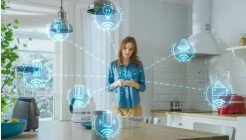
Smart home technology can make everyday life more convenient, comfortable, and secure, but getting started can feel overwhelming. With so many connected devices, control systems, and automation options available, homeowners may wonder where to begin and which technologies are actually worth installing.
Designing a smart home does not mean filling every room with gadgets. A functional smart home should be built around the way people use their property. The most effective systems combine useful technology with simple controls, reliable connectivity, and thoughtful planning.
For homeowners considering a connected living environment, Sound Effects AV can provide solutions that bring different technologies together while keeping usability and the home’s overall design in mind.
Start With Your Everyday Needs
The first step in designing a smart home is identifying what you want the technology to accomplish. Every household has different priorities, so there is no single setup that works for everyone.
Some homeowners may be most interested in security, while others may want better entertainment, lighting control, energy management, or convenience. A family that spends a lot of time watching movies may prioritise a home theatre and whole-home audio system, while someone who works from home may place greater emphasis on lighting, climate control, and reliable networking.
Making a list of everyday challenges can help determine which smart technologies will provide genuine value.
Plan the Home as One Connected System
One of the biggest mistakes beginners can make is purchasing individual smart devices without considering how they will work together.
A smart light, thermostat, security camera, speaker, or television may work perfectly on its own. However, problems can arise when devices use different platforms or require separate applications and controls.
A connected home should therefore be planned as a complete system. Homeowners should consider how lighting, security, climate control, entertainment, networking, and other technologies will communicate.
Professional planning from a provider such as Sound Effects AV can help homeowners avoid creating a collection of disconnected devices and instead build a system that is easier to manage.
Build a Reliable Network
A reliable network is one of the foundations of a connected home. Smart devices depend on communication between equipment, control systems, and the internet, so weak connectivity can quickly become frustrating.
Larger homes may have areas where a standard wireless router cannot provide consistent coverage. Planning network access points, wired connections, and other infrastructure during construction or renovation can help provide more reliable connectivity.
The network should also be capable of handling multiple connected devices at the same time. As smart technology becomes more common, the number of devices connected to a home’s network can increase significantly.
Consider Smart Lighting
Lighting is a good starting point for homeowners who want to introduce automation. Smart lighting can provide greater control over brightness, schedules, and different areas of the home.
Instead of switching individual lights on and off, homeowners can create scenes for different activities. A relaxation setting might use softer lighting, while a work setting could provide brighter illumination.
Lighting can also be connected with other smart technologies. For example, an evening scene could adjust lighting while activating entertainment equipment and closing motorised blinds.
The key is to automate lighting according to real routines rather than creating unnecessary complexity.
Add Smart Climate Control
Temperature has a major impact on household comfort and energy consumption. Smart thermostats and connected climate-control systems can make it easier to manage indoor conditions.
Homeowners can establish schedules around their daily routines, adjusting heating or cooling when the property is occupied and reducing unnecessary operation when everyone is away.
Depending on the system, sensors may also provide information about occupancy or temperature in different areas of the property.
Smart climate control should complement the home’s existing heating and cooling equipment rather than simply adding another device to manage.
Improve Home Security
Security technology is another practical area for smart home upgrades. Depending on the property’s requirements, homeowners can consider smart locks, video doorbells, security cameras, motion sensors, alarms, and access-control systems.
The benefit of integration is that these technologies can work together. A security event can potentially trigger notifications or other predefined actions, giving homeowners greater awareness of activity around their property.
Remote access can also allow homeowners to check selected systems while they are away.
However, security technology should be planned carefully. Cameras need appropriate positioning, access controls must be convenient for residents, and alerts should provide useful information without becoming excessive.
Create a Connected Entertainment Experience
Entertainment is an important part of many smart homes. Audio-visual technology can be integrated into living rooms, bedrooms, outdoor spaces, or dedicated entertainment areas.
A whole-home audio system can allow music to be played in multiple rooms, while a home theatre can provide a more immersive experience for movies, sports, and gaming.
Sound Effects AV can help homeowners plan these systems around the room’s layout, acoustics, equipment requirements, and interior design. This can help avoid the common problem of adding equipment after the room has already been completed.
Think About Controls and Simplicity
A smart home should make life easier, not require homeowners to become technology experts.
Centralised controls can bring multiple functions together. Depending on the system, homeowners may be able to control lighting, entertainment, climate, blinds, and security from a smartphone, tablet, wall-mounted interface, remote, or voice command.
Simple controls are especially important in homes where multiple people will use the system. Family members should be able to understand the basic functions without needing complicated instructions.
Automation should also have a clear purpose. If a function does not make daily life easier, there may be little reason to automate it.
Plan for Future Expansion
Technology changes quickly, so a smart home should not be designed only around today’s devices. Homeowners should consider whether the system can accommodate future upgrades.
Good infrastructure can make it easier to add new equipment later. This includes appropriate network capacity, wiring, equipment locations, and control systems.
Planning for future expansion can also prevent homeowners from needing to replace major parts of the system simply because they want to introduce a new technology.
Work With the Home’s Design
Smart technology should complement the home’s architecture and interior rather than dominate it.
Speakers can be installed discreetly, screens can be integrated into carefully selected locations, and control panels can be positioned where they are convenient without disrupting the appearance of a room.
This is particularly important for new construction and major renovations. Integrating technology into the design from the beginning generally provides more options than attempting to hide equipment after construction is complete.
Creating a Smart Home That Works for You
A successful smart home is not defined by the number of connected devices it contains. It is defined by how effectively the technology supports everyday life.
Starting with practical needs, planning reliable connectivity, choosing compatible systems, and keeping controls simple can help homeowners create a connected environment that is comfortable and easy to manage.
With professional guidance from Sound Effects AV, homeowners can bring together entertainment, lighting, security, climate control, and other technologies in a way that suits their property and lifestyle. The result is a smart home that feels less like a collection of gadgets and more like a naturally connected living environment.
 Sky Bloom IT
 Backlinks Hub