
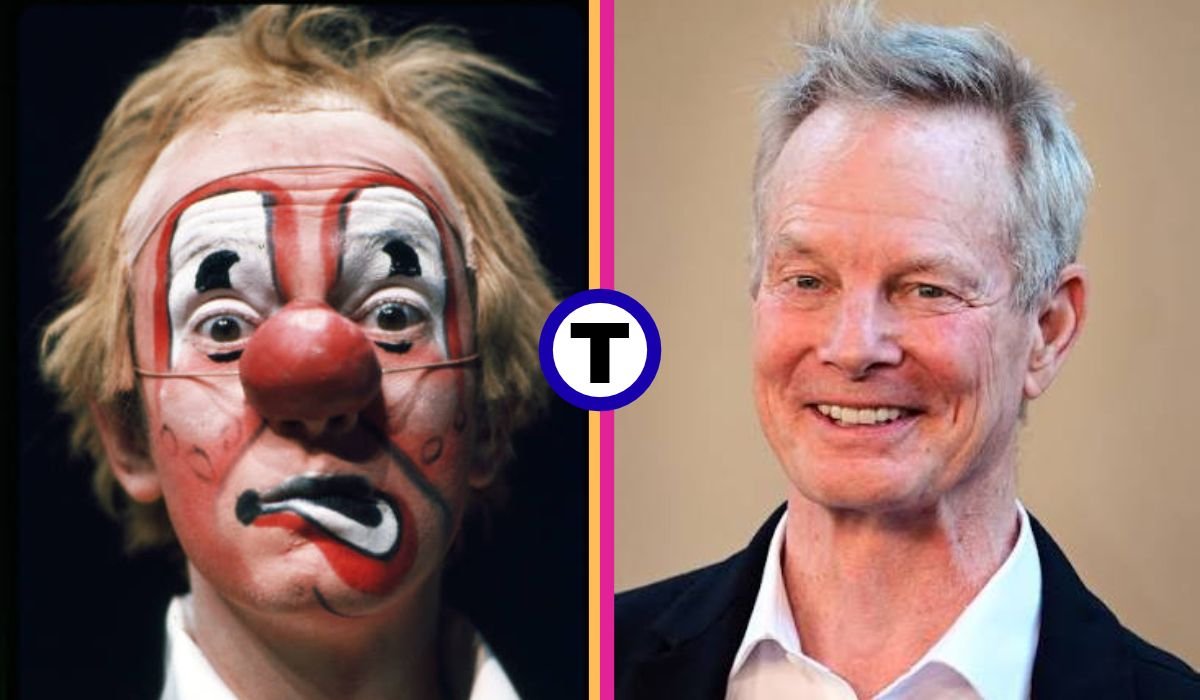
Not every performer needs a punchline to make an audience laugh. Sometimes, a raised eyebrow, an awkward pause, or a carefully timed movement is enough. Bill Irwin has spent much of his career proving just how powerful those small moments can be. An American actor, comedian, clown, mime artist, writer, director, and choreographer, he’s built a distinctive place for himself in the worlds of theater, film, and television.
Born in Santa Monica, California, Irwin developed a performance style rooted in traditional clowning, vaudeville, silent-film comedy, and physical theater. His work has taken him from circus stages to Broadway, earning him some of the entertainment industry’s most respected honors. He received a MacArthur Fellowship in 1984 and won the Tony Award for Best Actor in a Play in 2005 for Who’s Afraid of Virginia Woolf?. Television audiences may know him just as well as Mr. Noodle from Sesame Street. His career is a fascinating example of what can happen when an artist follows an unconventional path and turns a personal passion into a lifelong craft.
Quick Bio Information About Bill Irwin
| Personal Detail | Information |
|---|---|
| Full Name | William Mills Irwin |
| Professional Name | Bill Irwin |
| Date of Birth | April 11, 1950 |
| Age in 2026 | 76 Years |
| Birthplace | Santa Monica, California, USA |
| Nationality | American |
| Profession | Actor, Clown, Comedian, Writer, Director, Choreographer |
| Education | Oberlin College |
| Additional Training | Ringling Bros. and Barnum & Bailey Clown College |
| Height | Approximately 5 Feet 11½ Inches |
| Mother | Elizabeth Mills |
| Father | Horace G. Irwin |
| First Wife | Kimi Okada |
| Wife | Martha Roth |
| Children | One Son |
| Son’s Name | Santos Patrick Morales Irwin |
| Famous Television Role | Mr. Noodle |
| Notable Film | How the Grinch Stole Christmas |
| Major Award | 2005 Tony Award for Best Actor in a Play |
| Major Fellowship | 1984 MacArthur Fellowship |
Who Is Bill Irwin? A Look at His Life and Career
Bill Irwin is an American performer whose work has helped bring traditional clowning into contemporary theater. His approach to comedy is different from that of many conventional comedians. Rather than depending on spoken jokes, he uses gestures, facial expressions, movement, and impeccable timing to create memorable moments. His performances can be playful one minute and surprisingly emotional the next, giving his characters a depth that audiences don’t always expect from a clown.
His career has stretched across several areas of entertainment. Irwin has appeared on Broadway, performed in original theatrical productions, acted in Hollywood films, and taken on television roles. Among his best-known projects are Fool Moon, The Regard of Flight, Waiting for Godot, and Who’s Afraid of Virginia Woolf?. He’s also appeared in Interstellar, How the Grinch Stole Christmas, and the television series Legion. For younger viewers, his work as Mr. Noodle on Sesame Street offers a very different introduction to the same performer. Few actors have moved so comfortably between children’s entertainment, experimental theater, and serious drama.
Bill Irwin’s Early Life and Family Background
Bill Irwin was born William Mills Irwin on April 11, 1950, in Santa Monica, California. His mother, Elizabeth Mills, worked as a teacher, while his father, Horace G. Irwin, was an aerospace engineer. He grew up as the oldest of three children and, according to published biographical information, has English, Irish, and German ancestry.
One particularly interesting part of his early life was a year spent in Belfast, Northern Ireland, as an exchange student. Living outside the United States gave him an opportunity to experience a different environment during his formative years. His childhood wasn’t shaped by the usual Hollywood route of auditions and early acting roles. Instead, his interest in performance developed through education, exploration, and a growing fascination with the possibilities of theater. Those early experiences eventually led him toward an artistic career that would be anything but conventional.
Education and the Beginning of His Interest in Theater
Education played a significant role in shaping Irwin’s artistic direction. He studied at the University of California, Los Angeles, from 1968 to 1970, before attending the California Institute of the Arts from 1970 to 1971. He later enrolled at Oberlin College in Ohio, where he studied theater arts between 1971 and 1974. These experiences exposed him to different approaches to performance and gave him a foundation for developing his own theatrical ideas.
A particularly important chapter began in 1974, when he attended Ringling Bros. and Barnum & Bailey Clown College in Florida. The specialized program introduced him to the discipline behind professional circus clowning. It wasn’t simply about learning how to make people laugh. It involved understanding movement, physical expression, timing, character development, and the relationship between a performer and a live audience. That training would become central to his professional identity. Irwin learned to treat the body as a storytelling instrument, a skill that would distinguish his performances throughout his career.
How Bill Irwin Started His Professional Career
Irwin didn’t begin his career by heading straight into Hollywood. His early professional experiences were rooted in experimental theater and circus performance, where he had room to explore unusual ideas and challenge conventional acting techniques.
Between 1971 and 1974, he was an original member of Kraken, an experimental theater company directed by Herbert Blau. The experience gave him an opportunity to work outside traditional theatrical boundaries. In 1974, he joined the original cast of San Francisco’s Pickle Family Circus, remaining with the company until 1979. The group combined circus traditions with theatrical storytelling, creating an environment where performers could experiment with physical comedy and imaginative characters. These years helped Irwin sharpen his skills and develop the confidence to pursue his own creative direction. By 1979, he had begun establishing himself as an independent theatrical performer.
Bill Irwin’s Rise as an American Theater Performer
As his experience grew, Irwin began creating original productions that showed just how far he could take the art of clowning. One important example was The Regard of Flight, a theatrical work that brought together mime, physical comedy, imaginative movement, and storytelling. Rather than relying on a conventional narrative or a steady stream of jokes, the production explored how a performer could build an entire theatrical world through physical expression.
Another major achievement was Largely New York, which received four Tony Award nominations in 1989. Irwin was recognized for his work as a playwright, actor, director, and choreographer. The nominations were significant because they highlighted the many creative responsibilities he could handle within a production. He wasn’t simply performing someone else’s material; he was also helping shape the work itself. His growing reputation reflected a wider recognition of clowning as a serious and imaginative theatrical discipline.
Bill Irwin’s Most Famous Theater Performances
The stage has remained one of the most important parts of Bill Irwin’s career. Over the years, he’s appeared in productions that demonstrate both his comic instincts and his ability to handle demanding dramatic material. Among his most notable works is Fool Moon, created with fellow performer David Shiner. The production brought traditional clowning to the theater through a lively combination of physical humor, unusual characters, and carefully timed performances.
Irwin also appeared in Samuel Beckett’s Waiting for Godot alongside Steve Martin and Robin Williams in the 1988 production directed by Mike Nichols. He returned to the play in a Broadway revival in 2009, portraying Vladimir. His other notable stage appearances include The Goat, or Who Is Sylvia?, The Iceman Cometh, and Shakespeare’s King Lear, in which he played the Fool. These roles reveal a performer comfortable moving between very different theatrical worlds. Whether working with absurdist comedy or classical drama, Irwin brings a strong physical presence and a distinctive understanding of character.
How Bill Irwin Won a Tony Award for Who’s Afraid of Virginia Woolf?
For many performers, winning a Tony Award represents the high point of a professional career. For Irwin, the recognition came in 2005, when he received the Tony Award for Best Actor in a Play for his portrayal of George in the Broadway revival of Who’s Afraid of Virginia Woolf?.
Written by Edward Albee, the play explores a deeply complicated marriage through sharp dialogue, emotional confrontations, and psychological tension. Irwin performed opposite Kathleen Turner, who played Martha. The production demanded a level of dramatic intensity quite different from the physical comedy for which he was already known. George is a complex character, requiring emotional control, careful delivery, and an ability to navigate uncomfortable moments without losing the audience’s attention. Irwin’s performance showed that the skills he’d developed through years of theatrical work could serve serious drama just as effectively as comedy. The award became one of the most important milestones of his career.
Bill Irwin’s Movies and Film Career
Although Irwin built his reputation in theater, his film career introduced him to a much wider audience. His feature-film debut came in Robert Altman’s Popeye in 1980, where he played Ham Gravy. The role gave him an early opportunity to bring his expressive performance style to the screen.
One of his most recognizable film appearances came in How the Grinch Stole Christmas (2000), in which he portrayed Lou Lou Who, the father of Cindy Lou Who. He later appeared in Rachel Getting Married (2008) and Christopher Nolan’s science-fiction film Interstellar (2014). His other film credits include Eight Men Out, My Blue Heaven, and Across the Universe. Irwin has often taken supporting roles, but that hasn’t stopped him from making an impression. His background in physical theater gives him an unusual ability to communicate personality through small gestures and subtle expressions, even when a character has limited screen time.
Bill Irwin’s Television Career and Famous TV Roles
Television has introduced Irwin to audiences who might never have encountered his stage work. One of his most familiar characters is Mr. Noodle, featured in the Elmo’s World segments of Sesame Street. The character’s exaggerated reactions, unusual movements, and attempts to understand everyday activities make him a natural fit for children’s entertainment. Irwin’s physical comedy allows young viewers to follow the action without needing complicated dialogue.
His television work also includes some considerably darker characters. In CSI: Crime Scene Investigation, he portrayed Nate Haskell, also known as the Dick and Jane Killer. He appeared as Dr. Peter Lindstrom in Law & Order: Special Victims Unit and played Cary Loudermilk in the FX series Legion from 2017 to 2019. The contrast between Mr. Noodle and these dramatic roles is striking. It also illustrates the range that has kept Irwin relevant across different types of entertainment and generations of viewers.
What Makes Bill Irwin’s Comedy and Performance Style Unique?
What separates Irwin from many other comedians is the way he uses physical expression to tell stories. A pause, a change in posture, or a seemingly ordinary gesture can become a complete comic moment in his hands. His style draws on several traditions, including classical mime, vaudeville, circus clowning, dance, and silent-film comedy.
Yet there’s more to his performances than visual jokes. His characters often move between humor and genuine emotion, making them feel like people rather than simple comic figures. A clown might appear confident one moment and completely lost the next. That contrast creates opportunities for both laughter and empathy. Irwin’s work also reminds audiences that physical comedy requires considerable discipline. Every movement has to be controlled, every reaction timed, and every character developed with care. It’s an art form that may look spontaneous, but it rests on years of practice and observation.
Bill Irwin’s Collaboration With David Shiner
David Shiner has played an important role in Irwin’s theatrical journey. The two performers share an interest in physical comedy, clowning, and the creative possibilities of movement. Their partnership helped produce Fool Moon, a theatrical production that presented traditional clowning in a fresh and engaging way.
The show received a Special Tony Award for Live Theatrical Presentation in 1999, giving their collaboration significant recognition. Irwin and Shiner later worked together on Old Hats, another production built around the expressive possibilities of clowning. Their creative relationship demonstrates how two performers with similar artistic interests can bring something distinctive to the stage. Rather than simply repeating traditional circus routines, they found ways to make physical comedy feel relevant to contemporary theater audiences.
Bill Irwin’s Awards, Honors, and Major Achievements
Recognition has followed Irwin throughout his career, although his influence extends well beyond the awards themselves. One of his earliest major honors came in 1984, when he received a MacArthur Fellowship. The foundation recognized his innovative approach to theatrical performance and his interest in bringing traditional vaudeville and silent-film imagery into modern comedy.
His achievements also include four Tony Award nominations for Largely New York in 1989. The nominations recognized his contributions across several creative categories. In 1999, Fool Moon received a Special Tony Award for Live Theatrical Presentation. That same year, Irwin was inducted into the International Clown Hall of Fame. His 2005 Tony Award for Best Actor in a Play, earned for Who’s Afraid of Virginia Woolf?, remains another major career highlight. Taken together, these honors recognize both his performance skills and his contribution to the development of theatrical comedy.
Bill Irwin’s Personal Life: Wife, Marriage, and Family
Despite spending decades in the public eye, Irwin has generally kept his personal life away from unnecessary attention. Available biographical records show that he married performer Kimi Okada in 1977. Their marriage ended in divorce in 1982. He later married Martha Roth in 1990.
Irwin also has a son named Santos Patrick Morales Irwin. Some published biographies list his birth year as 1990, although other online profiles give a different year. Since the available information isn’t entirely consistent, it’s best to avoid treating an uncertain birth date as established fact. Compared with his professional achievements, relatively little information about his family life has been shared publicly. A responsible biography should respect that distinction rather than fill the gaps with speculation.
Interesting Facts About Bill Irwin You May Not Know
There are plenty of details about Irwin’s career that deserve attention beyond his best-known stage and screen roles. He appeared alongside Robin Williams in Bobby McFerrin’s famous music video for Don’t Worry, Be Happy. He also created original theatrical work connected with the 1996 Atlanta Olympic Games, taking his performance skills beyond the traditional theater setting.
Another interesting aspect of his career is the number of different creative responsibilities he’s taken on. Irwin has worked as an actor, writer, director, choreographer, and producer. He’s also collaborated with international performers, including Russian mime artist Vyacheslav Polunin. His ability to move from a playful character like Mr. Noodle to a serious dramatic role is a reminder of how much range physical performers can possess. Each project reveals a different side of his artistic personality.
Bill Irwin’s Recent Work and Lasting Legacy in American Theater
Bill Irwin’s professional journey has continued into 2026. One of his recent major projects is The Imaginary Invalid, a Broadway production based on the classic comedy by Molière. Irwin adapted the play and stars as Argan, a man whose obsession with his health creates complications for those around him. The production began performances on September 25, 2026, at the Todd Haimes Theatre, with its scheduled run ending November 22, 2026. The project brings together several sides of his experience, including acting, writing, and theatrical clowning.
Another notable project is On Beckett, his one-person theatrical exploration of the writing of Samuel Beckett. The production examines the connection between physical comedy, language, and serious literature. His 2024 engagement at the Irish Repertory Theatre gave audiences another opportunity to see how he approaches Beckett’s work through his distinctive performance style. It also reflects an artistic interest that has remained consistent throughout his career: finding humor, meaning, and human emotion in unexpected places.
Irwin’s legacy isn’t limited to individual awards or memorable characters. He helped bring renewed attention to American circus traditions and demonstrated that clowning could be a sophisticated theatrical art. His work has expanded the possibilities of physical comedy, showing how movement and expression can communicate ideas that words alone sometimes cannot. Through theater, film, and television, he’s introduced audiences of different ages to the creative power of performance. That contribution is an important part of what makes his career worth remembering.
Final Thoughts
Bill Irwin’s career is a reminder that there’s no single way to entertain an audience. He’s made people laugh through traditional clowning, earned critical recognition for serious dramatic performances, and introduced physical comedy to younger viewers through television. His journey from experimental theater and circus performance to Broadway is a story of artistic curiosity, hard work, and a willingness to take a different path.
The awards and recognition are certainly important, but his contribution goes further. Irwin has helped audiences see clowning as a meaningful theatrical discipline, one capable of expressing complicated emotions as well as creating laughter. Whether he’s performing as Mr. Noodle, portraying George on Broadway, or bringing Molière’s comedy to a modern stage, he approaches each project with a distinctive sense of imagination. It’s that combination of humor, skill, and creative independence that makes Bill Irwin such a remarkable figure in American entertainment.
Frequently Asked Questions About Bill Irwin
Who Is Bill Irwin?
Bill Irwin is an American actor, comedian, clown, mime artist, writer, director, and choreographer. He’s known for original theatrical performances, Broadway roles, and television appearances. His best-known work includes Mr. Noodle on Sesame Street and George in Who’s Afraid of Virginia Woolf?.
How Old Is Bill Irwin?
Bill Irwin was born on April 11, 1950. He turned 76 in April 2026. His career spans decades of work in theater, film, and television, and he continues to participate in creative theatrical projects.
What Is Bill Irwin Famous For?
He’s famous for combining traditional clowning with modern theater, physical comedy, and dramatic acting. His Tony Award-winning Broadway performance, original productions such as Fool Moon, and television role as Mr. Noodle have introduced his work to audiences of different generations.
Did Bill Irwin Win a Tony Award?
Yes. Irwin won the 2005 Tony Award for Best Actor in a Play for portraying George in the Broadway revival of Who’s Afraid of Virginia Woolf?. He was also associated with Fool Moon, which received a Special Tony Award for Live Theatrical Presentation in 1999.
Who Played Mr. Noodle on Sesame Street?
Bill Irwin played Mr. Noodle in the Elmo’s World segments of Sesame Street. The character uses exaggerated gestures, funny reactions, and physical comedy to demonstrate everyday activities to young viewers.
What Movies Has Bill Irwin Appeared In?
His film credits include Popeye, Eight Men Out, My Blue Heaven, How the Grinch Stole Christmas, Rachel Getting Married, and Interstellar. His performances cover several genres, including comedy, drama, family entertainment, and science fiction.
Is Bill Irwin Married and Does He Have Children?
Bill Irwin married Kimi Okada in 1977, and they divorced in 1982. He married Martha Roth in 1990 and has one son, Santos Patrick Morales Irwin. He generally keeps his family life private, so publicly available information about his personal relationships is limited.
Learn more and explore exciting content on: Liev Schreiber: Biography, Age, Wife, Children, Movies, and Career
[…] Learn more and explore exciting content on: Bill Irwin: The Remarkable Life and Career of America’s Beloved Clown […]