
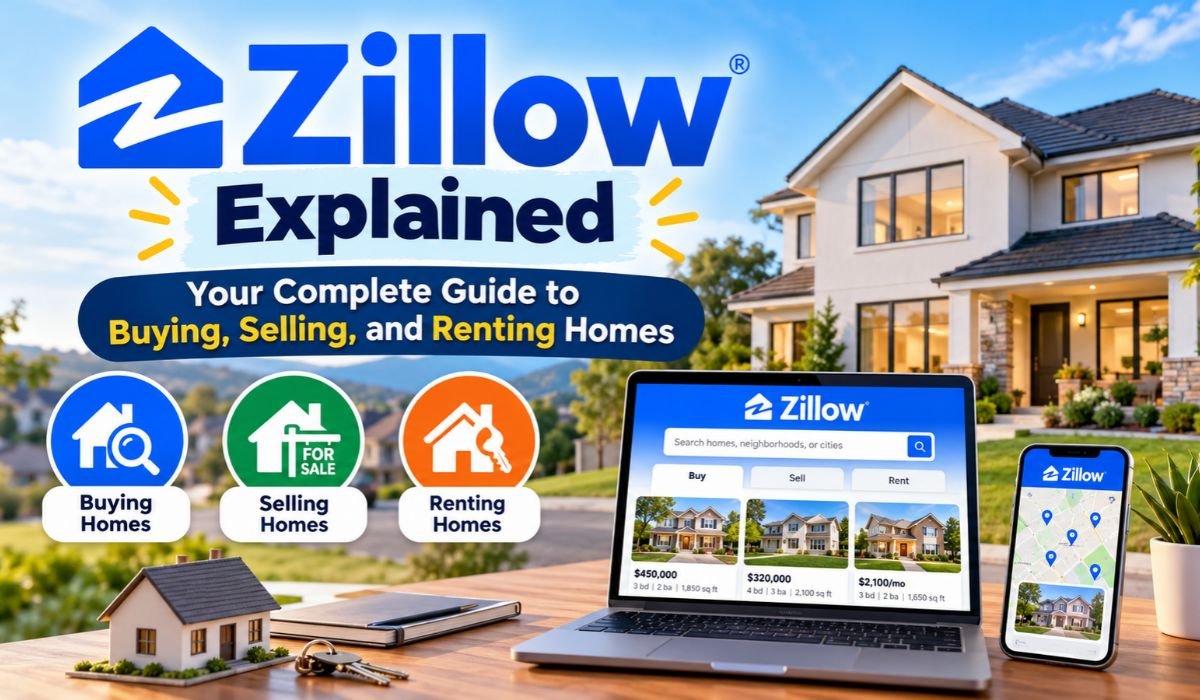
Introduction to Zillow
Finding a place to call home should be exciting. Yet, whether you’re buying your first house, searching for a rental apartment, or preparing to sell a property, the process can quickly become overwhelming. Between comparing prices, researching neighborhoods, understanding mortgage costs, and contacting real estate agents, there’s a lot to manage.
That’s where Zillow comes in.
Zillow brings property listings, rental opportunities, home value estimates, and mortgage resources together in one online platform. Instead of searching through multiple websites or contacting different agencies just to get started, users can explore housing options and gather useful information in one place.
But Zillow offers more than photographs of attractive homes. Its tools can help buyers understand affordability, renters compare available properties, and homeowners explore potential selling prices.
In this guide, we’ll look at how Zillow works in 2026, what its most useful features offer, and how to make the most of the platform without overlooking important financial or practical details.
What Is Zillow?
Zillow is an American online real estate marketplace that helps people search for homes, explore rental properties, research housing prices, and connect with real estate professionals.
The company was founded in 2006 by Rich Barton and Lloyd Frink. Since then, it has grown into one of the most recognizable names in online residential real estate.
The idea behind Zillow is straightforward: make housing information easier for everyday consumers to access and understand.
Visitors can browse homes for sale, compare asking prices, review property characteristics, and explore neighborhood information without having to visit a real estate office first.
Zillow also serves homeowners, landlords, and real estate professionals. Its broader services include rental tools, automated home value estimates, agent discovery, and mortgage financing through Zillow Home Loans.
The platform belongs to Zillow Group, which also operates real estate brands such as Trulia, StreetEasy, and HotPads.
Still, it’s important to understand what Zillow can and cannot do. It provides valuable information and connections, but it doesn’t replace property inspections, independent appraisals, mortgage underwriting, or professional legal advice.
Zillow Quick Bio and Key Information
| Information | Details |
|---|---|
| Platform Name | Zillow |
| Industry | Real Estate Technology |
| Founded | 2006 |
| Founders | Rich Barton and Lloyd Frink |
| Parent Company | Zillow Group |
| Headquarters | Seattle, Washington |
| Primary Market | United States |
| Main Purpose | Residential Real Estate Search |
| Home Buying | Property Listings and Buying Resources |
| Home Renting | Rental Listings and Online Services |
| Home Selling | Property Research and Selling Tools |
| Home Valuation | Zestimate |
| Mortgage Services | Zillow Home Loans |
| Affordability Feature | BuyAbility℠ |
| Agent Services | Real Estate Professional Discovery |
| Search Options | Address, City, Neighborhood, ZIP Code |
| Personalization | Saved Homes and Recommendations |
| Related Brands | Trulia, StreetEasy, HotPads |
| Mobile Access | iOS and Android Applications |
| Mortgage Lender NMLS | 10287 |
How Does Zillow Work?
Using Zillow is fairly simple, even if you’ve never searched for property online.
Start by entering an address, city, neighborhood, or ZIP code into the search bar. Zillow then displays relevant property listings, which you can narrow down using filters for price, property type, bedrooms, bathrooms, and other available features.
Each listing brings together information that helps users evaluate a property. Depending on what’s available, you may see photographs, floor plans, square footage, price history, descriptions, and estimated home values. Some listings also offer virtual tours or options to schedule a visit.
Behind the scenes, Zillow gathers property information from several sources. These include real estate listing feeds, public records, property owners, and industry professionals.
That variety makes the platform useful, but it also creates an important limitation. Information doesn’t always update at the same speed across every source.
A home that appears available might already be under contract, while a rental price could have changed recently. For that reason, Zillow is best used as a starting point for research, with important details confirmed directly before making decisions.
Main Features of Zillow
One reason Zillow attracts so much attention is the range of services available within a single platform.
For homebuyers, the property search feature makes it possible to explore houses in different neighborhoods and compare available options. Renters have a dedicated experience through Zillow Rentals, where they can search for apartments, houses, and other residential properties.
Homeowners may find the Zestimate tool particularly interesting. It provides an automated estimate of a property’s market value using available housing data.
Zillow also offers mortgage calculators and affordability resources. Its BuyAbility℠ feature helps prospective buyers explore estimated purchasing power based on financial information and mortgage assumptions.
Beyond those tools, users can save properties, follow searches, and receive personalized recommendations influenced by the homes they’ve viewed and their search preferences.
The Zillow mobile app makes these features accessible on the move. However, certain services may differ depending on the property, location, and participating professionals.
How to Buy a Home Using Zillow
Buying a house involves much more than finding a property with an appealing kitchen or a spacious backyard. The real challenge is finding a home that suits your needs without stretching your finances too far.
Zillow can help with the early stages.
Begin by choosing your preferred location and setting a realistic price range. From there, explore available homes and compare their size, condition, features, and asking prices.
It’s worth paying attention to more than the listing price. Property taxes, homeowners insurance, maintenance, mortgage payments, and possible homeowners association fees all contribute to the true cost of ownership.
Once you’ve found a few promising properties, you can contact an agent or request a tour where that option is available.
Getting mortgage preapproval before making an offer can also help you understand your likely borrowing capacity. However, preapproval isn’t a final lending commitment.
After selecting a home, the usual process involves submitting an offer, negotiating with the seller, arranging inspections, completing financing requirements, and closing the purchase.
A useful habit is to compare recently sold homes in the same neighborhood. Those sales can provide valuable context when deciding whether a property’s asking price is reasonable.
How to Find Rental Homes and Apartments on Zillow
Finding a rental can feel like a race, especially in neighborhoods where desirable properties attract attention quickly.
Zillow Rentals gives prospective tenants a convenient way to explore available apartments, houses, townhomes, and other rental properties.
You can narrow your search according to monthly rent, location, number of bedrooms, amenities, and other preferences.
Individual listings may include information about parking, pet policies, utilities, lease conditions, and security deposits. Reviewing these details early can save time and help you avoid properties that don’t fit your circumstances.
Some landlords and property managers also support online rental applications, tenant screening, lease signing, and rent payments through Zillow-related services.
Not every listing includes these options, though, so availability should always be checked.
Before submitting an application, confirm the total monthly cost, required deposit, lease length, and identity of the person managing the property.
Be especially careful when someone requests money before you’ve verified the listing. An unusually low price or pressure to pay immediately can be a warning sign of rental fraud.
How to Sell Your Home Using Zillow
Selling a home is both a financial decision and a personal one. Homeowners naturally want a strong selling price, but attracting serious buyers also requires realistic expectations.
Zillow offers resources that can help sellers understand their local market before listing a property.
A common starting point is the home’s Zestimate, which provides an automated estimate of its potential market value. Sellers can also research recently sold properties with similar characteristics.
However, a Zestimate doesn’t always reflect recent renovations, maintenance problems, or features that make a property unusual.
Preparing a house for sale may involve repairs, cleaning, improving curb appeal, and arranging professional photographs. These details can influence how potential buyers perceive a listing.
Pricing deserves particular attention. Setting an asking price too high may discourage buyers, while pricing too low without a clear strategy could affect the final outcome.
Homeowners can explore working with a real estate agent or using available for-sale-by-owner options.
Either way, sellers should account for expenses such as agent compensation, repairs, negotiated concessions, and closing costs before estimating how much money they’ll receive.
Zillow Zestimate: How Accurate Are Home Value Estimates?
The Zestimate is one of Zillow’s best-known features, and it’s easy to understand why. Homeowners are naturally curious about what their property might be worth.
Zillow’s Zestimate uses an automated valuation model that considers available information, including property characteristics, public records, listing details, and local housing market activity.
The result is an estimated market value, not a guaranteed selling price.
Accuracy can vary considerably. A home in an area with frequent comparable sales may be easier to estimate than a unique property in a neighborhood with limited recent transactions.
Renovations can also complicate the picture. If a homeowner has recently upgraded a kitchen or added living space, those improvements may not be fully reflected in the available data.
Zillow publishes information about Zestimate accuracy, but national statistics shouldn’t be treated as a promise about any individual home.
For important decisions, it’s sensible to compare the Zestimate with recent local sales, a comparative market analysis, or a professional appraisal.
The most useful way to view a Zestimate is as one piece of evidence rather than the final word on a property’s value.
Zillow Home Loans and Mortgage Tools Explained
Finding a suitable home is only half the challenge. Understanding how to pay for it is equally important.
Zillow Home Loans, LLC offers mortgage lending services to eligible borrowers, while Zillow’s broader platform provides tools for exploring financing and estimated housing costs.
One of those features is Zillow BuyAbility℠, which helps prospective buyers estimate their purchasing power.
Based on financial information and mortgage assumptions, BuyAbility can display a target home price, maximum estimated home price, and potential monthly payment.
These figures can help narrow a property search, but they shouldn’t be mistaken for guaranteed loan approval.
Lenders evaluate several factors before approving a mortgage, including income, credit history, existing debt, down payment, and property-related requirements.
It’s also important to understand the difference between a mortgage interest rate and annual percentage rate, or APR. The APR includes the interest rate and certain borrowing costs, making it useful when comparing loan offers.
Perhaps the most important lesson is that qualifying for a large mortgage doesn’t automatically mean taking the full amount is financially comfortable.
A sensible budget should leave room for everyday expenses, emergencies, and future financial goals.
How to Find Real Estate Agents on Zillow
Even with detailed online listings, real estate transactions can become complicated. That’s why many buyers and sellers choose to work with an experienced agent.
Zillow provides ways to discover real estate professionals who can assist with property searches, showings, pricing, negotiations, and transaction coordination.
When comparing agents, local knowledge matters. Someone who regularly works in a particular neighborhood may understand pricing trends, buyer expectations, and common property concerns.
Communication is another important factor. A good agent should explain the process clearly, respond to questions, and help clients understand their options.
Before choosing someone, review available professional information, client feedback, and relevant experience.
It’s also wise to discuss compensation and representation agreements in advance. Real estate agent compensation is negotiable, and consumers should understand what they’re agreeing to before signing.
Is Zillow Free to Use?
For most people browsing homes, Zillow is free to use.
Visitors can search property listings, compare available homes, explore rental options, and research estimated property values without paying a general subscription fee.
That doesn’t mean every service connected with Zillow is free.
Certain rental applications may involve charges. Mortgage financing comes with borrowing expenses, while buying or selling a property can involve inspections, professional compensation, and closing costs.
Zillow itself generates revenue through several business activities, including residential advertising, rental services, mortgage lending, and software products for real estate professionals.
Understanding this business model helps consumers recognize the difference between free property research and paid services.
Before using any financial or application-related feature, review the applicable fees and terms.
Is Zillow Safe and Reliable?
Zillow is an established real estate platform, but using a well-known website doesn’t eliminate every risk involved in property transactions.
Listings can contain outdated information, and photographs may not reveal maintenance problems, structural defects, or other concerns.
Rental fraud is another issue worth taking seriously.
Scammers sometimes advertise properties they don’t own, copy legitimate listings, or ask prospective tenants to send money before verifying the rental.
If a listing appears unusually inexpensive or someone pressures you to make an immediate payment, investigate carefully.
Confirm the property’s availability, verify the landlord or management company, and avoid sharing sensitive financial information with unverified contacts.
Zillow also provides privacy notices, accessibility information, and fair housing resources.
Still, the safest approach is to combine online research with independent verification, official property information, and professional advice when appropriate.
Benefits and Limitations of Zillow
Zillow’s biggest strength is convenience.
Instead of gathering property information from several separate sources, users can explore homes, compare prices, research estimated values, and investigate financing options through one platform.
Its search filters help narrow choices, while saved listings and recommendations make ongoing research more manageable.
For someone unfamiliar with a local housing market, Zillow can provide a useful introduction to available properties and asking prices.
But convenience has limits.
Property listings may not always reflect the latest changes. Automated home valuations can differ from actual selling prices, and estimated mortgage payments may change when a lender reviews a borrower’s full financial situation.
Online photographs also can’t replace seeing a property in person.
Zillow is most valuable when users recognize both its strengths and its limitations. It’s an excellent place to begin researching real estate, but important decisions deserve additional verification.
Practical Tips for Getting the Most Out of Zillow
The best way to use Zillow is to begin with a clear understanding of what you need and what you can realistically afford.
For buyers, that means looking beyond the purchase price. Property taxes, insurance, repairs, maintenance, and monthly mortgage payments should all fit comfortably within the household budget.
Renters should take a similar approach by considering utilities, parking charges, security deposits, and other recurring costs.
When comparing homes, focus on properties with similar sizes, locations, conditions, and features. This makes price comparisons more meaningful.
Zillow’s saved searches can also help you follow the market over time. Watching how listings change may reveal price reductions, newly available homes, or shifts in local activity.
Before making an offer or submitting an application, confirm the details that matter most.
A little extra research can prevent expensive mistakes and make the entire process more manageable.
Final Thoughts: Is Zillow Worth Using in 2026?
Zillow has made residential real estate information easier to explore, whether you’re looking for a family home, searching for an apartment, or preparing to sell a property.
Its combination of property listings, rental resources, Zestimate valuations, mortgage tools, and real estate agent connections gives consumers a convenient place to begin.
For buyers, the platform can simplify home comparisons and early financial planning. Renters can research housing options, while sellers can gain useful insight into local property markets.
Of course, no online platform can answer every question about a home.
Property inspections, reliable financial advice, accurate records, and experienced professionals still play important roles in major real estate decisions.
Used thoughtfully, Zillow can help turn a complicated housing search into a more organized and informed experience.
FAQs About Zillow
What Is Zillow Mainly Used For?
Zillow is primarily used to search for homes for sale, find rental properties, explore estimated home values, and connect with real estate professionals. It also offers mortgage-related resources that help users understand housing affordability and financing options. Buyers, renters, sellers, and homeowners can use the platform to research properties before making decisions.
Can You Buy a House Directly Through Zillow?
Zillow helps buyers discover properties, contact agents, arrange tours, and explore mortgage financing. However, purchasing a house generally involves an accepted offer, inspections, financing, title-related procedures, and closing requirements. Zillow acts mainly as a real estate marketplace and service platform rather than the direct seller of every listed property.
Is Zillow Free for Homebuyers and Renters?
Browsing property listings and researching housing information on Zillow is generally free. However, some rental application services, mortgage products, and real estate transactions involve fees. Consumers should review the terms of individual services before paying or submitting financial information.
How Accurate Is Zillow Zestimate?
Zestimate accuracy depends on available property information, comparable sales, and local housing market conditions. Some estimates may be close to eventual selling prices, while others can differ significantly. Because Zestimate is an automated valuation rather than a professional appraisal, it should be considered alongside recent sales data and qualified professional assessments.
Can You Find Apartments and Rental Houses on Zillow?
Yes. Zillow Rentals allows users to search for apartments, houses, townhomes, and other available rental properties. Listings may provide details about monthly rent, amenities, pet policies, deposits, and lease requirements. Some participating landlords also support online applications and rent payments.
Does Zillow Provide Mortgage Loans?
Yes. Zillow Home Loans, LLC offers mortgage lending services to eligible borrowers. Buyers can explore financing options and seek preapproval, although approval depends on credit history, income, debts, property requirements, and other underwriting factors. Comparing loan terms and borrowing costs is important before selecting a mortgage.
Can You Sell a Home Without a Real Estate Agent on Zillow?
Zillow supports certain for-sale-by-owner listing options, allowing homeowners to market properties without traditional listing representation. However, sellers must still manage applicable disclosures, negotiations, paperwork, and transaction requirements. Depending on the circumstances, professional legal or real estate guidance may be helpful.
Is Zillow Available Outside the United States?
Zillow primarily focuses on residential real estate in the United States. People in other countries may be able to access the website, but its main property listings and consumer services are designed around the U.S. housing market. The availability of particular tools and services depends on location and applicable requirements.
Learn more and explore exciting content on: Freefy Explained: Features, Benefits, and How Free Music Streaming Works
[…] Learn more and explore exciting content on: Zillow Explained: Your Complete Guide to Buying, Selling, and Renting Homes […]