
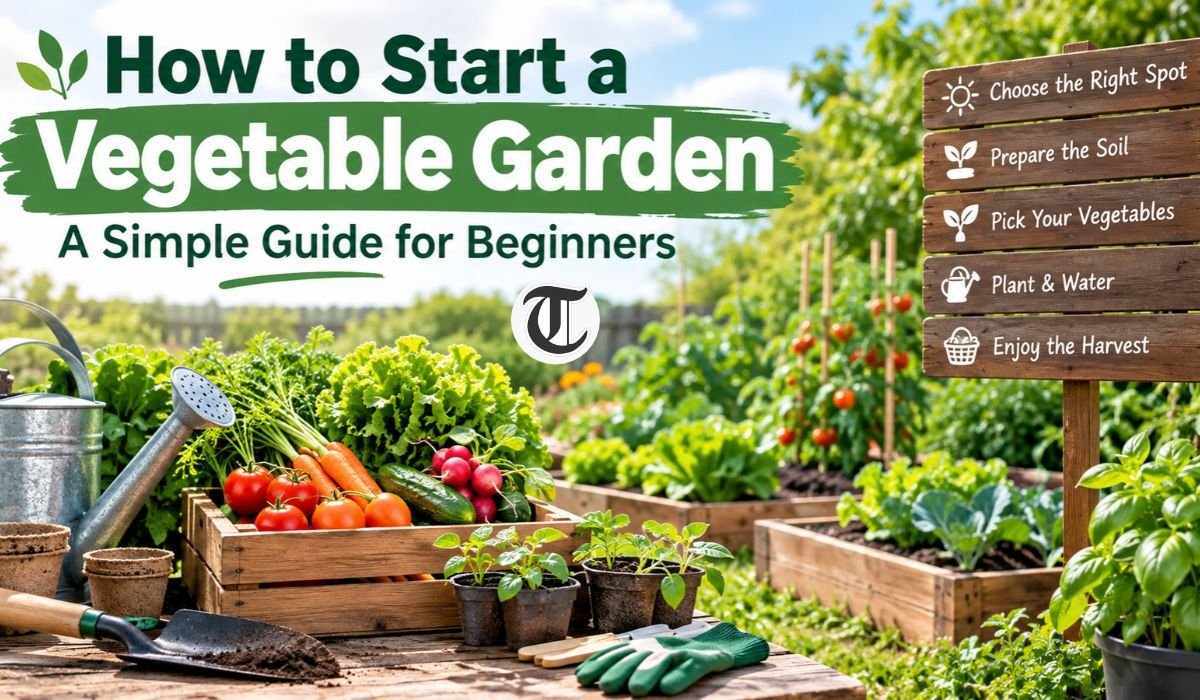
Introduction: Why Start a Vegetable Garden?
Learning How to Start a Vegetable Garden can seem like a big project when you’re looking at an empty yard or a handful of seed packets for the first time. The good news is that you don’t need a large backyard, expensive equipment, or years of gardening experience to get started. A few containers on a sunny balcony can be enough, while a larger outdoor space can accommodate raised beds or an in-ground garden.
Growing your own vegetables is rewarding in a way that goes beyond simply producing food. You get to watch a plant develop from a tiny seed or young transplant into something you can eventually bring to the kitchen. Along the way, you’ll learn which crops and varieties perform best in your soil, climate, and available space. And if something doesn’t work the first time, that’s part of gardening too. Even experienced gardeners have crops that fail.
The basic process is fairly simple: choose a suitable location, prepare the soil, select vegetables that fit your conditions, plant them at the right time, and provide regular care. This guide walks you through each stage so your first vegetable garden feels manageable rather than overwhelming.
Quick Bio Information: Vegetable Gardening Facts
Sunlight: Most vegetables need at least six hours of direct sunlight, with many crops benefiting from additional sunlight.
Starter Size: A modest garden is generally easier for beginners to manage than a large plot filled with many different crops.
Soil: Productive vegetable soil should be well-drained, reasonably deep, and rich in organic matter.
Soil Testing: Testing can provide useful information about soil pH and nutrient levels before amendments are added.
Soil Safety: Existing soil should be assessed for potential contaminants when appropriate, particularly when establishing food-growing areas.
Compost: Compost can improve soil structure while adding organic matter.
Raised Beds: Raised beds can be useful where native soil is compacted, shallow, poorly drained, or otherwise difficult to manage.
Containers: Many vegetables can be grown in containers when the container provides adequate root space, drainage, suitable growing media, and sufficient sunlight.
Cool-Season Crops: Lettuce, spinach, peas, and radishes generally prefer cooler growing conditions.
Warm-Season Crops: Tomatoes, peppers, beans, cucumbers, and eggplant generally need warmer conditions.
Frost: Frost-sensitive vegetables should be planted according to local conditions rather than a universal calendar.
Seeds: Many vegetables can be directly sown when soil and weather conditions are suitable.
Transplants: Starter plants can give certain long-season vegetables a useful head start.
Hardening Off: Young plants raised indoors should be gradually acclimated to outdoor conditions before permanent planting.
Succession Planting: Planting quick-growing vegetables at intervals can extend the harvest period.
Vertical Gardening: Trellises and other supports allow climbing crops to use vertical space.
Mulch: Suitable organic mulch can help suppress weeds and conserve soil moisture.
Garden Journal: Recording planting dates, varieties, weather, problems, and harvests can make future gardening decisions easier.
Learning: Crop failures happen to beginners and experienced gardeners alike. Each season can provide information that improves the next one.
Start With What Your Garden Needs
Every vegetable garden depends on a few essentials: sunlight, suitable soil, water, nutrients, and enough room for plants to develop properly. Most vegetables need at least six hours of direct sunlight each day, while many crops do even better with more. Fruiting plants such as tomatoes generally benefit from plenty of sunlight, whereas some leafy vegetables can handle somewhat less.
Water matters just as much, but more isn’t necessarily better. Plant roots need moisture as well as oxygen. If soil stays saturated for long periods, roots can struggle and plants may become unhealthy. It’s also smart to choose a location that’s easy to reach. A garden that you can see and visit regularly is much easier to maintain because you’ll notice dry soil, weeds, insects, disease symptoms, or plants that need support before small problems become bigger ones.
You don’t need a huge garden to get useful results. University extension guidance suggests that beginners can start with a modest growing area, while even smaller spaces can produce vegetables when containers or intensive planting methods are used.
Choose The Right Location
Take some time to observe your potential garden site before putting anything in the ground. Notice where the sun falls during the day and how that pattern changes. A spot that looks bright in the morning might be shaded by a house, fence, or tree later in the afternoon. That difference can matter, particularly for vegetables that depend on strong sunlight.
Good drainage is another priority. Choose an area where water doesn’t routinely collect after rain. Convenient access to water is helpful too. Carrying watering cans across a large yard every day can quickly turn a pleasant gardening routine into a chore.
Think about wildlife before you plant as well. Depending on where you live, deer, rabbits, birds, groundhogs, raccoons, and other animals may find a vegetable garden just as appealing as you do. Fencing or other suitable protection may be necessary.
If your yard doesn’t have a perfect garden location, don’t assume you’re out of options. Containers or raised beds can be placed in a brighter area of a patio, deck, balcony, or another suitable space. You don’t have to transform your entire yard to start growing food.
Choose Between In-Ground Gardens, Raised Beds, And Containers
There isn’t one correct way to create a vegetable garden. An In-Ground Vegetable Garden is a practical option when your existing soil drains well and is suitable for growing food. It can also be economical because you aren’t building beds or filling large containers. The drawback is that poor or compacted native soil may require preparation before planting.
Raised Beds give gardeners more control over the growing environment. They’re particularly useful when the ground is compacted, shallow, poorly drained, or otherwise difficult to manage. A well-built raised bed should still have proper drainage and should be filled with an appropriate growing medium rather than assuming that any available soil will work.
For people with limited space, Containers can be an excellent alternative. Lettuce, spinach, radishes, carrots, peas, peppers, and appropriately sized tomatoes can all be grown in containers when their basic requirements are met. The container needs enough room for the plant’s roots, adequate drainage, a suitable potting mix, and enough sunlight.
The best garden type is ultimately the one that fits your space, budget, climate, and available time. A simple garden that’s easy to care for is usually more useful than an ambitious one that becomes too difficult to maintain.
Prepare Healthy Soil Before Planting
Healthy soil gives a vegetable garden the foundation it needs. Ideally, garden soil should be reasonably deep, crumbly rather than hard, rich in organic matter, and able to drain excess water without drying out immediately. Water shouldn’t remain standing on the surface for extended periods after rainfall.
Before adding fertilizer or other amendments, consider having the soil tested. A Soil Test can provide information about pH and nutrient levels and, where food-safety concerns exist, may also help identify contaminants such as lead. University of Maryland Extension advises testing existing soil before establishing food-growing areas and notes that soil containing more than 400 parts per million of lead shouldn’t be used for vegetable crops.
Compost and other organic matter can improve soil structure and help create better growing conditions. However, avoid the temptation to add large amounts of amendments simply because they seem beneficial. The right material and quantity depend on the condition of the existing soil and the type of garden you’re creating.
If you’re turning part of a lawn into a garden, you can remove the sod or use suitable sheet-mulching methods to suppress grass. When working with bare ground, compost can help improve the soil. Try not to work soil while it’s very wet, since doing so can damage its structure and lead to compaction.
Understand Soil pH And Plant Nutrients
Soil pH measures how acidic or alkaline soil is. It matters because pH affects the availability of nutrients to plants. Many common vegetables grow well in mildly acidic to near-neutral soil, although individual crops have their own preferences. Testing is a better approach than trying to change the pH based on guesswork.
Vegetables also need nutrients, including nitrogen, phosphorus, and potassium, along with several other nutrients required in smaller amounts. A soil test can help determine whether your garden actually needs additional nutrients.
It’s worth clearing up a common beginner misconception here: adding more fertilizer doesn’t automatically mean you’ll get more vegetables. Excessive fertilizer can be wasteful and may damage plants or contribute to environmental problems. Follow soil-test recommendations and product directions when fertilizer is needed instead of applying it simply as a precaution.
Choose Vegetables You Actually Enjoy
A vegetable garden should produce food you want to eat. Before buying seeds or young plants, think about what regularly appears on your shopping list. If your household rarely eats a particular vegetable, dedicating valuable garden space to a large crop of it probably doesn’t make much sense.
Starting small is often the smarter choice. A few crops that you know you’ll use can teach you plenty about your growing conditions without creating a huge maintenance burden. Once you’re comfortable with watering, weeding, harvesting, and dealing with the occasional pest, you can expand.
You can also think about what gives you the most value from growing at home. Some gardeners prefer vegetables that are noticeably better when freshly picked, while others choose crops that are expensive to buy or difficult to find locally.
Whatever you choose, look for varieties suited to your climate and growing season. Local nurseries, university extension services, and reputable seed suppliers can provide useful information about varieties that perform well in your region.
Choose Beginner-Friendly Vegetables
Some vegetables are especially approachable for new gardeners. Lettuce, radishes, spinach, beans, peas, and many leafy greens can be started directly from seed. Bush beans, tomatoes, cucumbers, peppers, lettuce, summer squash, and leafy greens are also commonly recommended as relatively easy choices for home gardens.
Tomatoes and peppers can be particularly satisfying because they produce crops that many people use regularly. In regions with a shorter growing season, buying healthy starter plants can give these crops a useful head start.
Still, don’t rely too heavily on a generic “easy vegetables” list. Local conditions make a major difference. A crop that’s effortless in one climate might struggle somewhere else because of heat, cold, humidity, rainfall, pests, or the length of the growing season.
Understand Cool-Season And Warm-Season Vegetables
Knowing the difference between Cool-Season and Warm-Season Vegetables makes it much easier to decide what belongs in your garden at different times of the year.
Cool-season vegetables include lettuce, spinach, peas, radishes, broccoli, beets, and several other leafy and root crops. They generally prefer cooler growing conditions and may become stressed when temperatures remain high for long periods.
Warm-season vegetables include tomatoes, peppers, beans, cucumbers, corn, squash, and eggplant. These crops generally need warmer soil and air temperatures and can be seriously damaged by frost.
The important thing is to think beyond a generic planting calendar. Your local climate determines when conditions are suitable. A planting date that works in one region may be far too early or too late somewhere else.
Determine When To Plant
Knowing When To Plant Vegetables is just as important as knowing what you want to grow. Use your local frost information, regional gardening calendars, soil conditions, seed-packet directions, and the expected days to maturity for individual varieties.
Cool-season crops can often be planted earlier than frost-sensitive warm-season vegetables. Crops such as beans and cucumbers generally need warmer soil for good germination, while tomatoes and peppers need protection from freezing temperatures.
Days to maturity deserve attention too. If a tomato variety takes a long time to produce fruit and your growing season is short, you may be better off choosing a shorter-season variety or starting with a transplant. The goal is to give the plant enough time to produce before unfavorable weather returns.
Succession Planting is another useful technique. Instead of sowing all your lettuce or radishes at once, plant smaller amounts at intervals. As one planting approaches harvest, another can be developing behind it. This can help spread production over a longer period rather than leaving you with a large amount of produce all at once.
Decide Between Seeds And Starter Plants
Growing from Seeds gives you access to a wide range of varieties and can be an economical way to fill a garden. Many vegetables, including beans, peas, carrots, radishes, and some leafy greens, can be directly sown outdoors when soil and weather conditions are appropriate.
Starter Plants, also called transplants, can be useful for crops that take longer to reach harvest. Tomatoes, peppers, eggplant, cabbage, and broccoli are examples of vegetables commonly started indoors or purchased as young plants. For beginners, buying healthy transplants can simplify the early stages of growing these crops.
If you grow transplants indoors, remember that they may need Hardening Off before moving permanently outdoors. This involves gradually exposing young plants to outdoor conditions so they can adjust to changes in sunlight, wind, and temperature.
Some crops have different starting methods. Garlic is generally grown from individual cloves, onions can be grown from sets or young plants, and potatoes are commonly grown from seed pieces or seed potatoes.
Plan Your Garden Layout
A simple garden map can prevent plenty of problems later. Before planting, note where each vegetable will go and consider its mature size rather than the size of the seedling or young transplant you see on planting day.
Leave enough space for plants to grow without unnecessary competition. Crowded plants can have poorer airflow and become harder to water, inspect, weed, and harvest. Make pathways wide enough that you can comfortably reach the growing areas without repeatedly stepping into the soil.
Plant height matters, too. Tall crops can shade shorter ones, so position them thoughtfully. Taller plants are generally best placed where they won’t unnecessarily block sunlight from shorter crops.
A garden plan also makes succession planting easier. Once an early crop such as radishes or lettuce finishes, you may be able to use that same area for another crop if your growing season allows.
Consider keeping a Garden Journal. Record what you planted, the variety, planting date, weather conditions, pest problems, harvest dates, and anything else you noticed. Those notes can become extremely valuable when you’re planning the following season.
Make The Most Of A Small Garden
Limited space doesn’t mean you have to give up on growing vegetables. In fact, small gardens can be easier for beginners because there’s less ground to maintain.
Vertical Gardening is one of the most useful space-saving approaches. Peas, pole beans, cucumbers, and some tomato varieties can be trained onto sturdy trellises or other suitable supports. Growing upward allows you to make use of space that would otherwise remain empty.
Containers are another option. Choose compact or dwarf varieties when they’re available, and make sure the container is large enough for the plant’s mature root system. A container that’s too small may dry out quickly and restrict root growth.
Raised beds can also make a defined growing area more productive. The goal isn’t to squeeze as many plants as possible into a small space. Instead, choose crops carefully and give each one enough room to remain healthy and accessible.
Water, Feed, And Protect Your Plants
Watering is one of the areas where new gardeners can easily go wrong. Rather than following a rigid schedule, check the soil and consider rainfall, temperature, humidity, soil type, plant size, and container size. Established vegetables generally benefit from thorough watering that reaches the root zone instead of frequent, shallow watering.
A general benchmark often used in vegetable gardening is about one inch of water per week, including rainfall. However, that figure isn’t a universal rule. Hot, dry weather can increase water requirements, while regular rainfall can reduce the amount you need to provide.
Try to water the soil around the plant rather than unnecessarily wetting its foliage. Drip irrigation or soaker hoses can be useful because they deliver water close to the root zone.
Keep weeds under control while they’re still small. Suitable organic mulch can help suppress new weeds and reduce moisture loss from the soil.
Your plants should also be inspected regularly. Look at the undersides of leaves, stems, and the soil around the plants for insects, damage, discoloration, or other unusual signs. If you notice a problem, identify it before reaching for a treatment. Different pests and diseases require different responses, and unnecessary pesticide use can harm beneficial insects and other organisms.
Good growing conditions are an important part of prevention. Plants receiving appropriate sunlight, water, spacing, nutrition, and airflow are generally better positioned to handle environmental stress.
Harvest At The Right Time
Harvesting is more than simply picking vegetables when they’re large enough to eat. Each crop has its own signs of maturity, and flavor and texture can change considerably as vegetables become overripe.
Some vegetables are best harvested while they’re young and tender. Others need more time to reach their proper size and maturity. Learn the expected harvest stage for each crop you’re growing, and check plants regularly once production begins.
Frequent harvesting can also encourage continued production in some crops. Leaving mature produce on a plant for too long may reduce quality or slow further production.
Handle harvested vegetables gently and use them while they’re fresh whenever possible. If your garden produces more than your household can use, consider freezing, canning, or another appropriate preservation method.
Don’t forget to record which varieties performed well. A variety that produced reliably, tasted good, and handled your local weather may deserve a permanent place in your future garden.
Common Vegetable Gardening Mistakes To Avoid
A first vegetable garden becomes much easier when you know which mistakes to watch for. One of the biggest is simply planting too much. A garden can look spacious when seedlings are tiny, but those same plants may quickly become crowded as they mature.
Choosing a location without enough sunlight is another common problem. So is planting warm-season crops before conditions are ready, watering without checking soil moisture, ignoring drainage, or placing plants too close together.
Beginners sometimes overlook the eventual size of their crops, too. A cucumber vine or tomato plant can occupy much more room than expected. Climbing plants may also need support before they become heavy with growth.
It’s also easy to underestimate the value of regular observation. You don’t need to spend hours in the garden every day, but checking your plants frequently gives you a chance to spot weeds, pests, disease symptoms, dry soil, or other problems while they’re still manageable.
Final Thoughts: Start Small And Keep Learning
The best way to learn How to Start a Vegetable Garden is to begin with a manageable space and pay attention to what happens. Choose a location with enough sunlight, prepare the soil carefully, select vegetables suited to your climate, and use local information to determine when to plant.
Don’t expect every crop to succeed. Weather, pests, diseases, soil conditions, watering, and timing can all affect the outcome. Even experienced gardeners have disappointing seasons. What matters is taking those experiences seriously and using them to make better decisions next time.
A successful vegetable garden isn’t necessarily the biggest one. It’s the garden you can maintain, learn from, and enjoy. Start with vegetables you actually like, give each plant the conditions it needs, and let your knowledge grow alongside your garden.
FAQs About Starting A Vegetable Garden
How Much Sun Does A Vegetable Garden Need?
Most vegetables need at least six hours of direct sunlight each day, while many perform better with more. Fruiting crops such as tomatoes generally benefit from strong sunlight, whereas some leafy vegetables can tolerate somewhat less. Before choosing a location, watch the area at different times of day to understand how much direct light it actually receives.
What Vegetables Are Easiest For Beginners?
Bush beans, tomatoes, cucumbers, peppers, lettuce, summer squash, leafy greens, and several quick-growing root crops can be approachable choices for beginners. Radishes and lettuce can be particularly useful for new gardeners because they can grow relatively quickly under suitable conditions. Your climate, soil, sunlight, and growing season should still guide the final selection.
Can I Start A Vegetable Garden Without A Backyard?
Yes. You can grow vegetables in containers, raised beds, patios, decks, balconies, and vertical gardening systems. The most important considerations are sunlight, adequate root space, drainage, suitable growing media, water, and choosing plants that fit the available space.
Should I Start Vegetables From Seeds Or Plants?
Both methods have advantages. Seeds usually offer more variety and can be economical, especially for vegetables that grow well from direct sowing. Starter plants can simplify the process for longer-season crops such as tomatoes, peppers, eggplant, cabbage, and broccoli. If young plants have been grown indoors, harden them off gradually before moving them permanently outdoors.
How Often Should I Water A Vegetable Garden?
There isn’t one watering schedule that works for every garden. Check the soil and consider recent rainfall, temperature, humidity, soil type, plant size, and container size. Established plants generally benefit from thorough watering that reaches their root zone rather than repeated shallow watering. About one inch of water per week, including rainfall, is often used as a general benchmark, but actual needs can vary significantly.
When Should I Plant Vegetables?
Planting time depends on both your location and the crop. Check local frost information, soil temperatures, seed-packet instructions, and regional planting calendars. Cool-season crops generally tolerate cooler conditions, while warm-season vegetables need warmer soil and air temperatures. Days to maturity are also important because long-season varieties need enough time to produce before unfavorable weather returns.
Do I Need A Raised Bed To Grow Vegetables?
No. An in-ground garden can work very well when the existing soil is suitable and drains properly. Raised beds are particularly useful when native soil is compacted, poorly drained, shallow, contaminated, or otherwise difficult to manage. Containers offer another practical solution when ground space isn’t available.
What Should I Do If My First Vegetable Garden Fails?
Start by looking at what happened instead of assuming you don’t have a green thumb. Consider sunlight, soil quality, drainage, watering, planting time, spacing, pests, diseases, and weather. Write down what you observed and make a few changes next season. Gardening is a learning process, and a disappointing crop can still teach you something valuable about your growing conditions.
Learn more and explore exciting content on: How to Wash Cashmere: A Simple Guide to Keeping It Soft and Fresh
[…] Learn more and explore exciting content on: How to Start a Vegetable Garden: A Simple Guide for Beginners […]